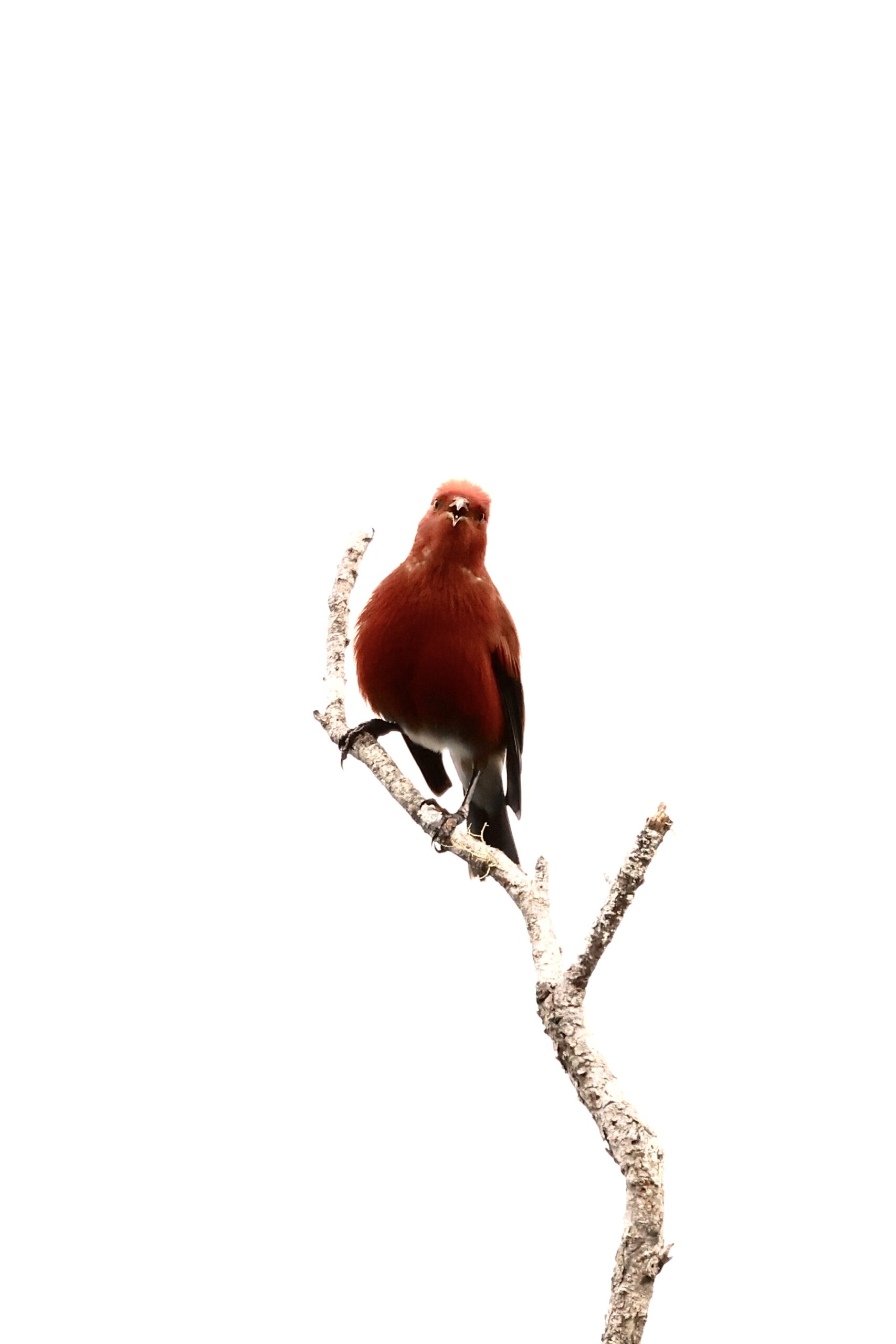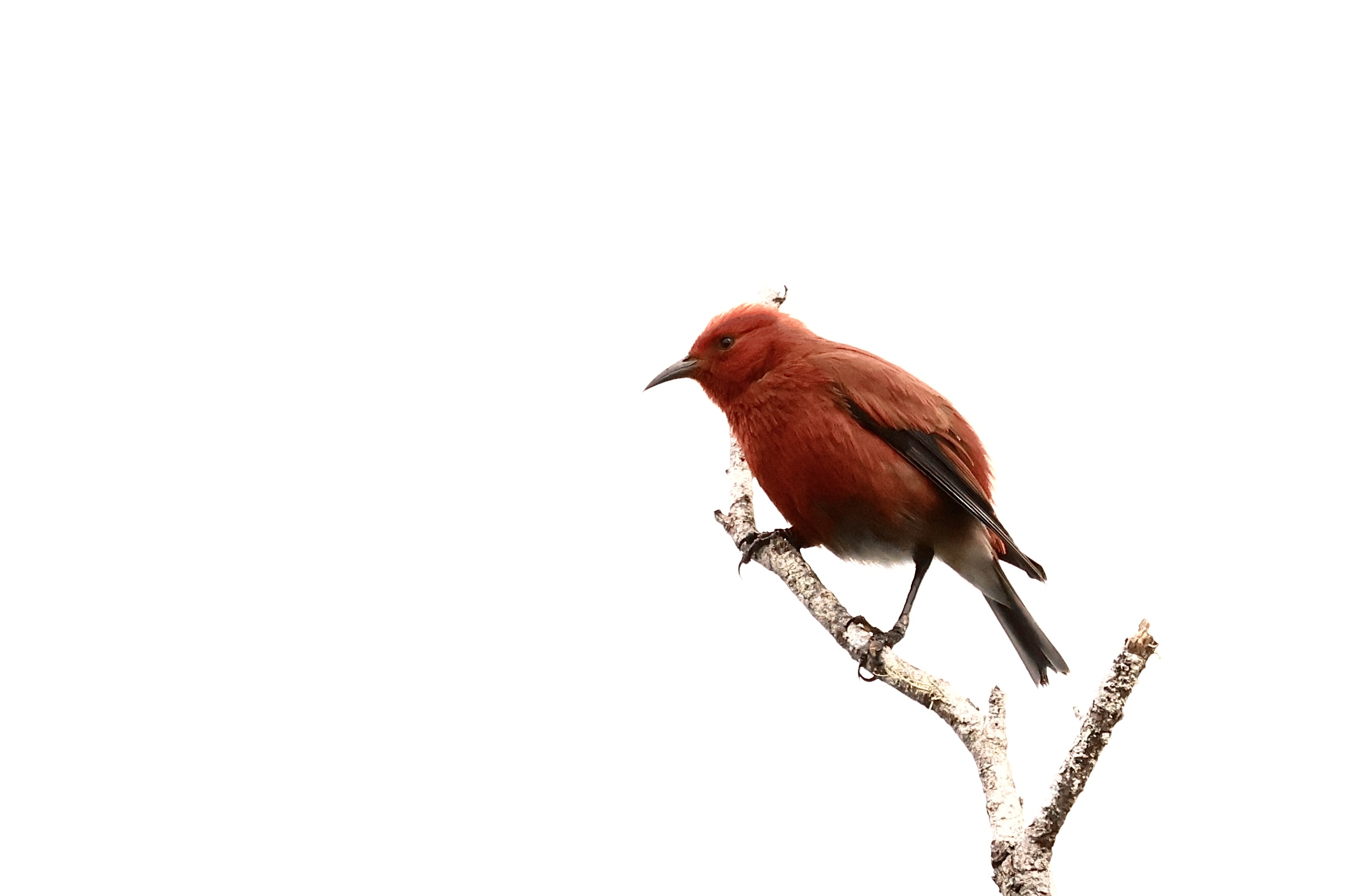
On day six of our trip, we woke up early from our cabins in Kokeʻe State Park After, still looking for the ʻAnianiau.
As we walked all the way between the two lookouts (Kalalau (or lookout number one) and Pu‘u O Kila (or lookout number two)) yesterday, we decided today to remain at the best patch near the second lookout. Looking at eBird, the ʻAnianiau had not been documented for a while, even the last few professional guided tours missed.
As we walked around the patch, enjoying the (probably same) Kauaʻi ʻElepaio and numerous ʻApapanes hopping around, we discovered that there seemed to be a group of birders on the other side of the forest. We walked around, and found out that it was a tour by the famous Mandy Talpas. As they searched the area, we decided to tag along, in case they found the ʻAnianiau. Just as they were leaving, and we were preparing to head back ourselves, that very same call I had recorded yesterday rang out directly above me. Mandy Talpas spun around abruptly and hurried back toward us. She was incredibly excited, telling everyone that this was indeed the call of an ʻAnianiau, which she had not found since a month ago! I quietly played her the recording I had made the previous day, and she confirmed that it, too, was definitely an ʻAnianiau. Although we ultimately didn’t manage to spot the bird itself, I did get the hardest lifer of this trip!
As we got all of our targets at Kokeʻe State Park, we headed down the mountain to our next stop at the north shore. Although we were technically at the north shore in Kokeʻe State Park, Kauaʻi has a weird road system where the road does not connect to form a loop at the Northwest corner (where Kokeʻe State Park is at). This means that we have to do a whole loop to basically get down the mountains at Kokeʻe State Park.
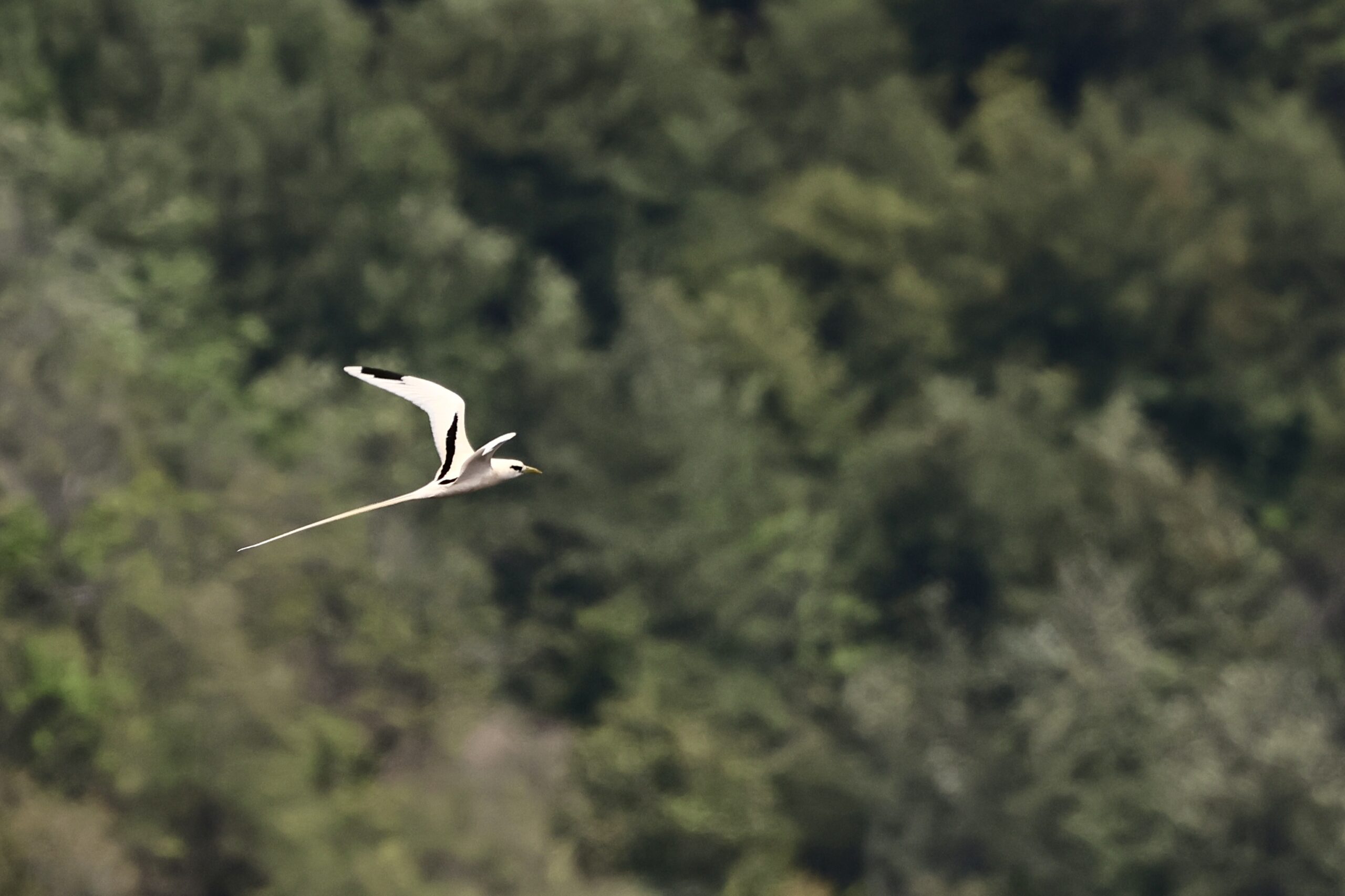
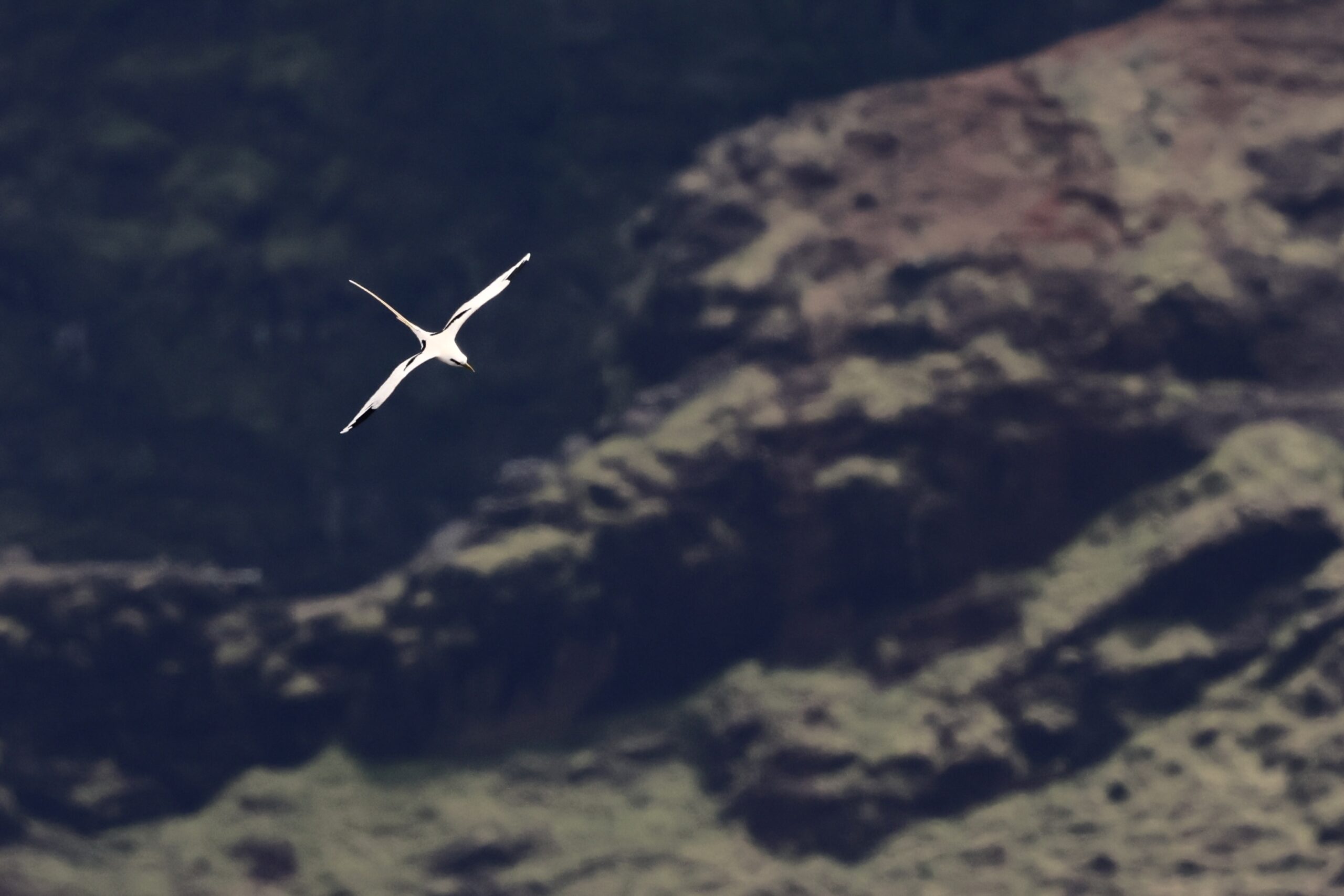
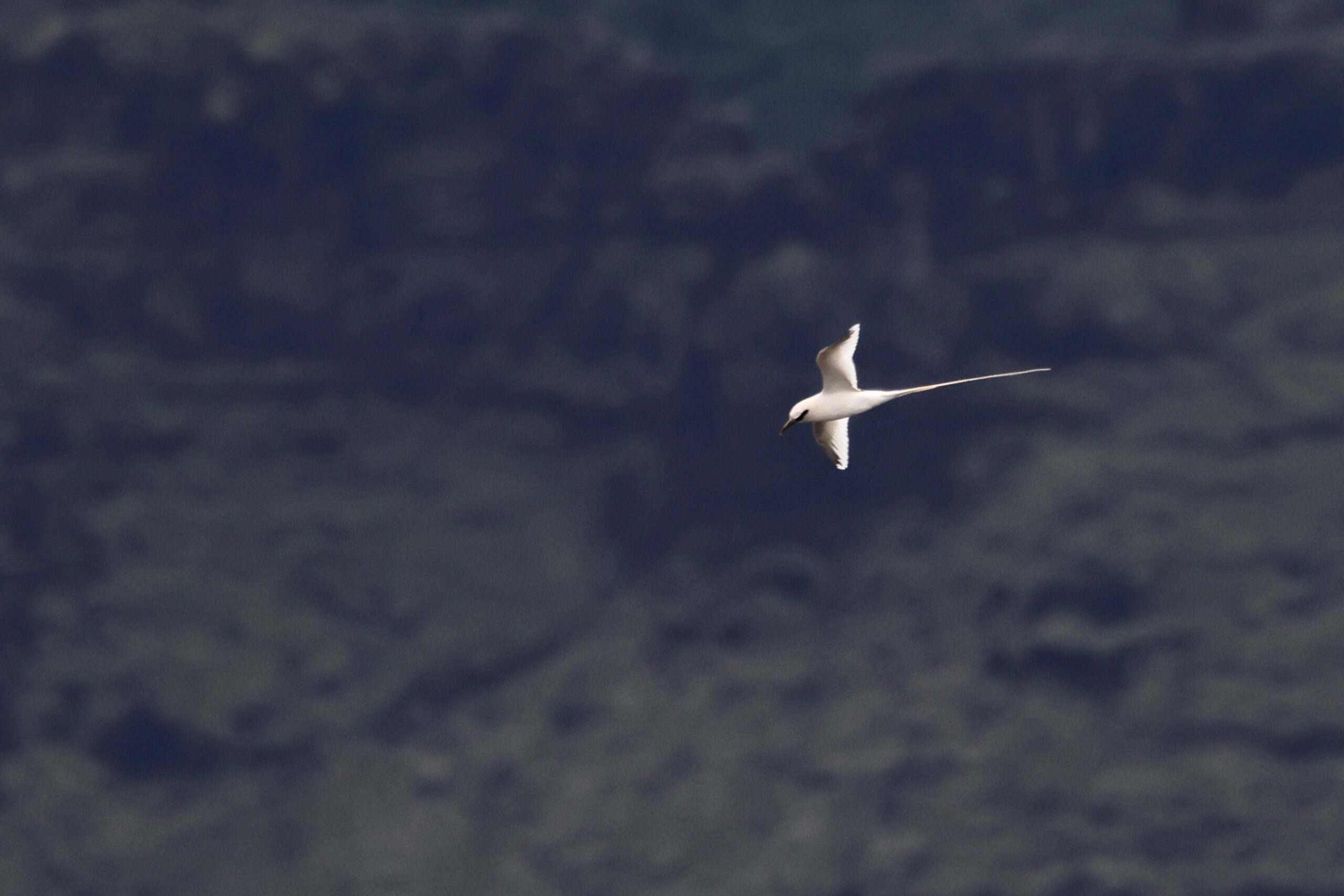
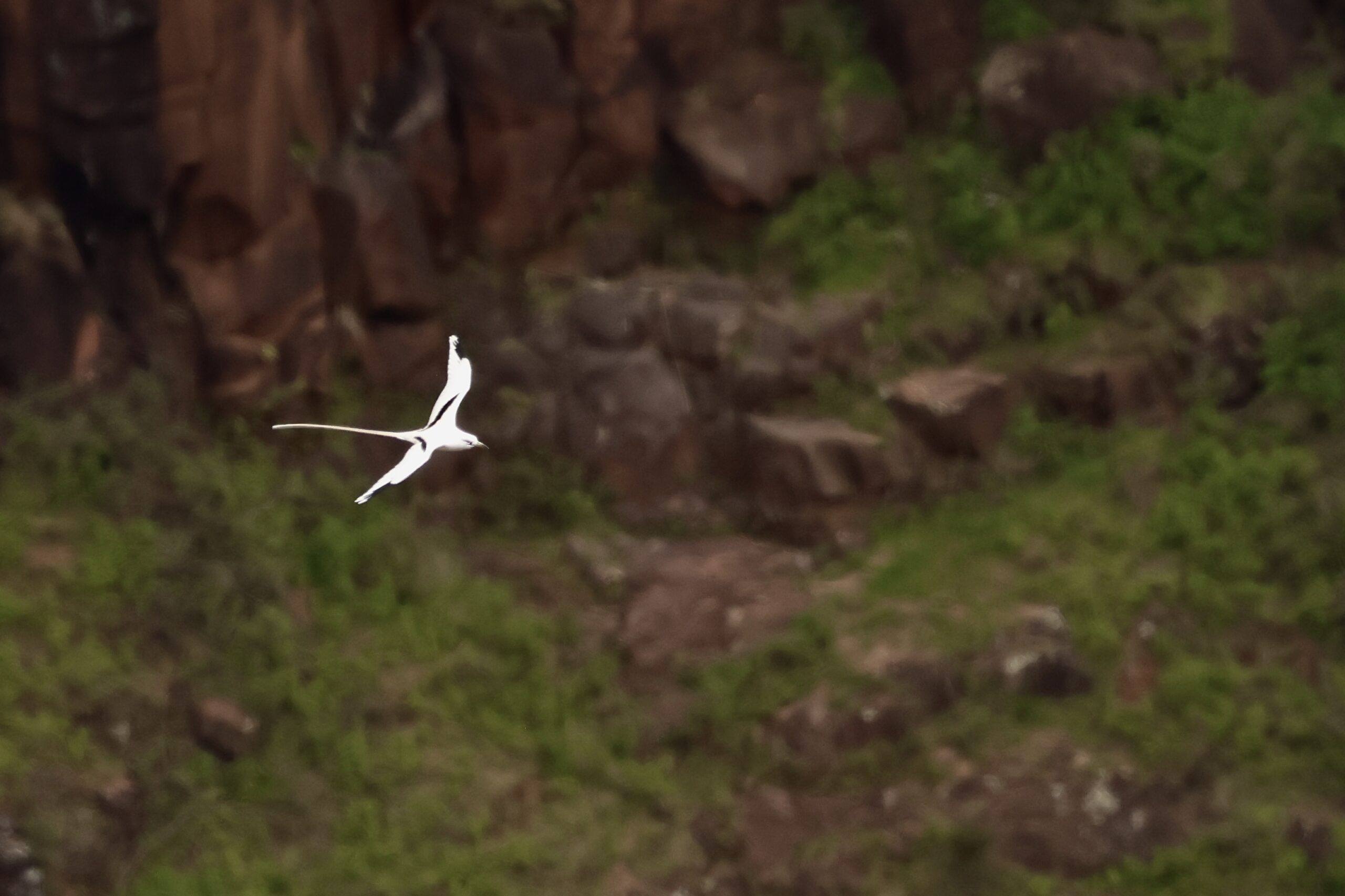
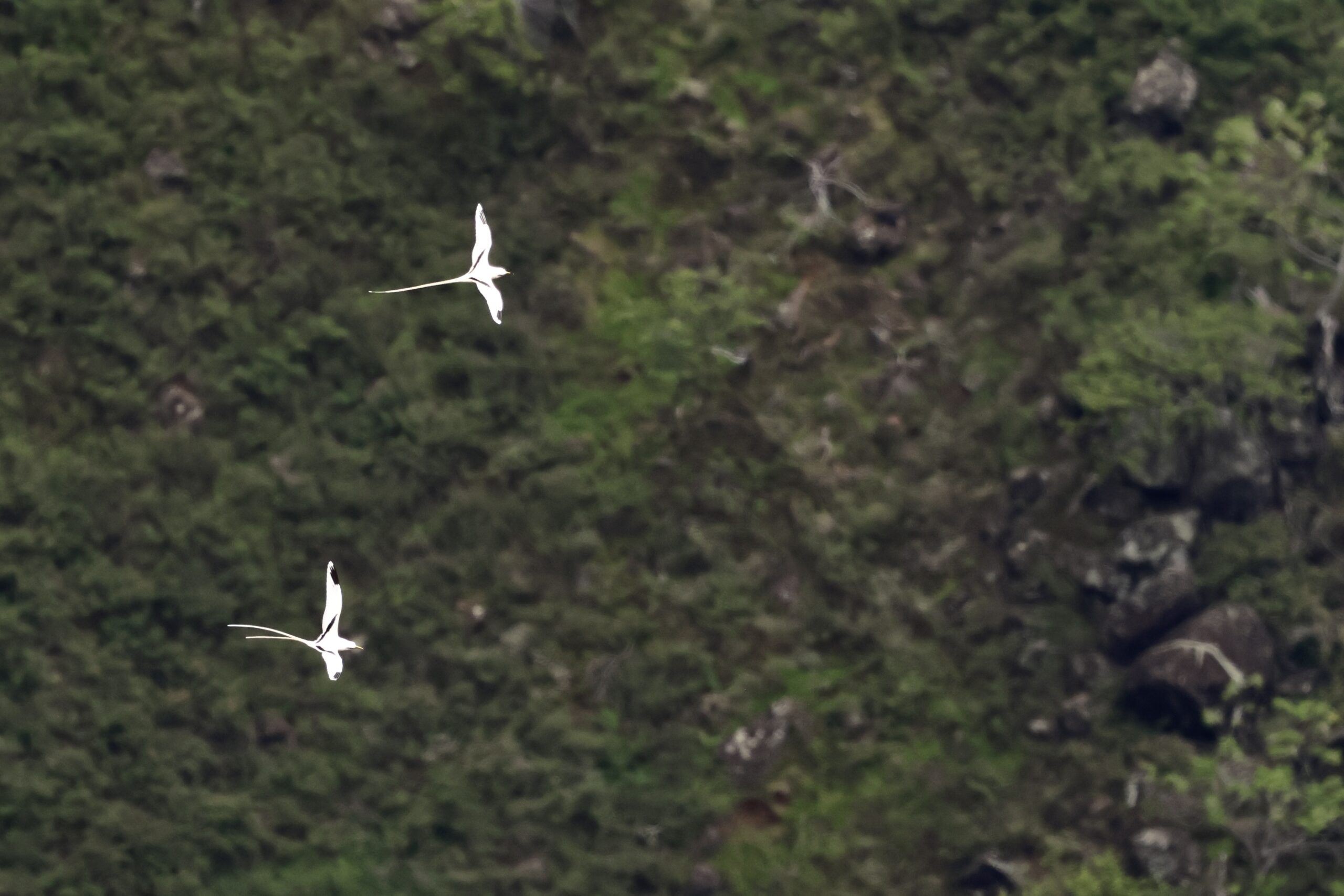
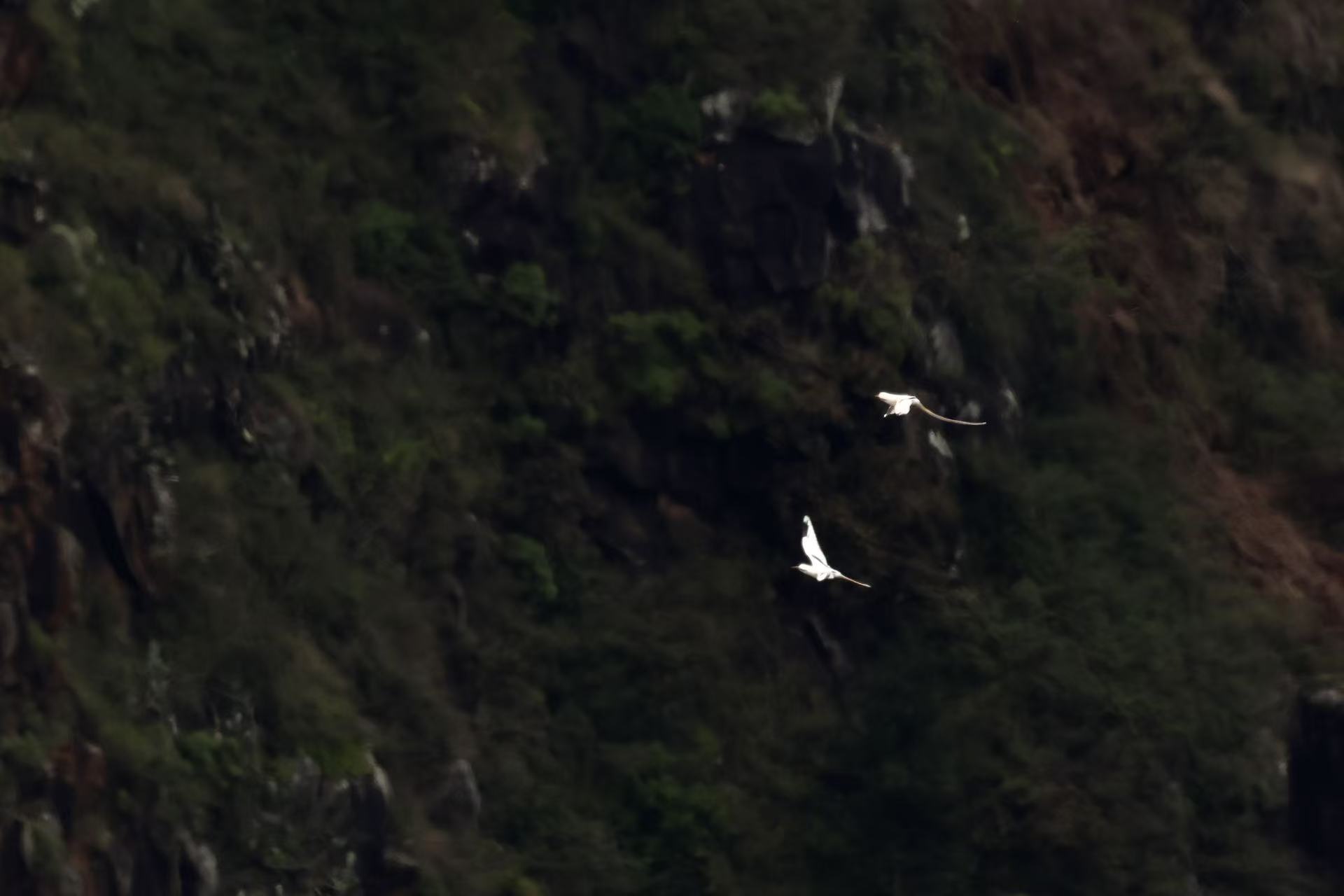
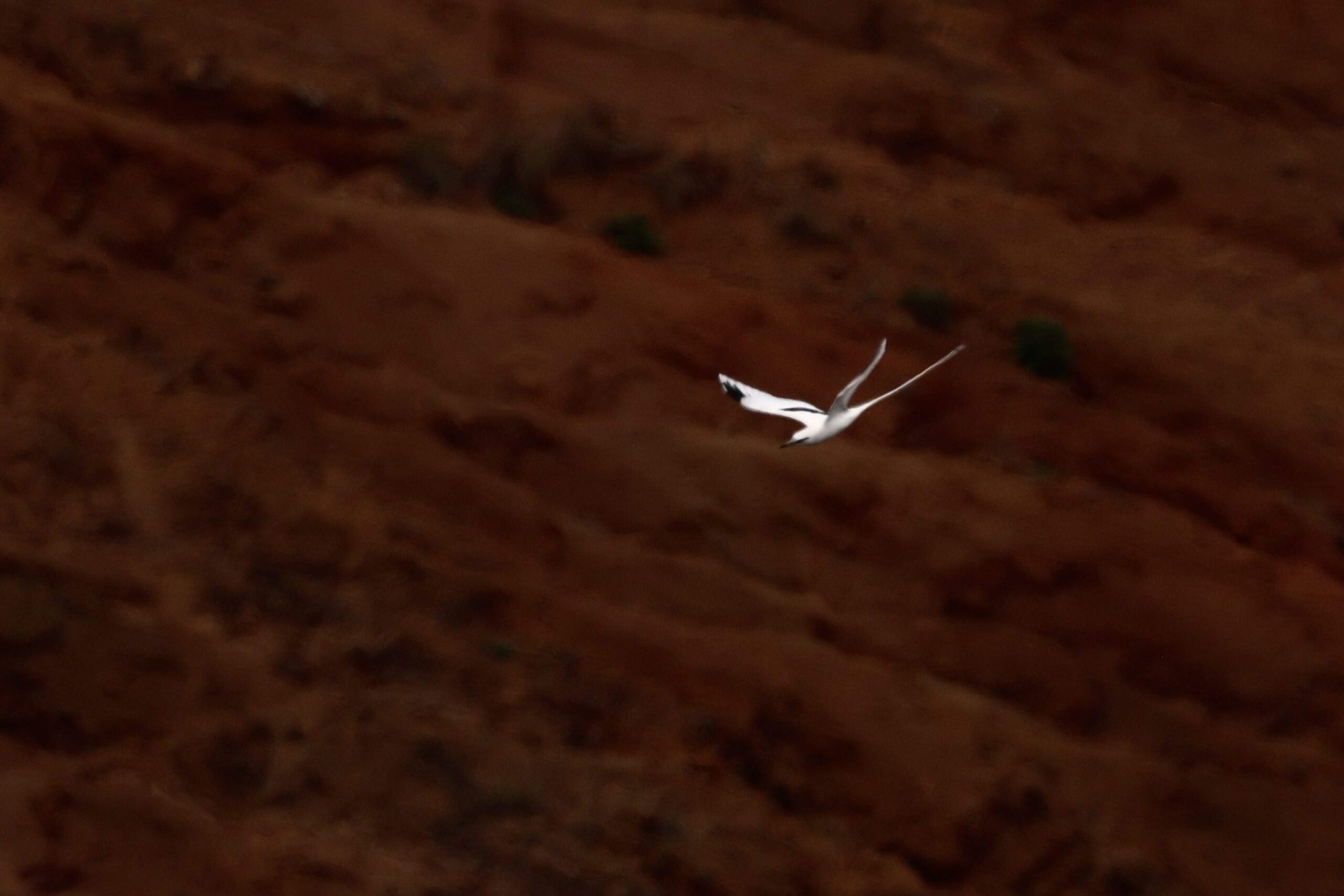
Fortunately, the island is smaller than Los Angeles, and there are quite a few scenic lookouts on the way. We stopped by the famous Pu’u Hinahina and Waimea Lookouts. Flocks of White-tailed Tropicbirds gracefully soared across this prehistoric landscape, emitting peculiar cries. They almost seemed like pterodactyls flying over the canyons in Jurassic Park/World (which part of it is indeed filmed here)!
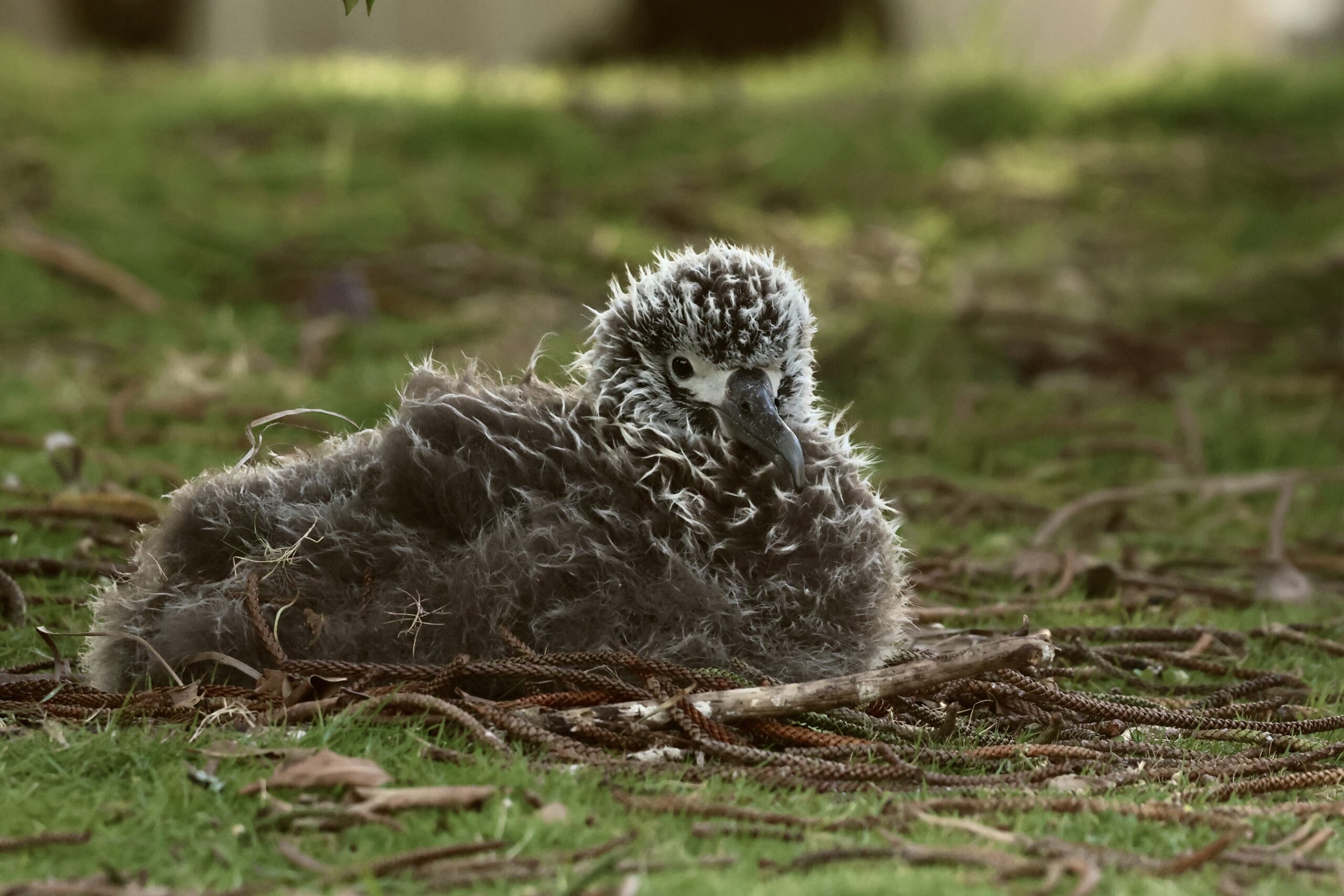
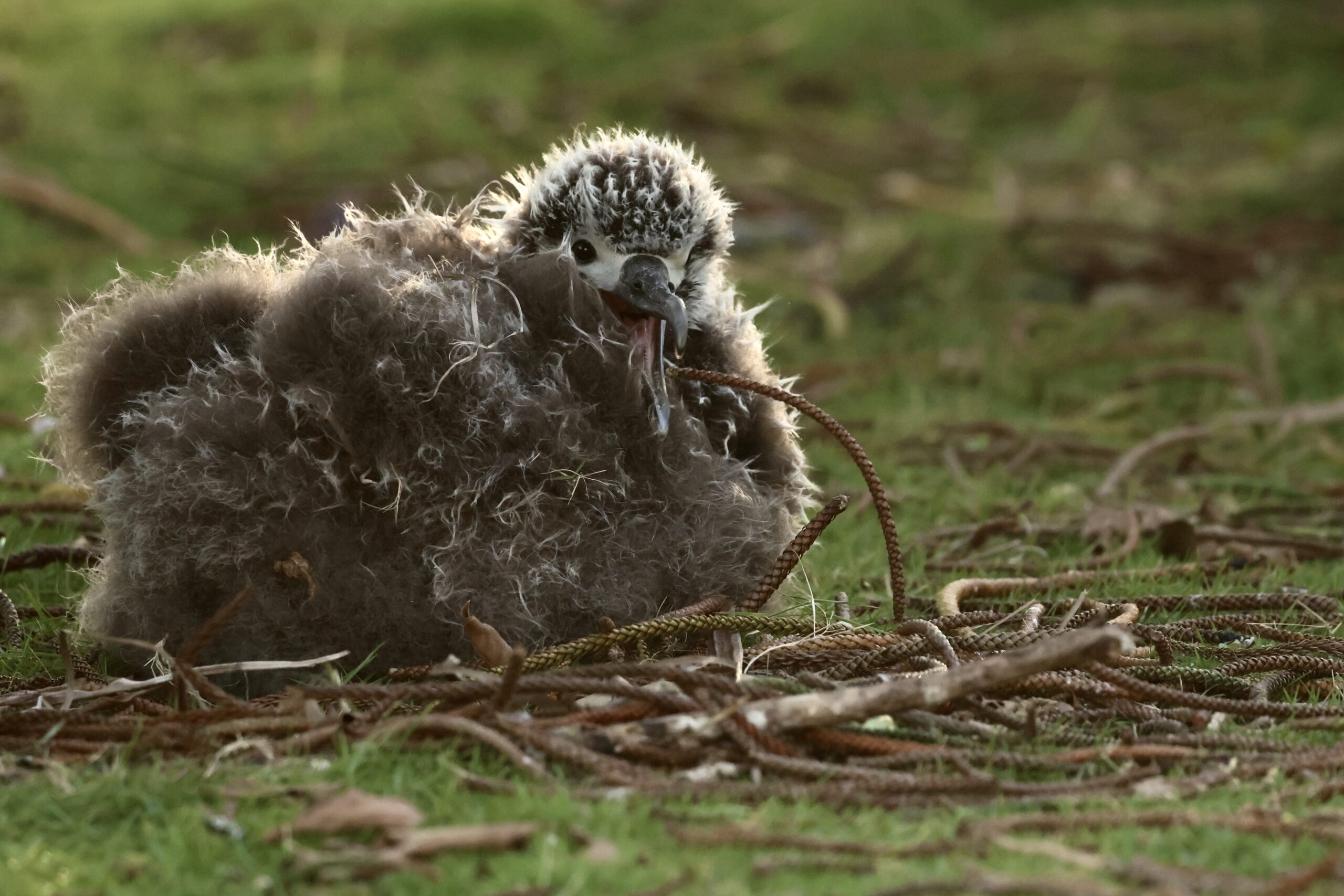
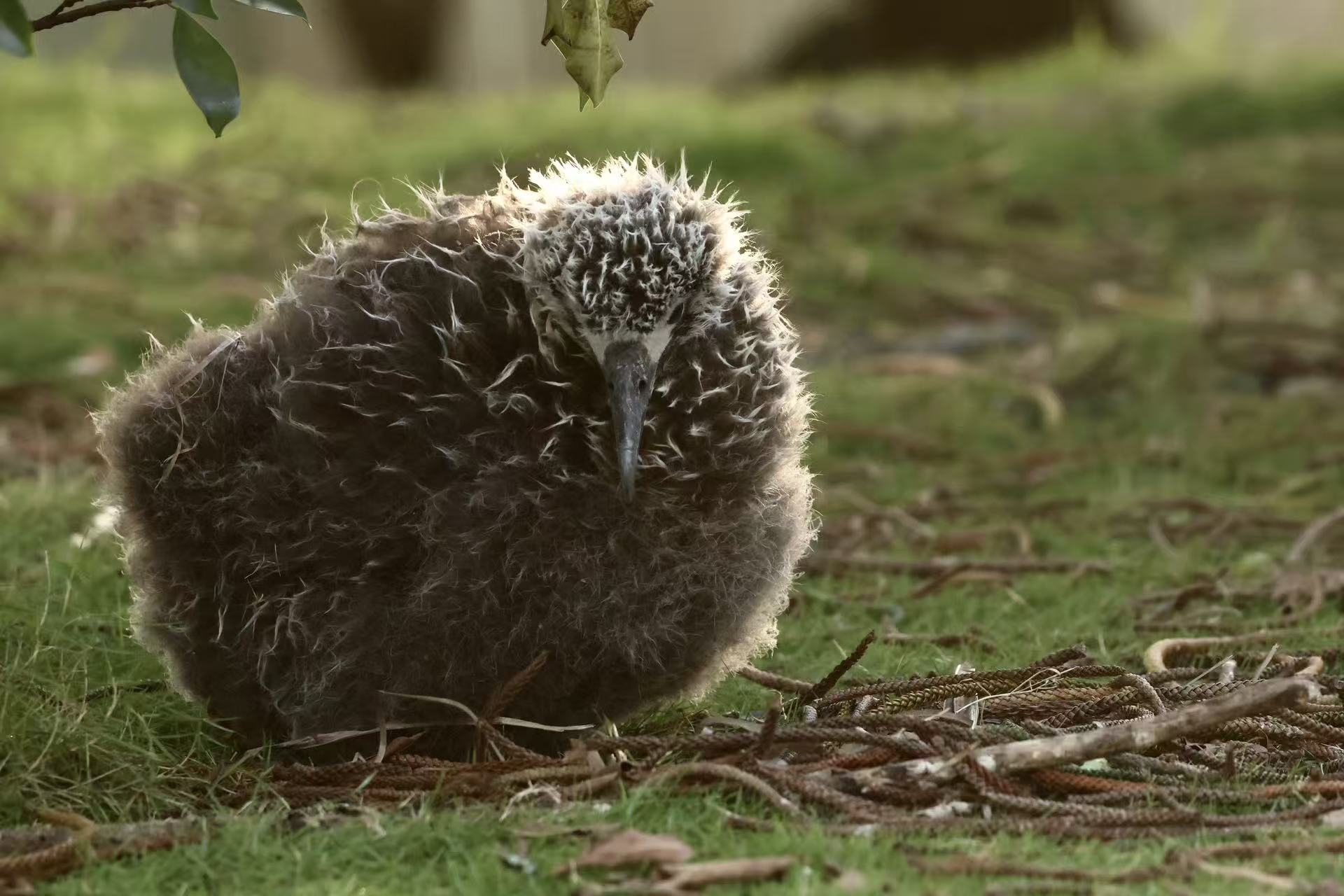
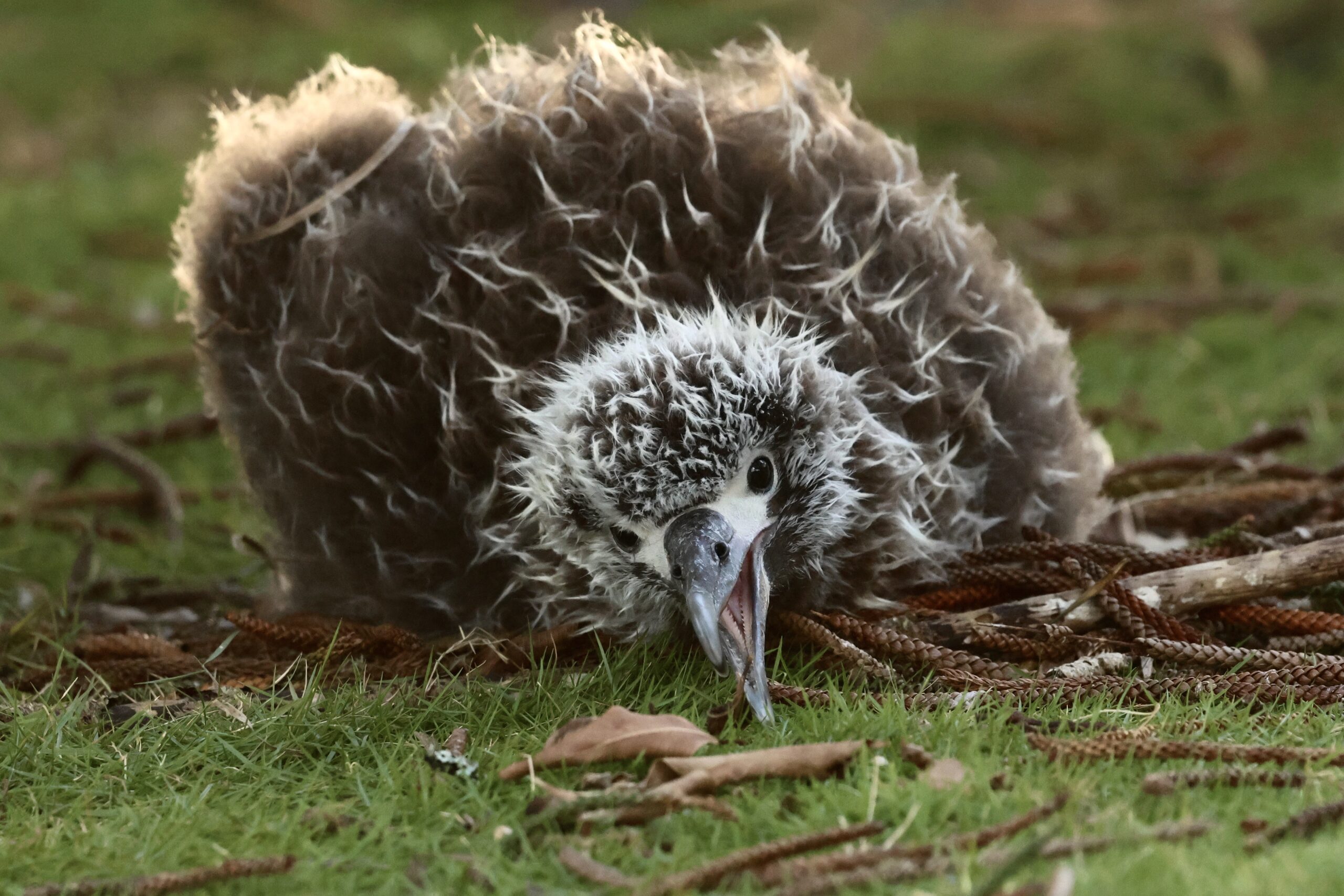
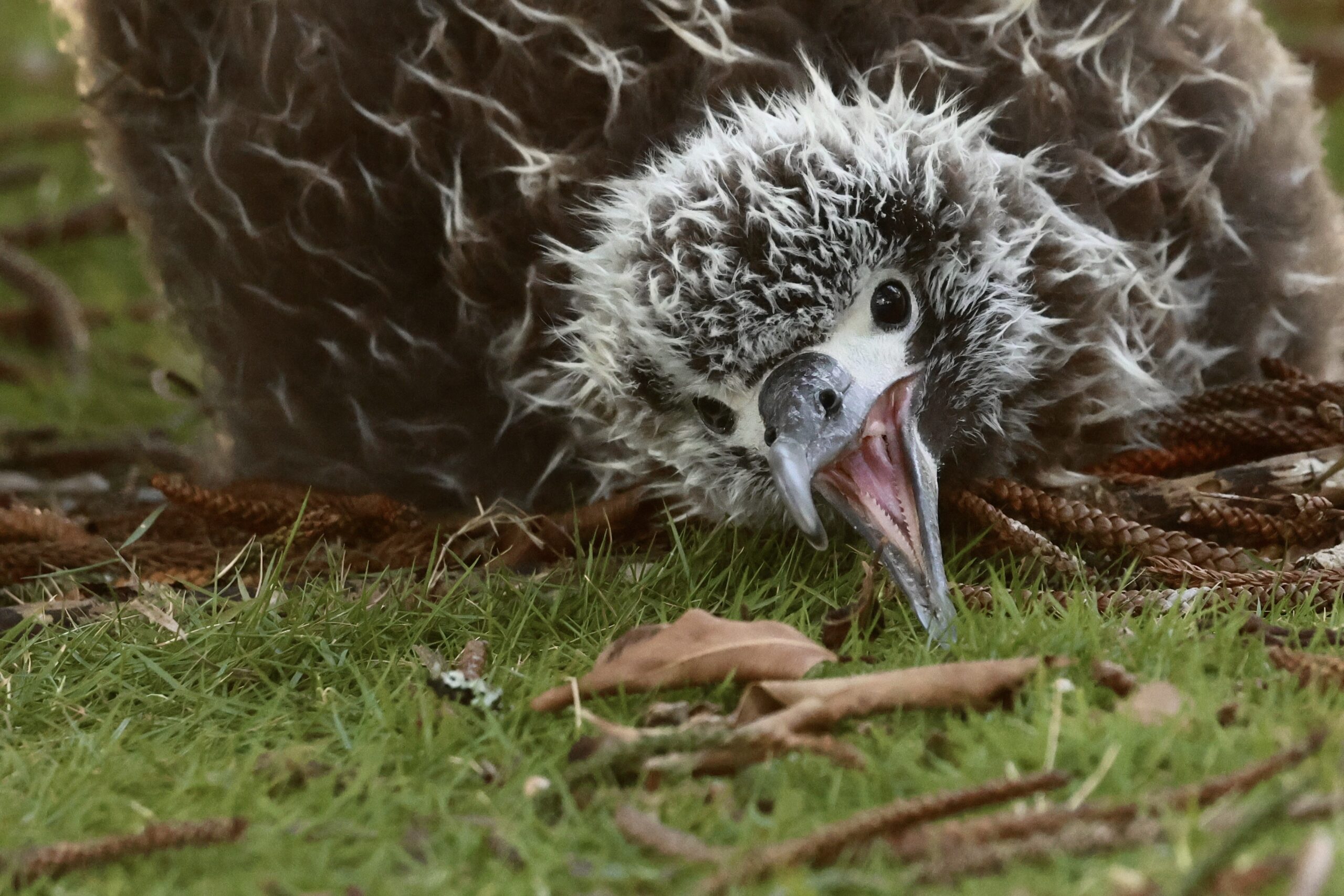
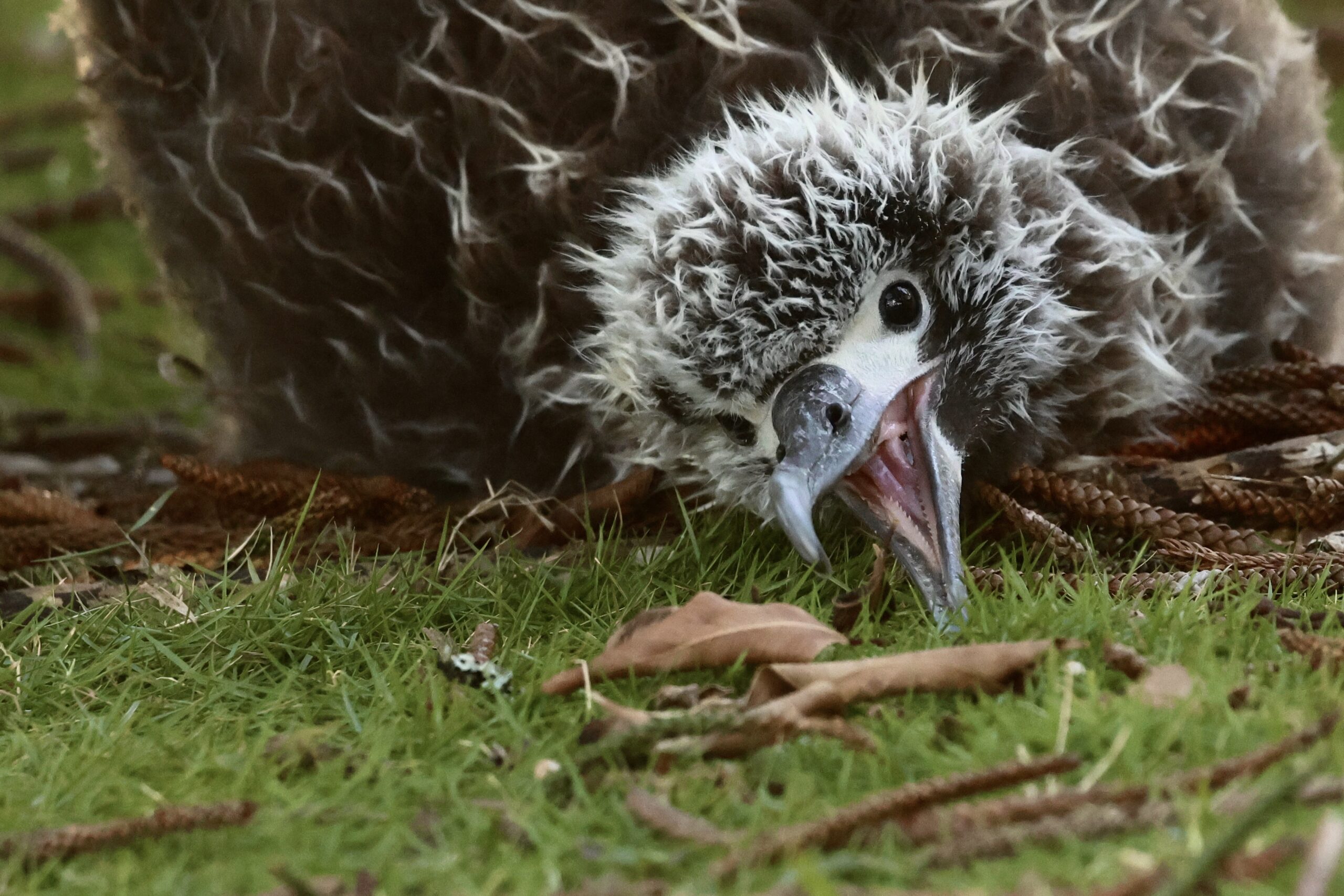
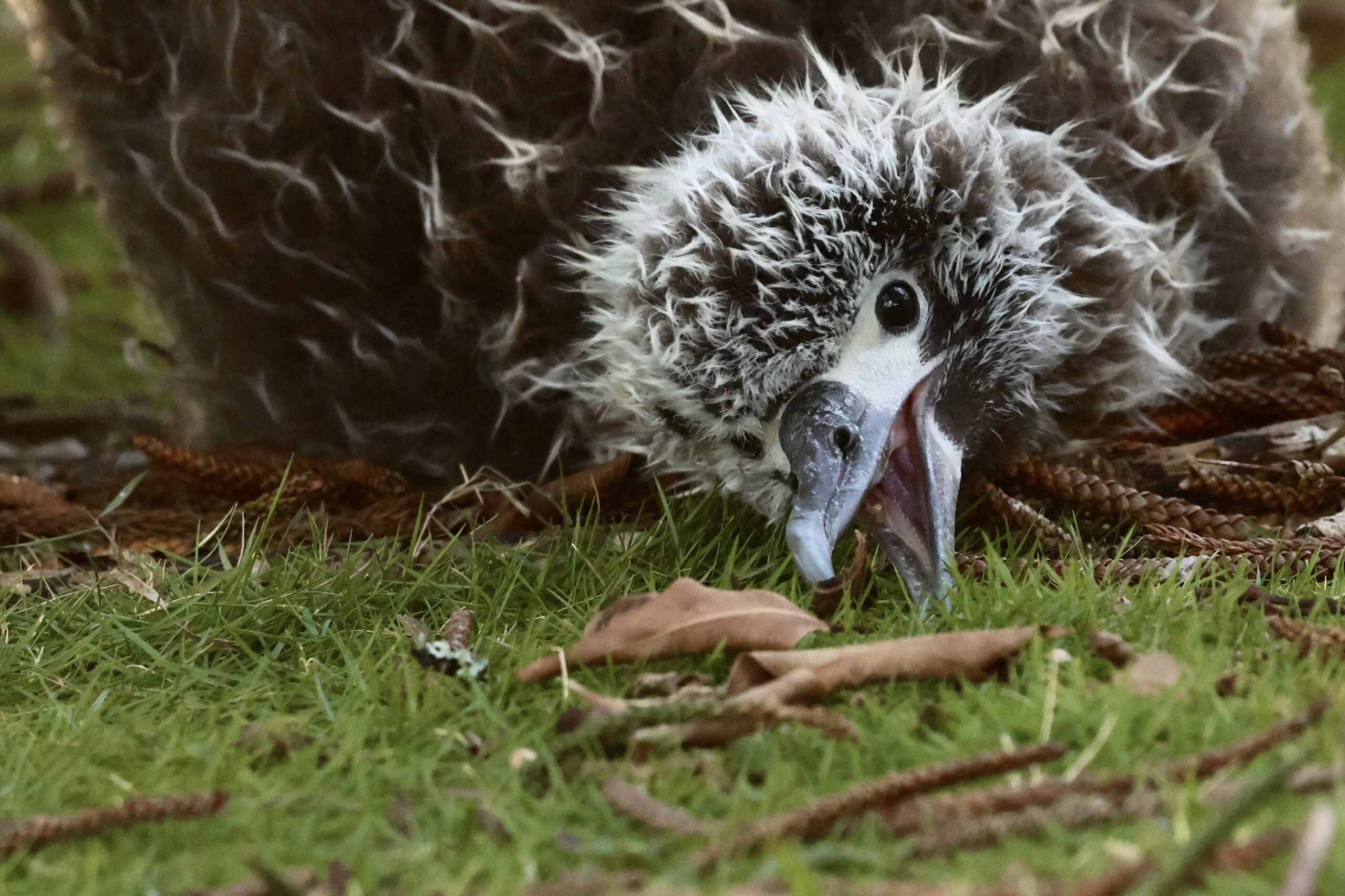
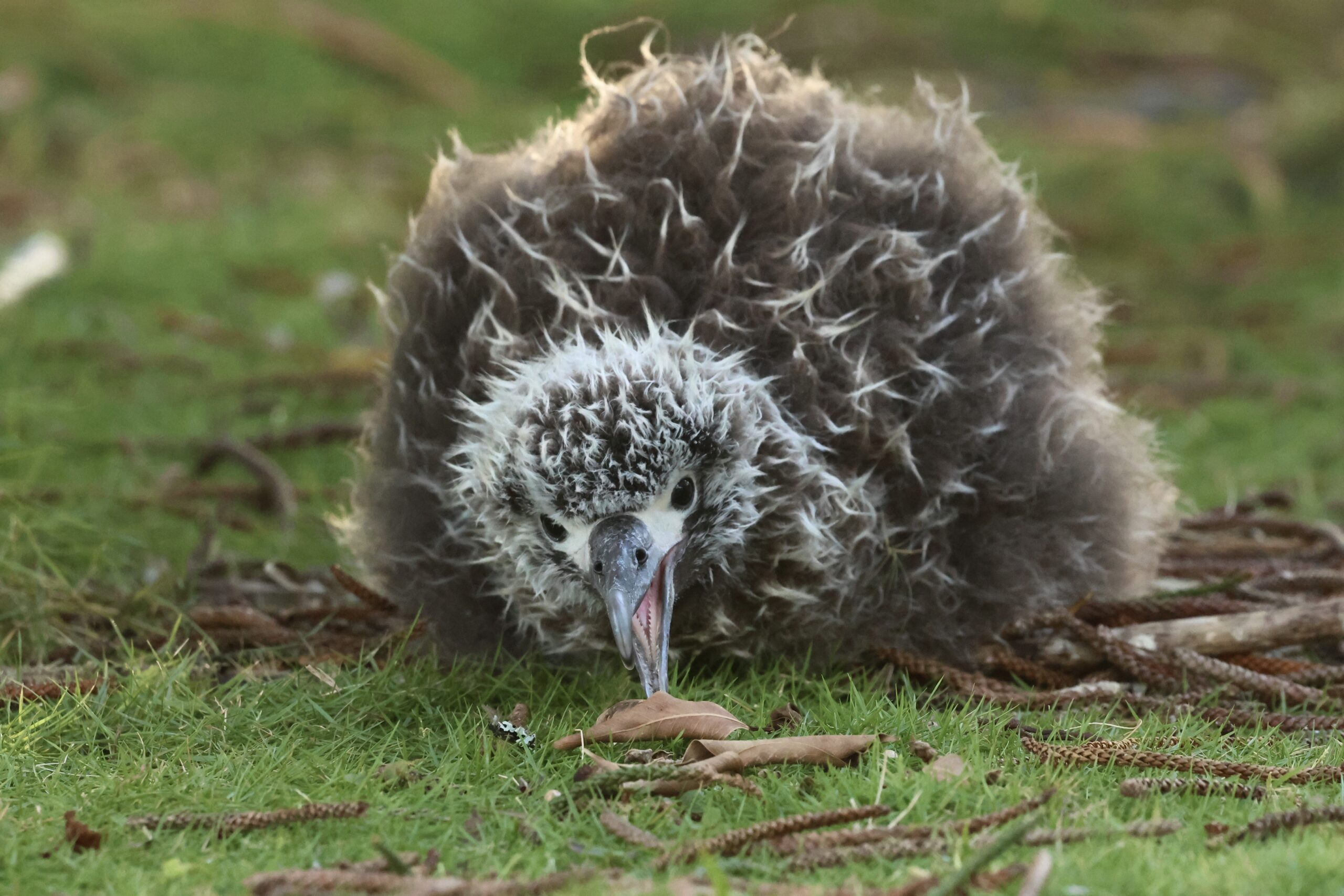
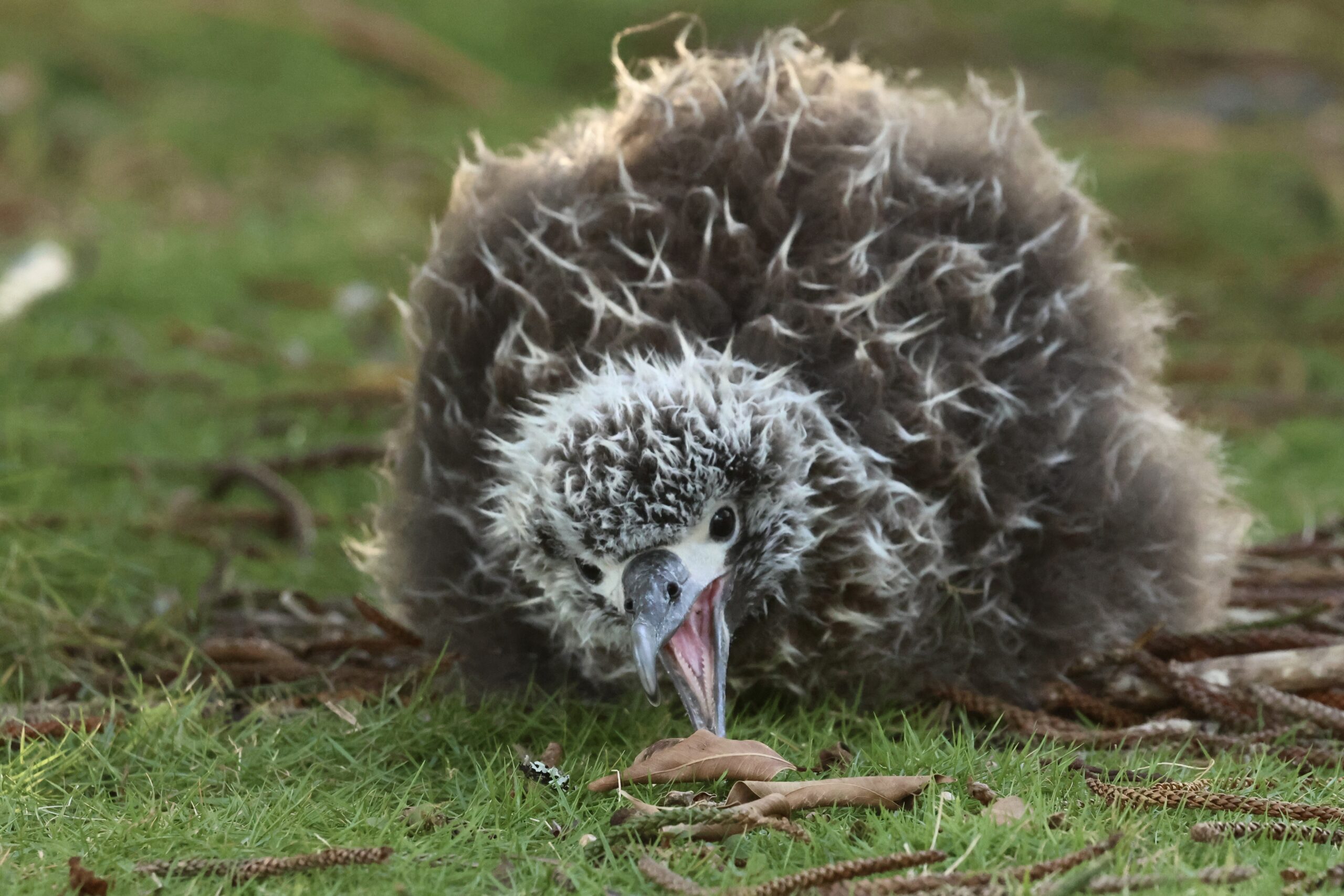
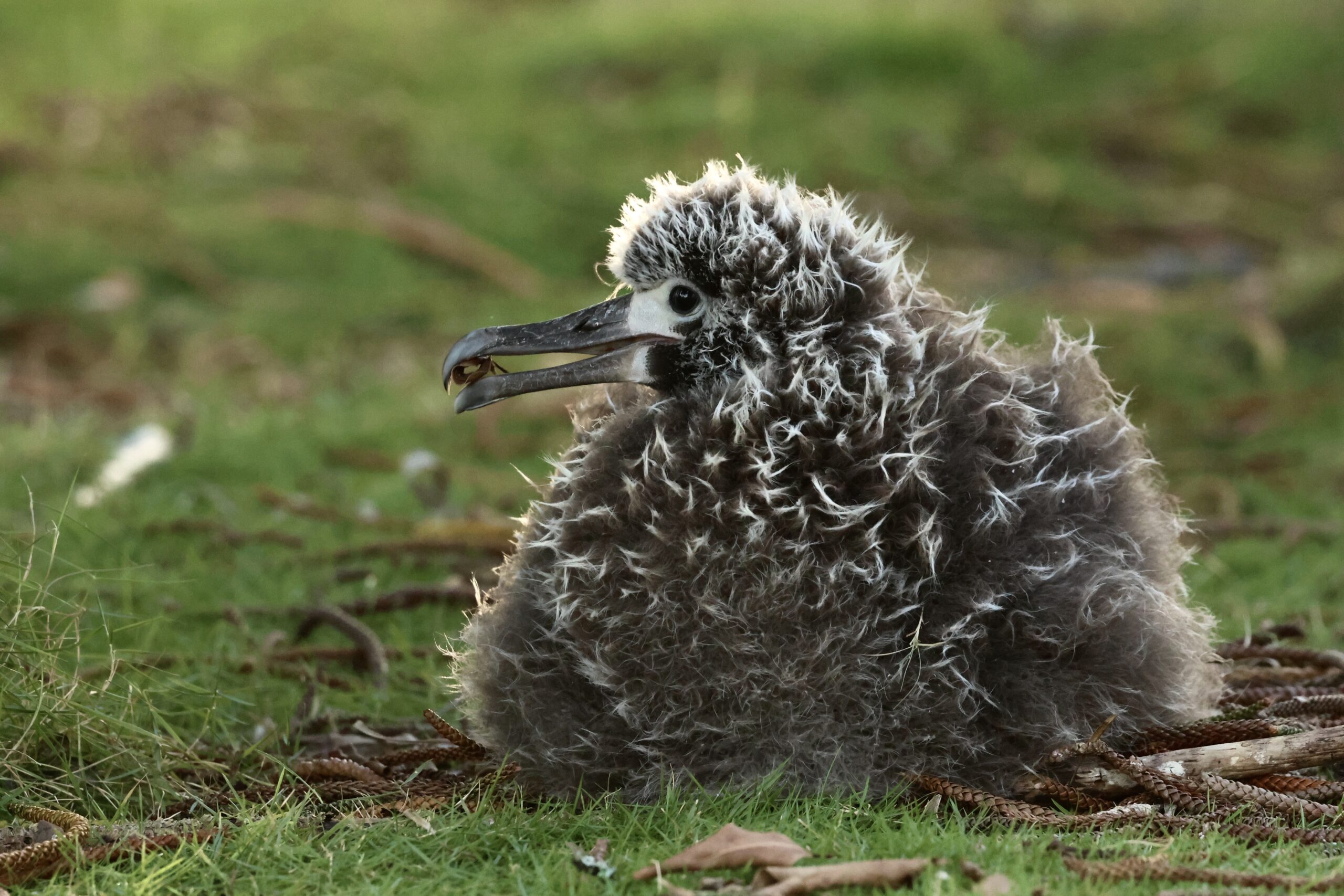
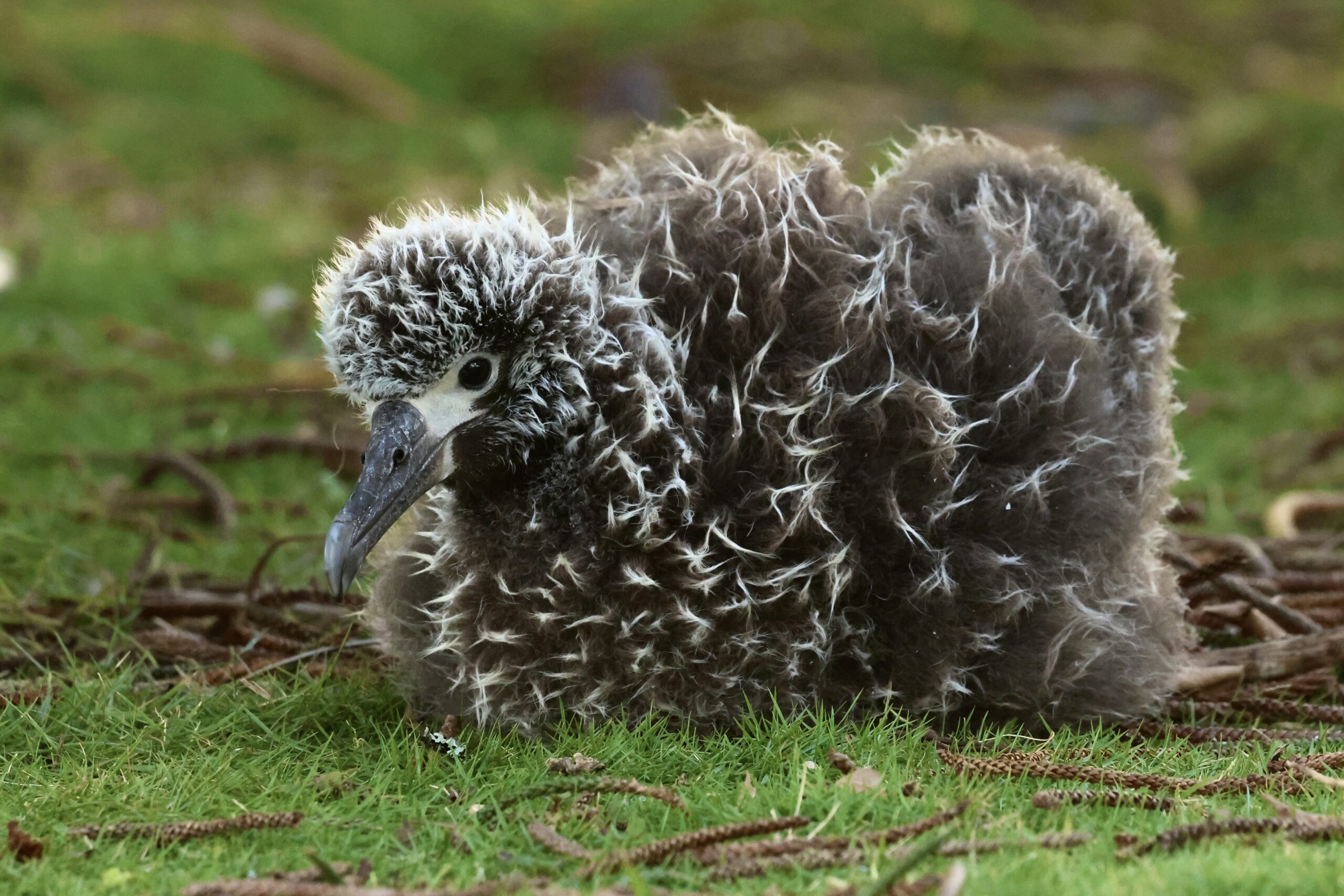
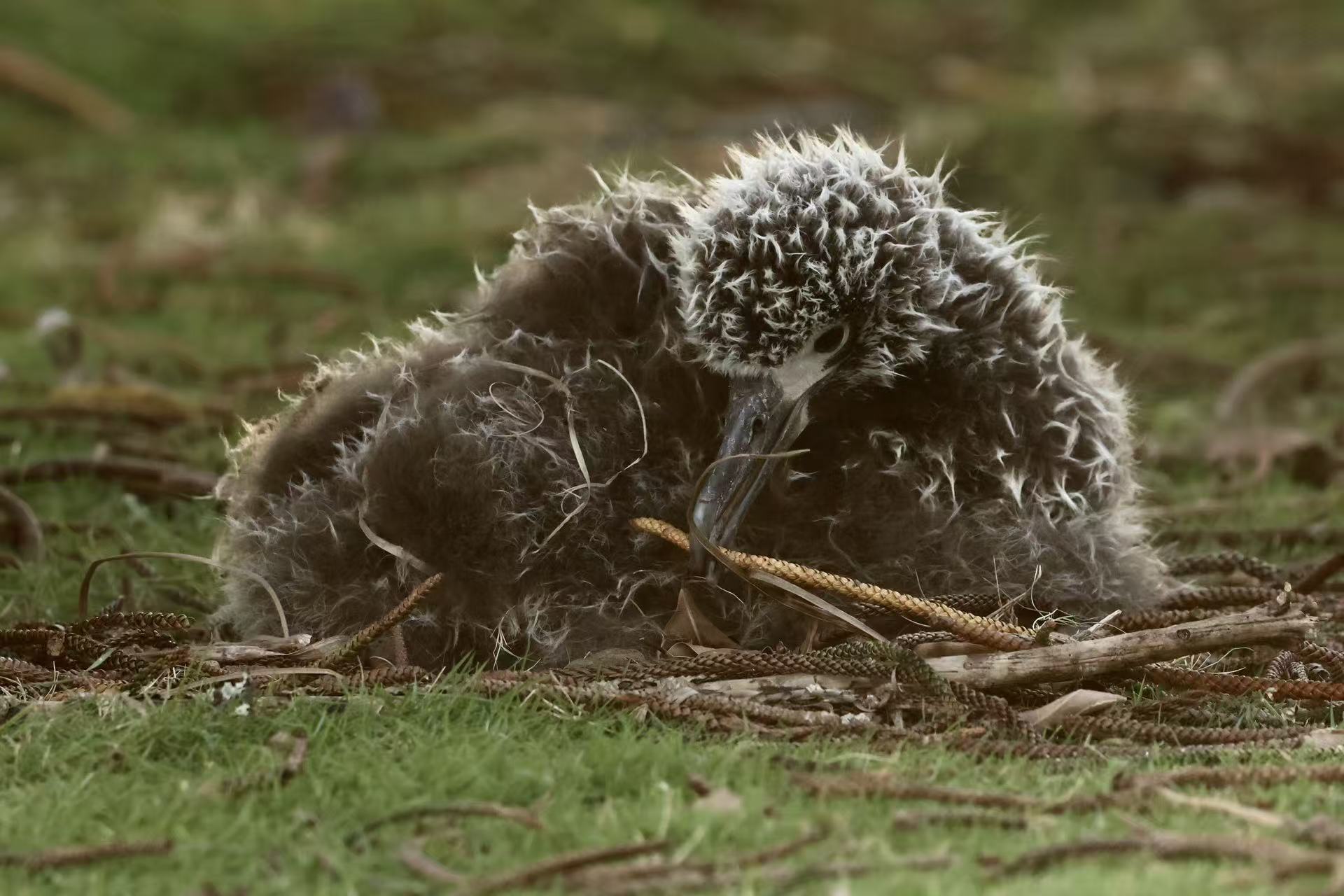
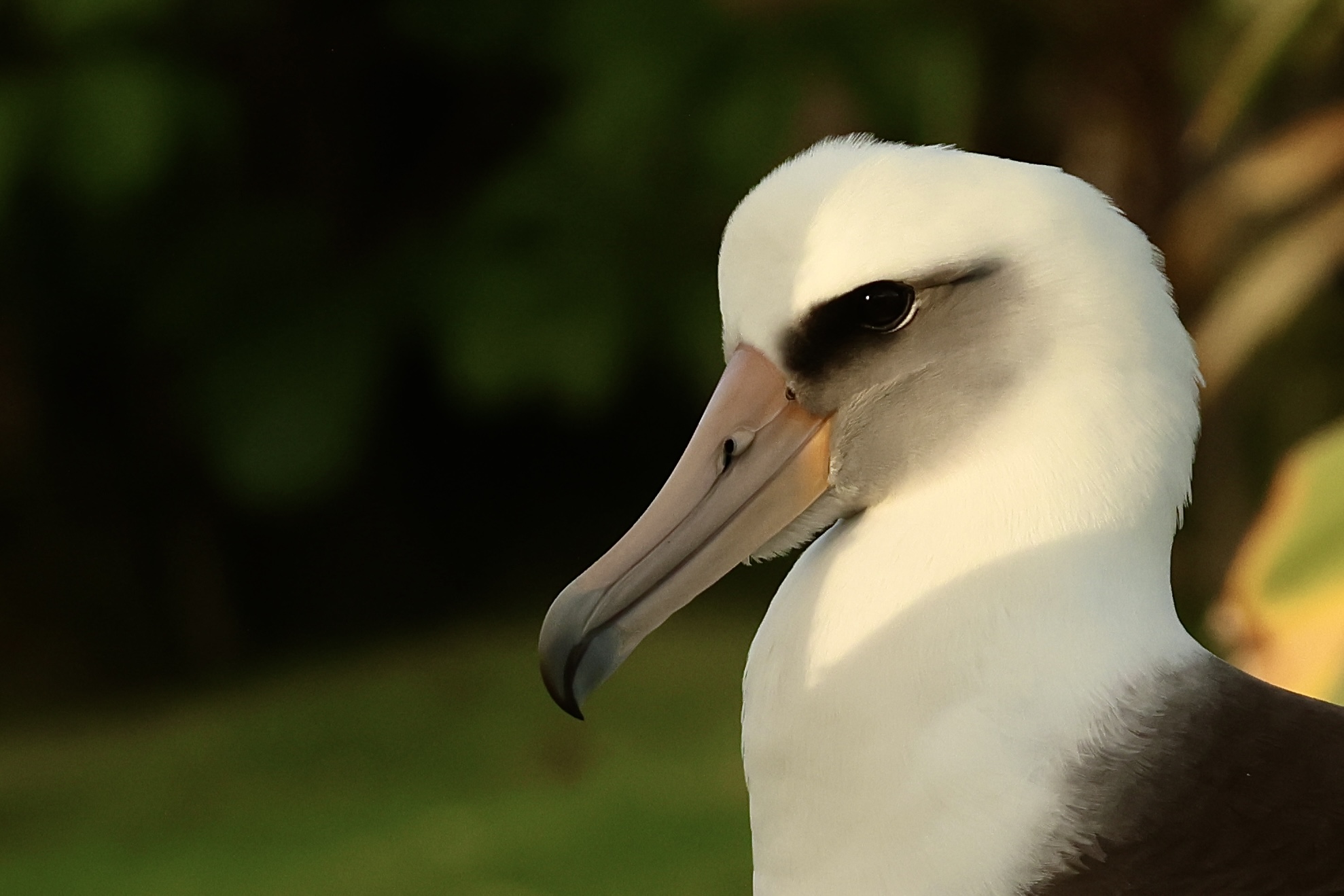
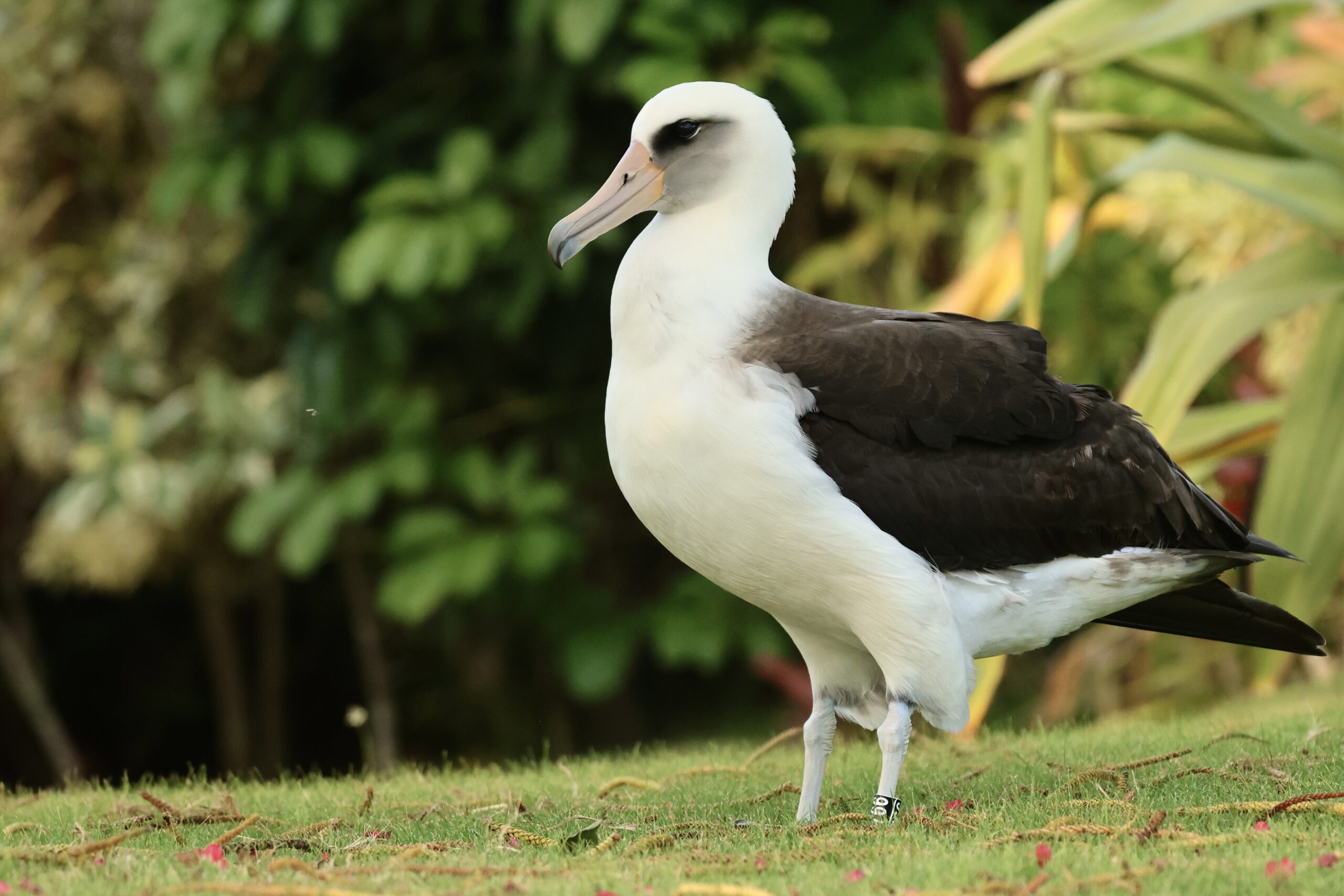
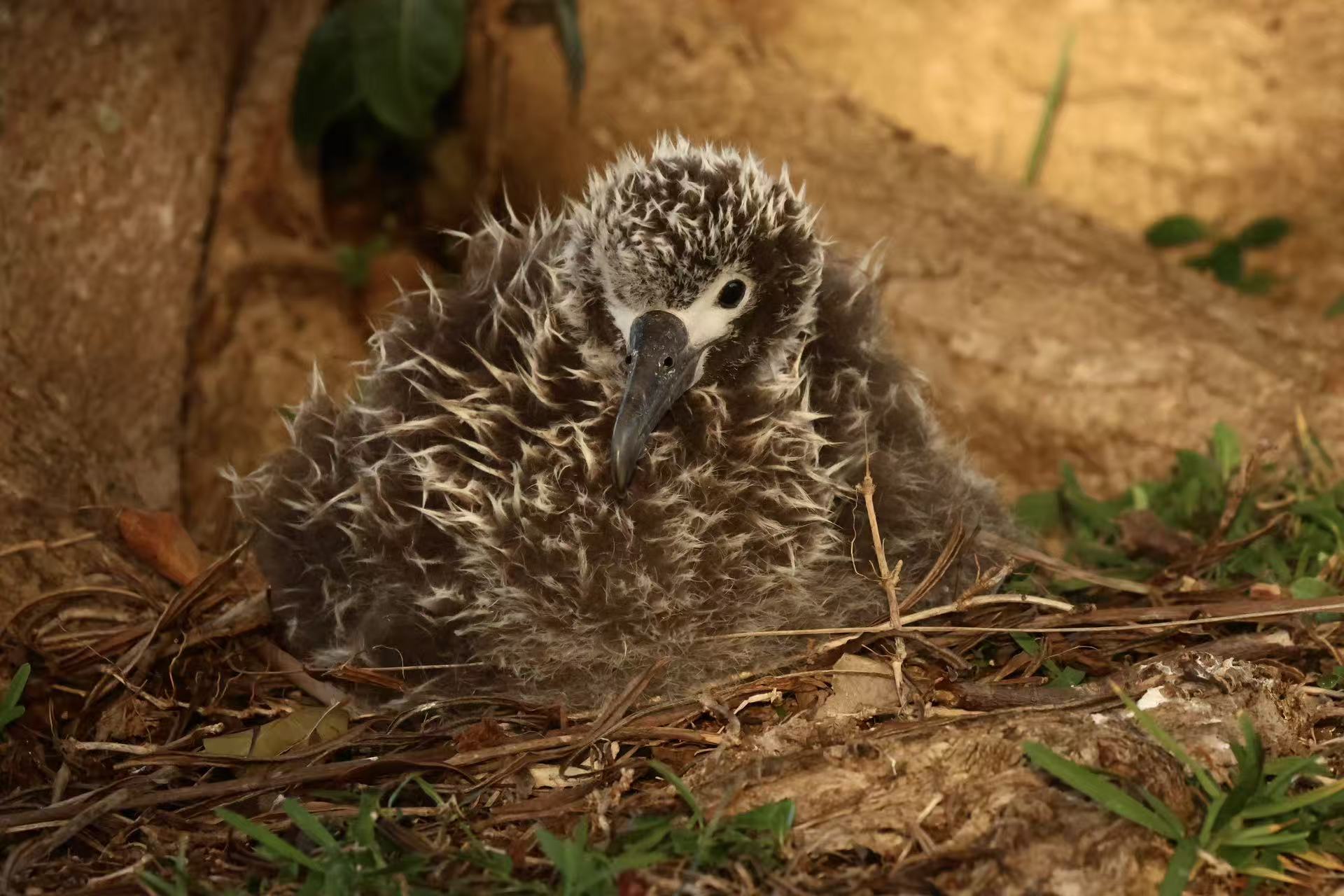
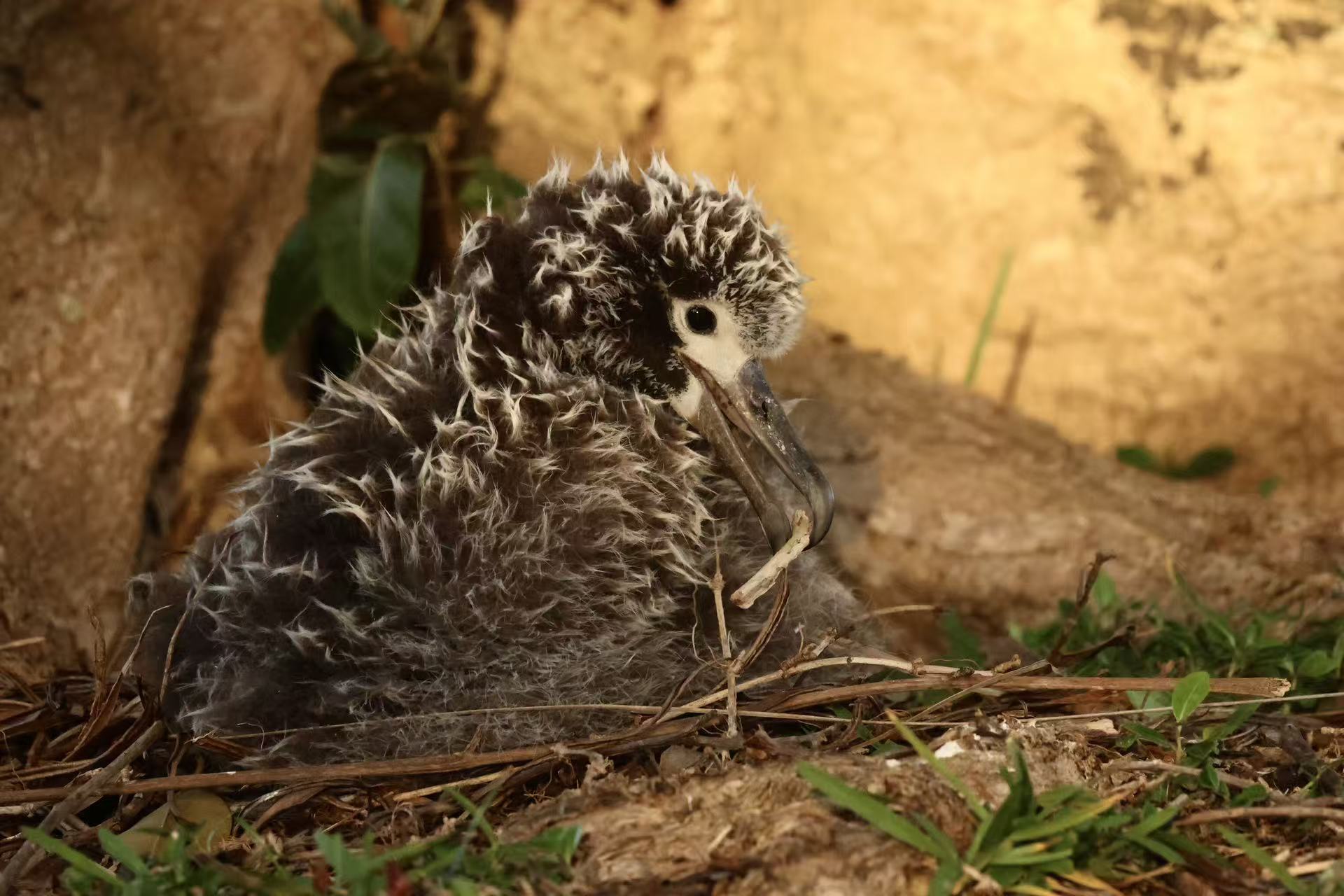
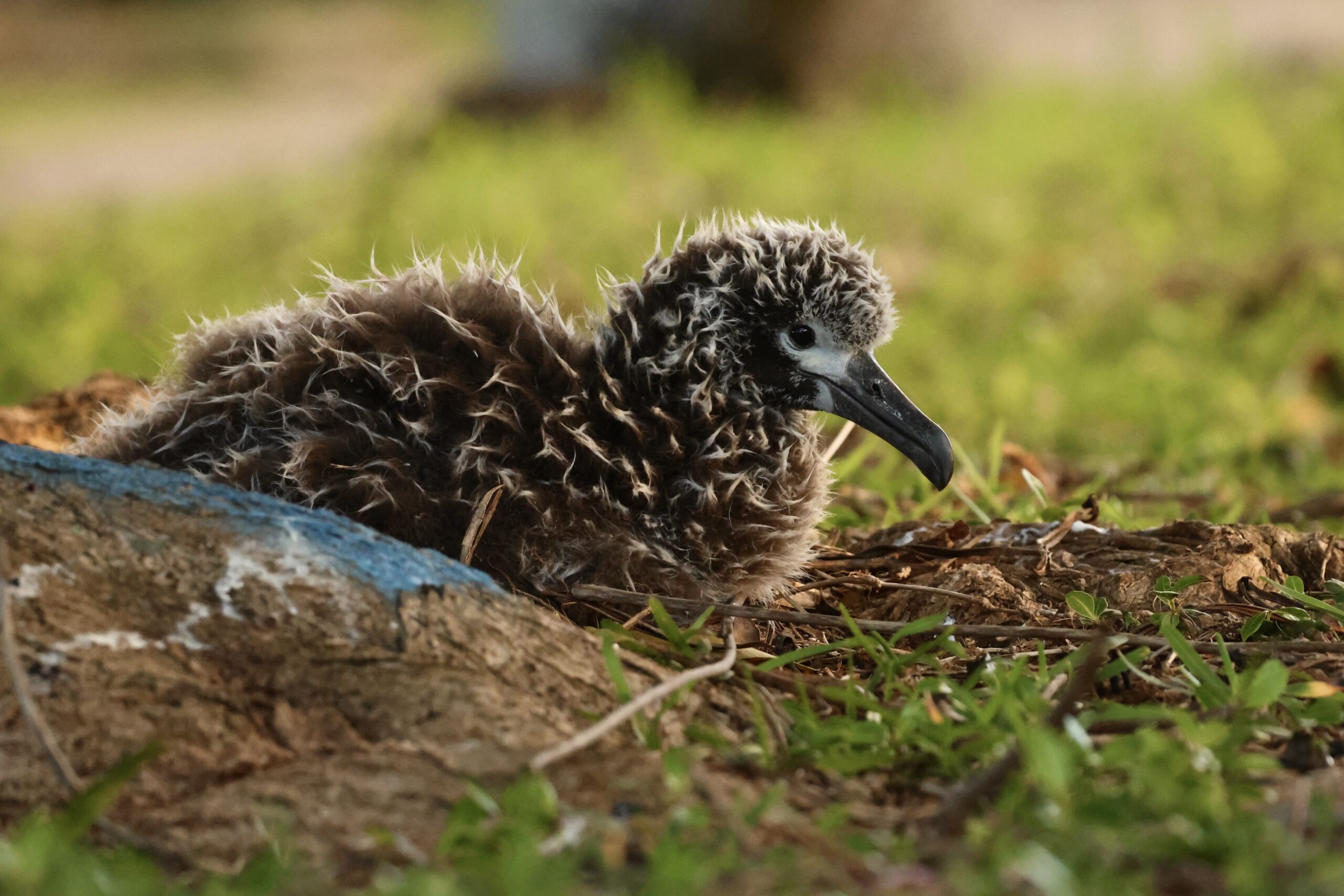
Leaving the mountains, we got to the north shore with still some time left for more birding. We walked around the world famous Princeville Neighborhood where Laysan Albatross nests in the people’s front and backyard. There, we saw lots of fussy Laysan Albatrosses nestlings that were building the nest themselves as they were bored waiting for their parents to return with fish. Several pairs that did not breed this year were also wandering around, doing courtship displays.
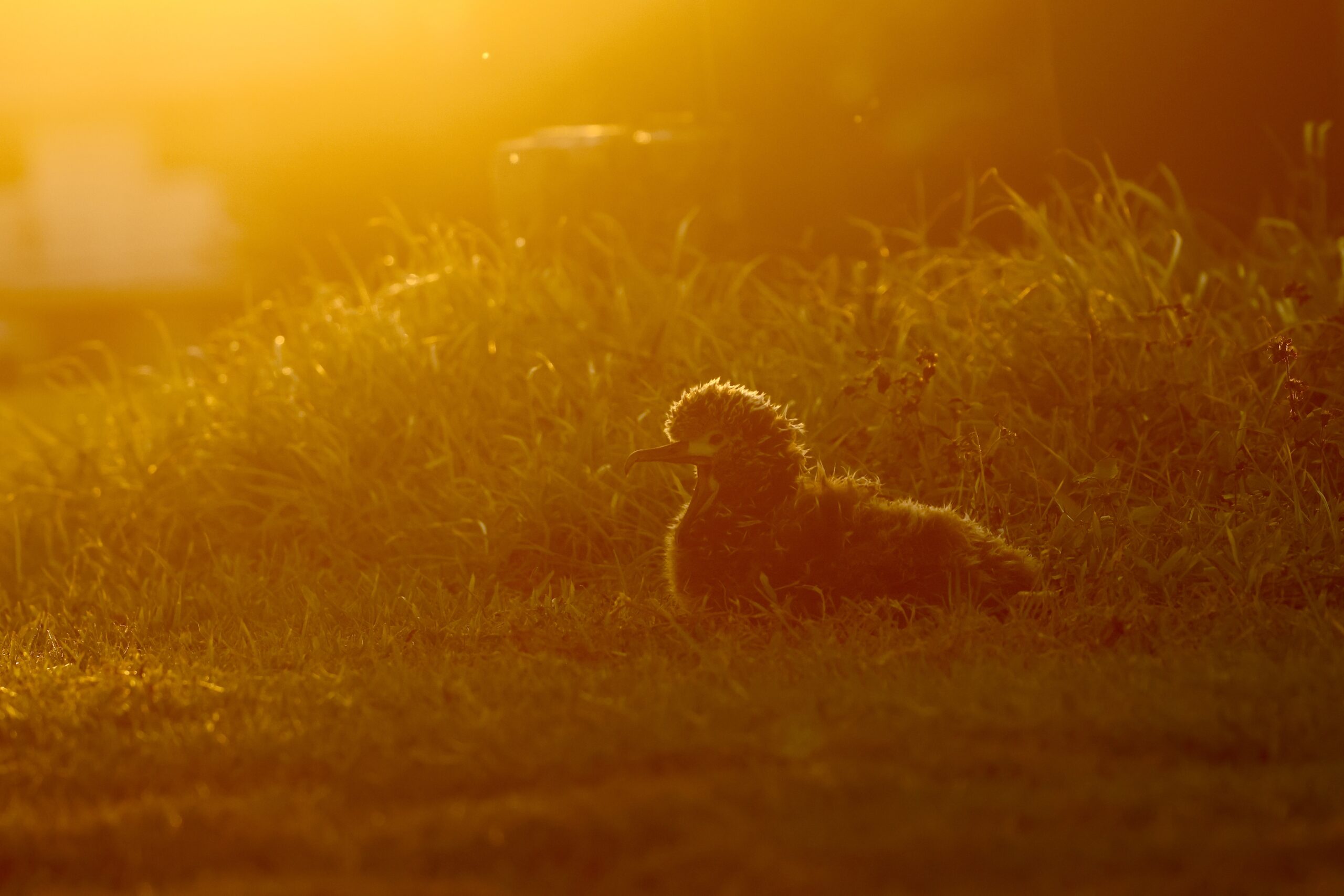
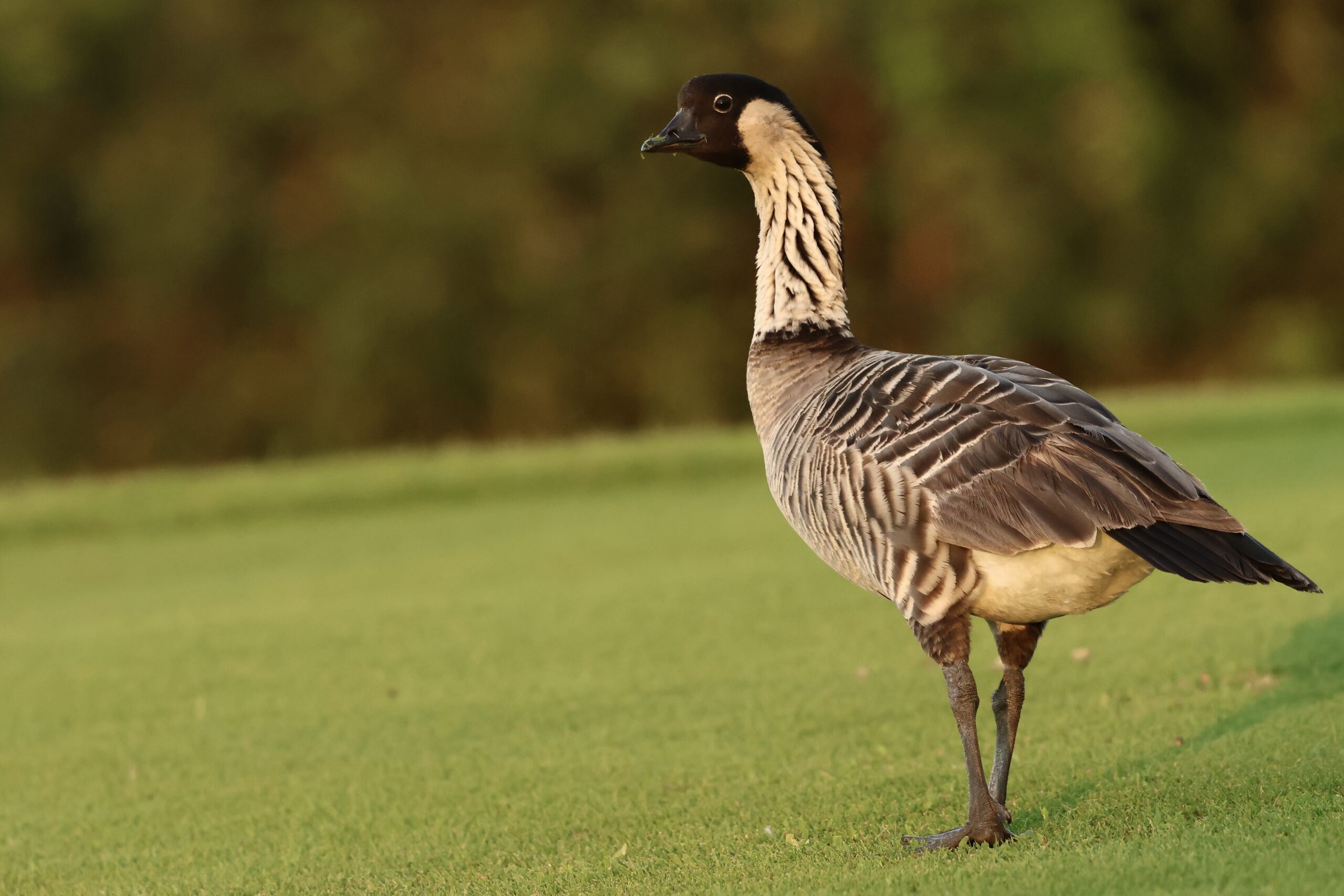
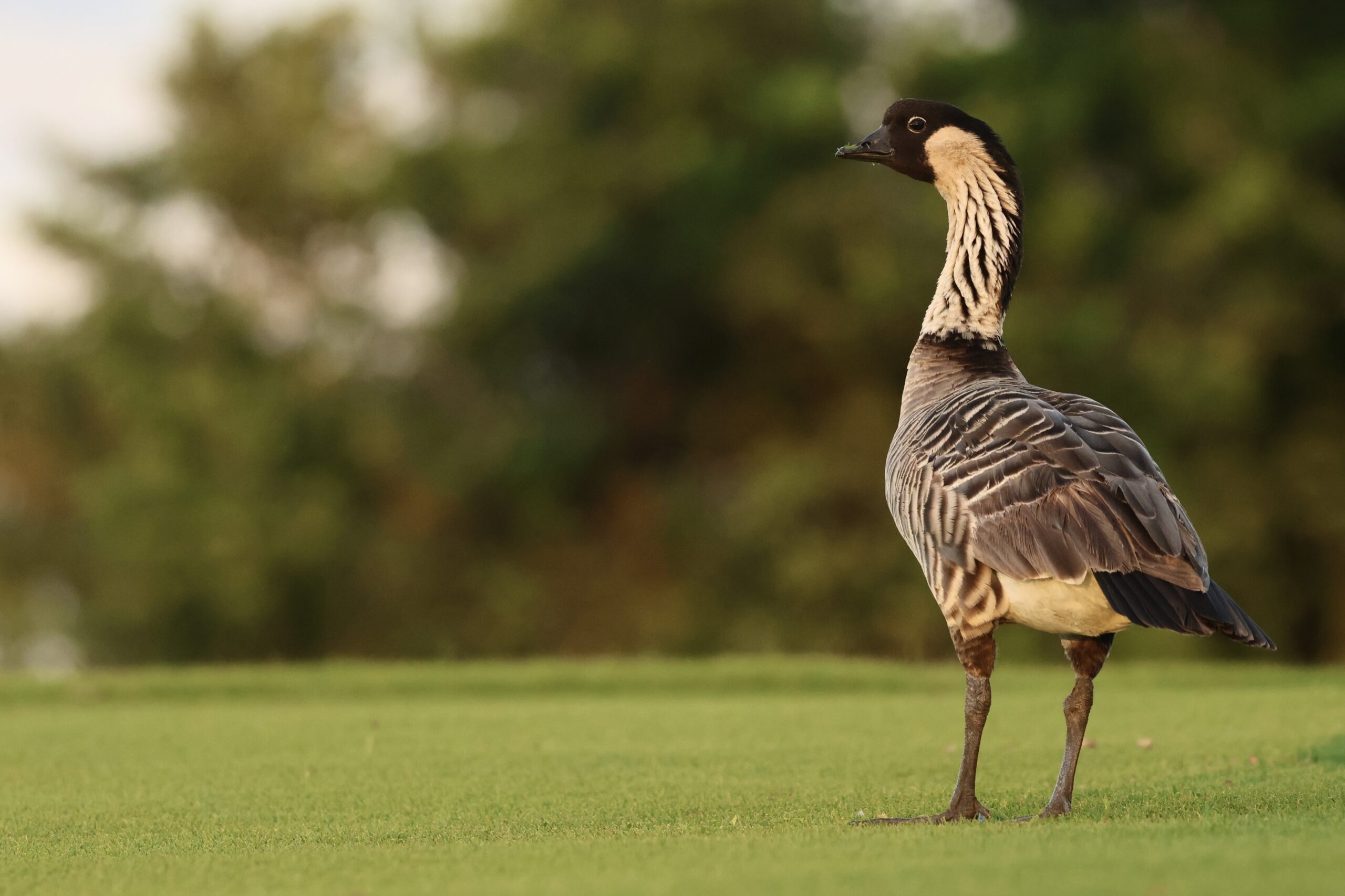
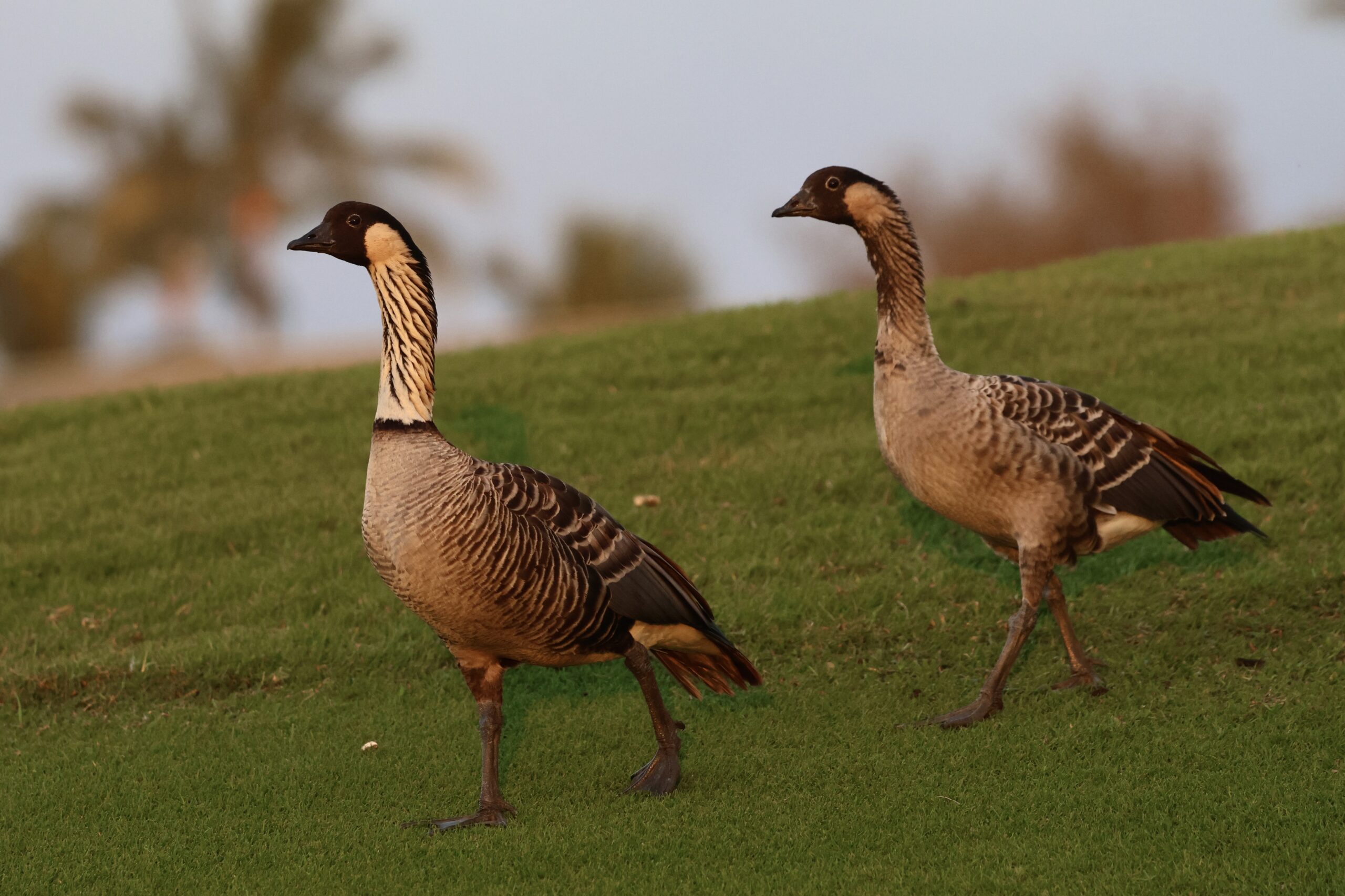
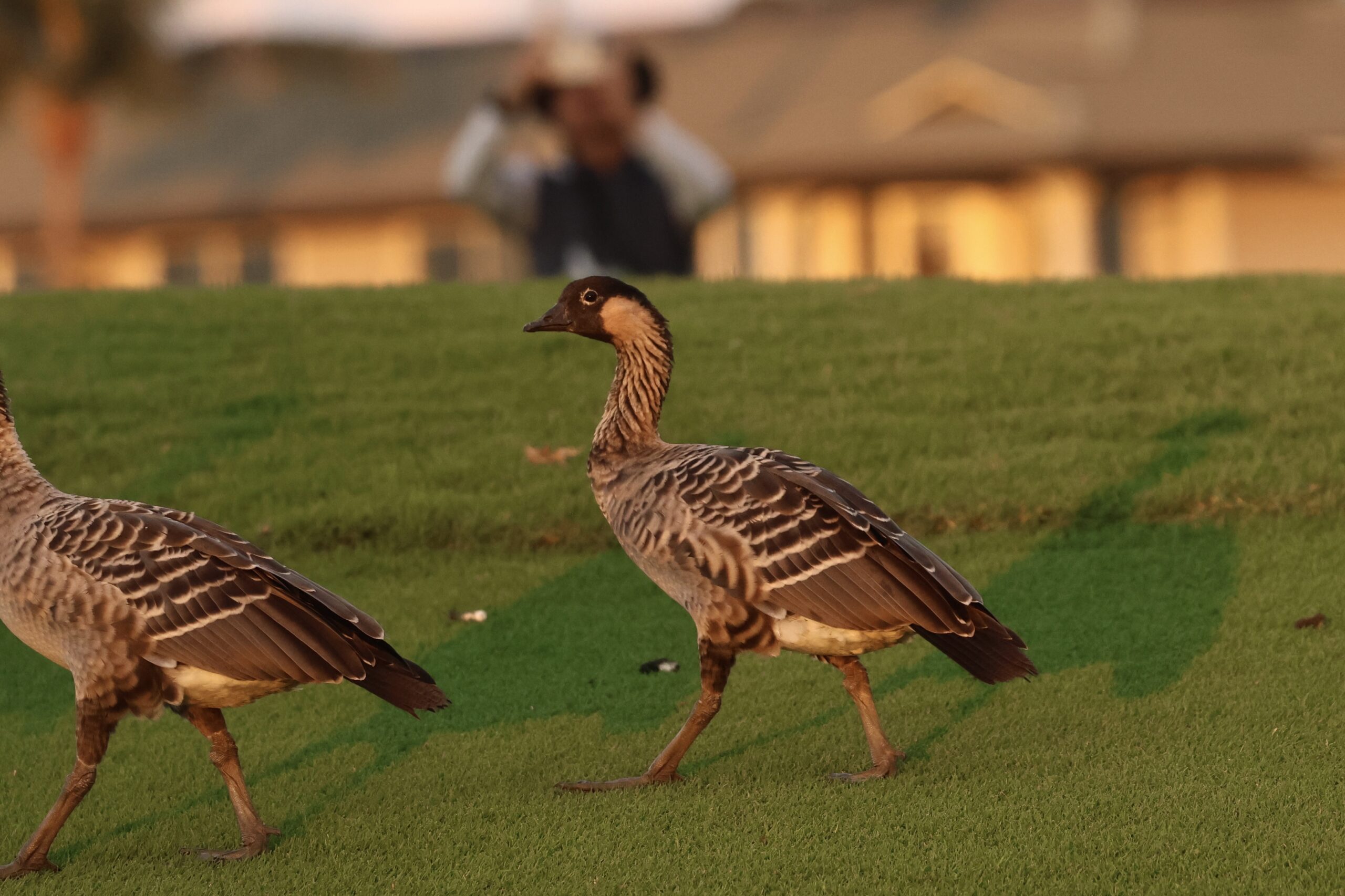
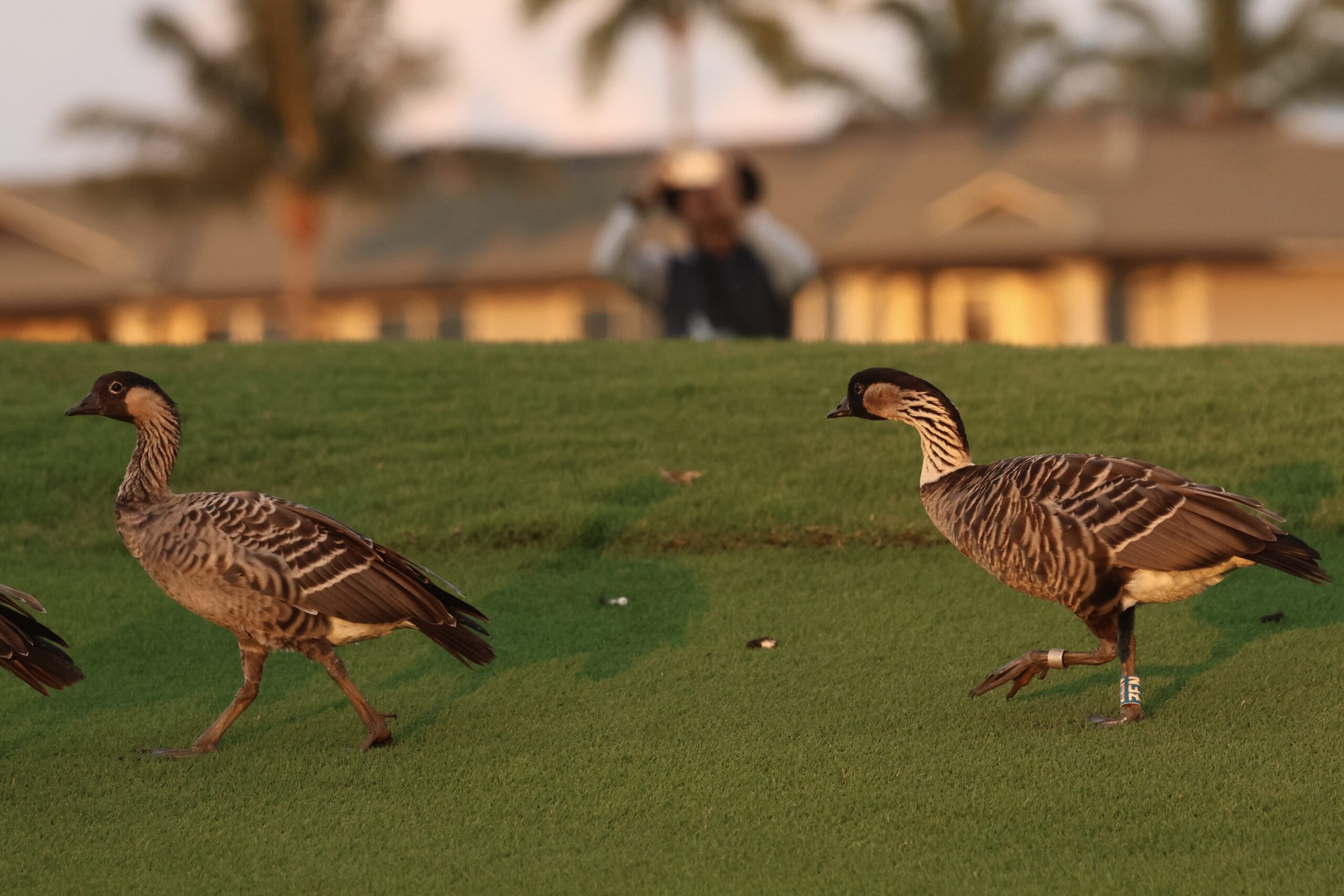
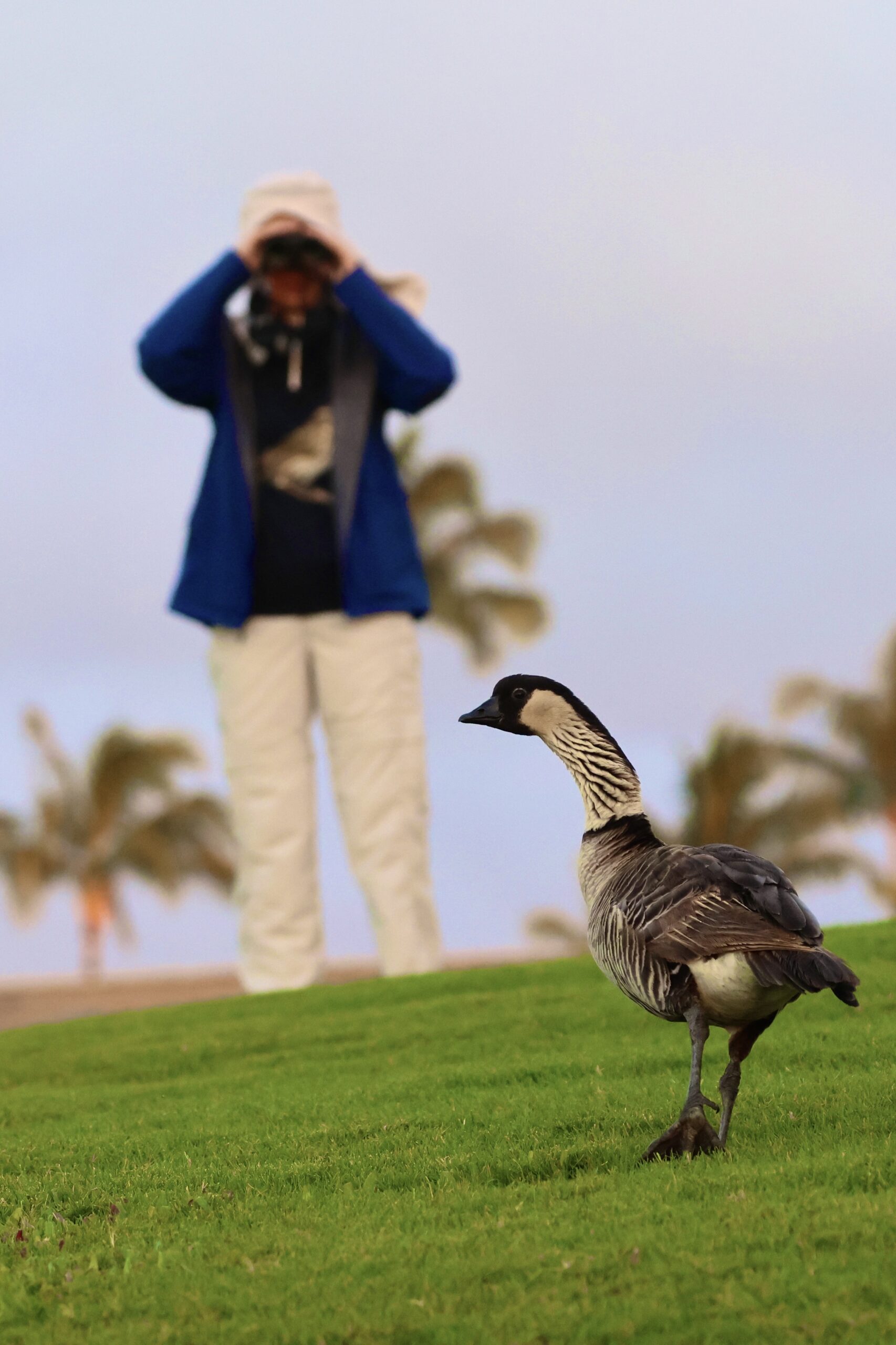
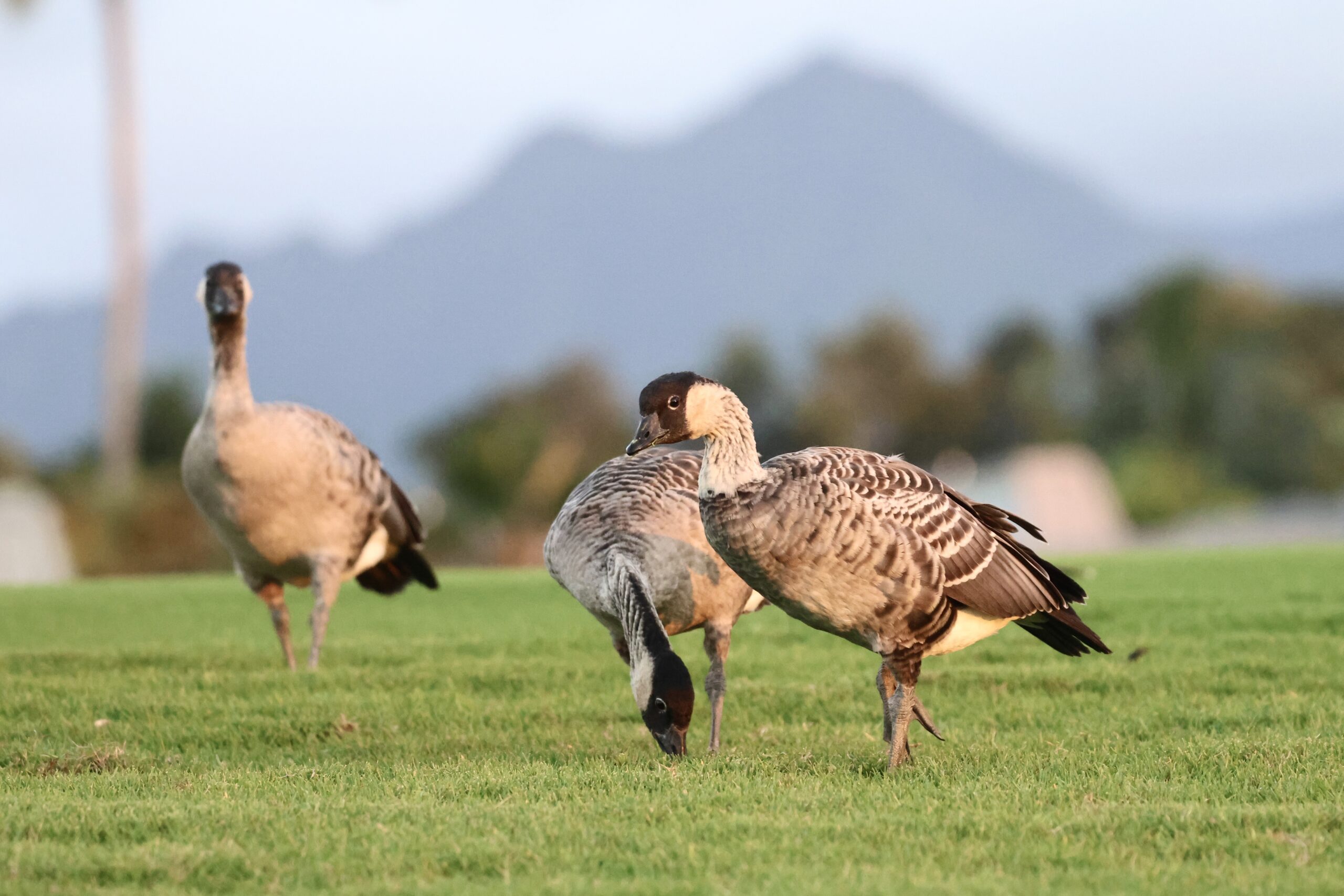
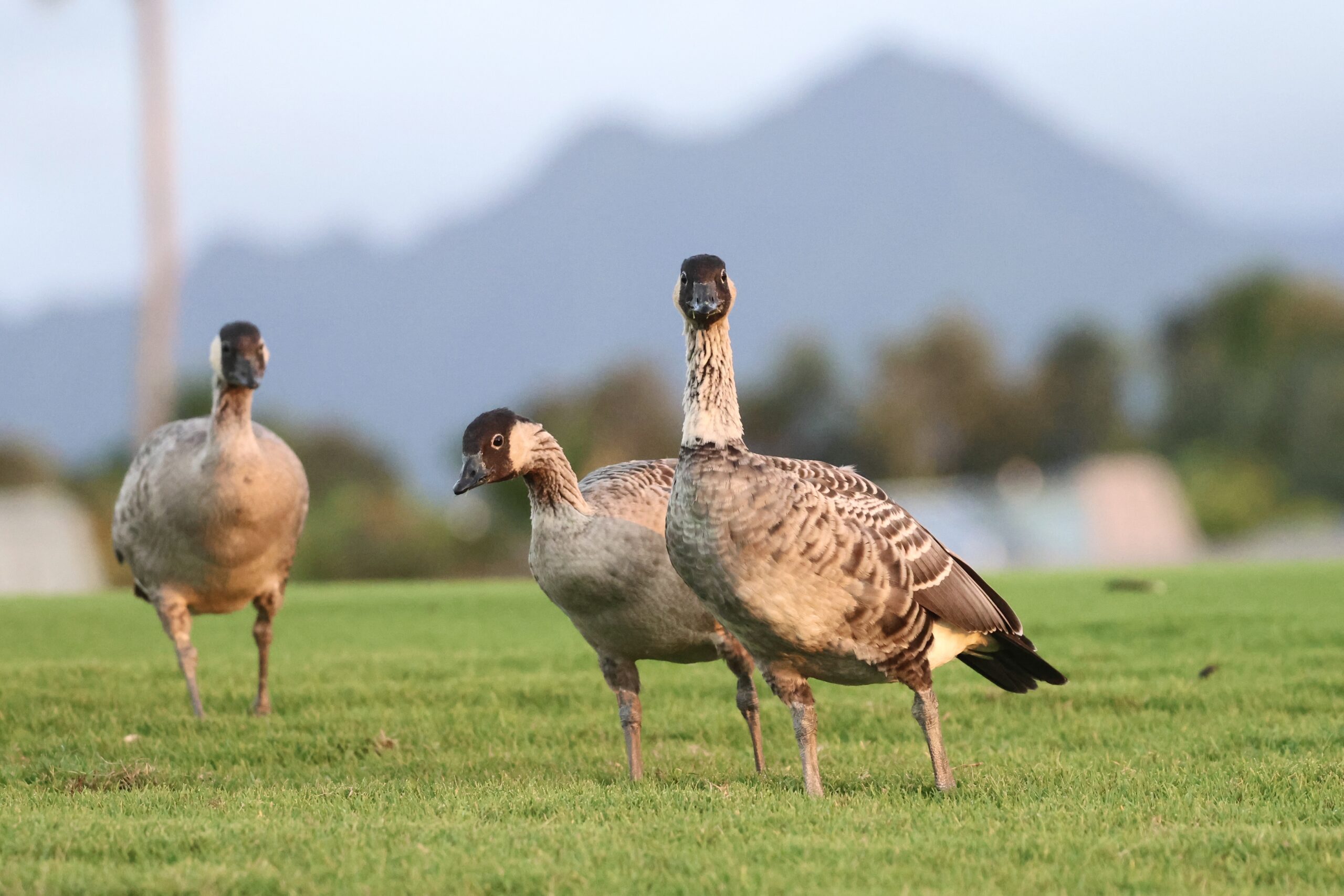
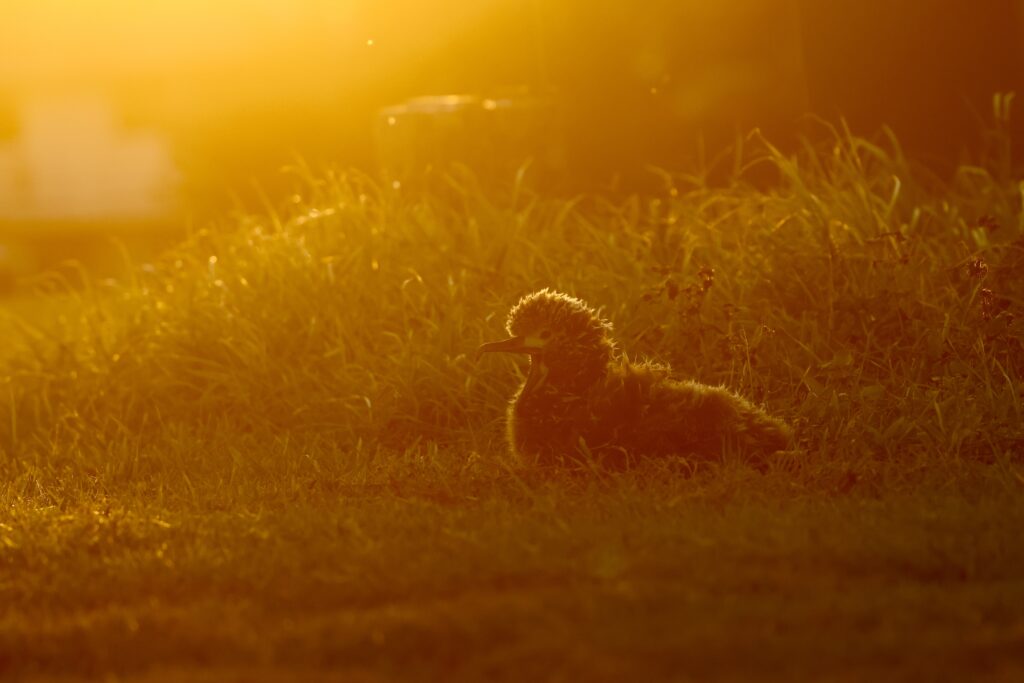
As the sun had not set yet, we drove to the golf course near our hotel to photograph Hawaiian Geese (Nēnē) in the golden hour. Nēnē covers the golf course, as if their previous near extinction is nothing. As we walked around, we even saw a sleeping Laysan Albatrosses chick, which my parents thought was dead and approached. Being spooked, the chick woke up, giving my parents quite a scare, let out a yawn, and went back to sleep again.
As the sky darkens, we walked back to our hotel, ready for our next day at Kīlauea Point National Wildlife Refuge.
eBird checklists:
- Kōkeʻe State Park–Puʻu O Kila Lookout (with ʻAnianiau recording!)
- Pu’u Hinahina Lookout
- Princeville Neighborhood (General)
- Princeville Makai Golf Course