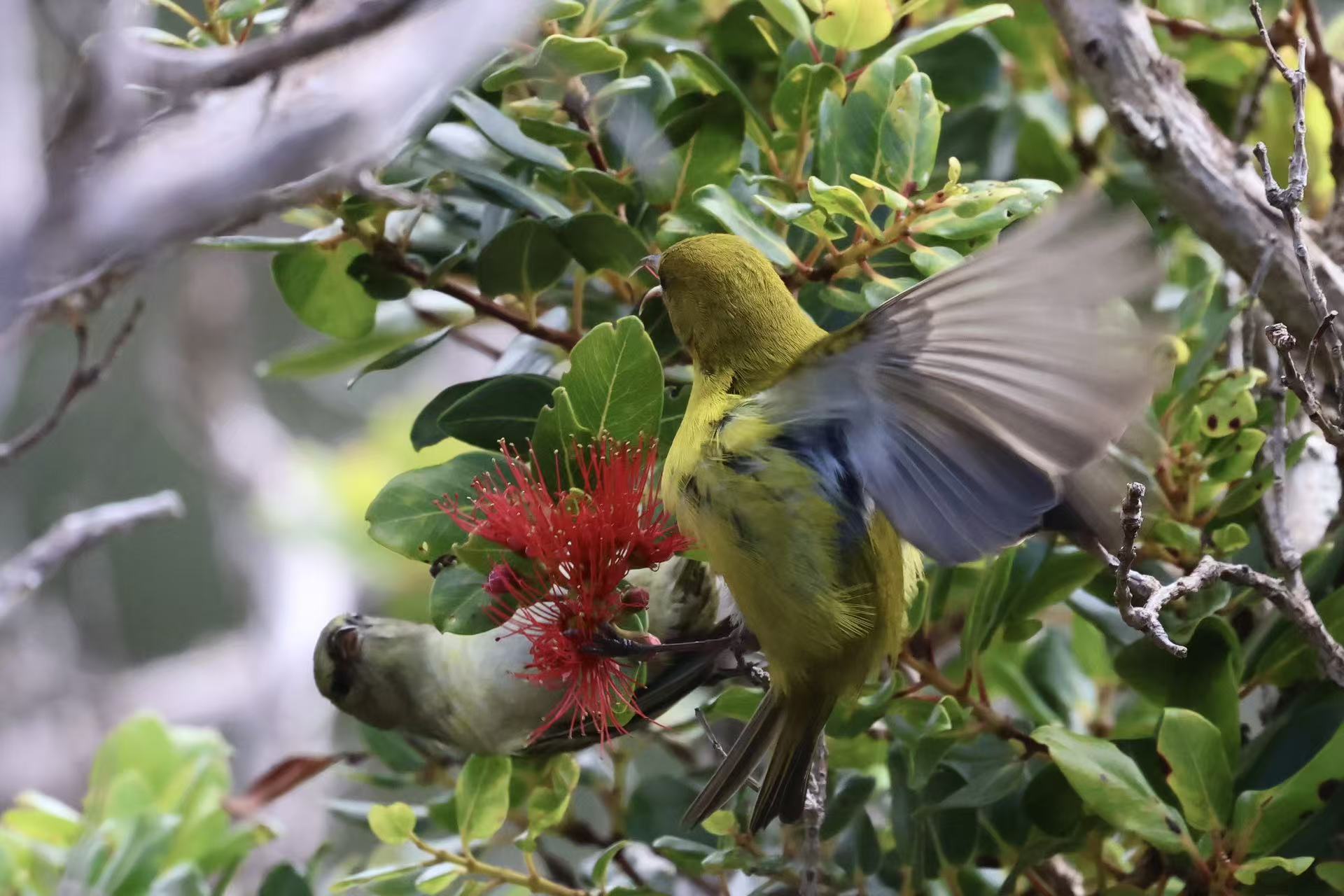
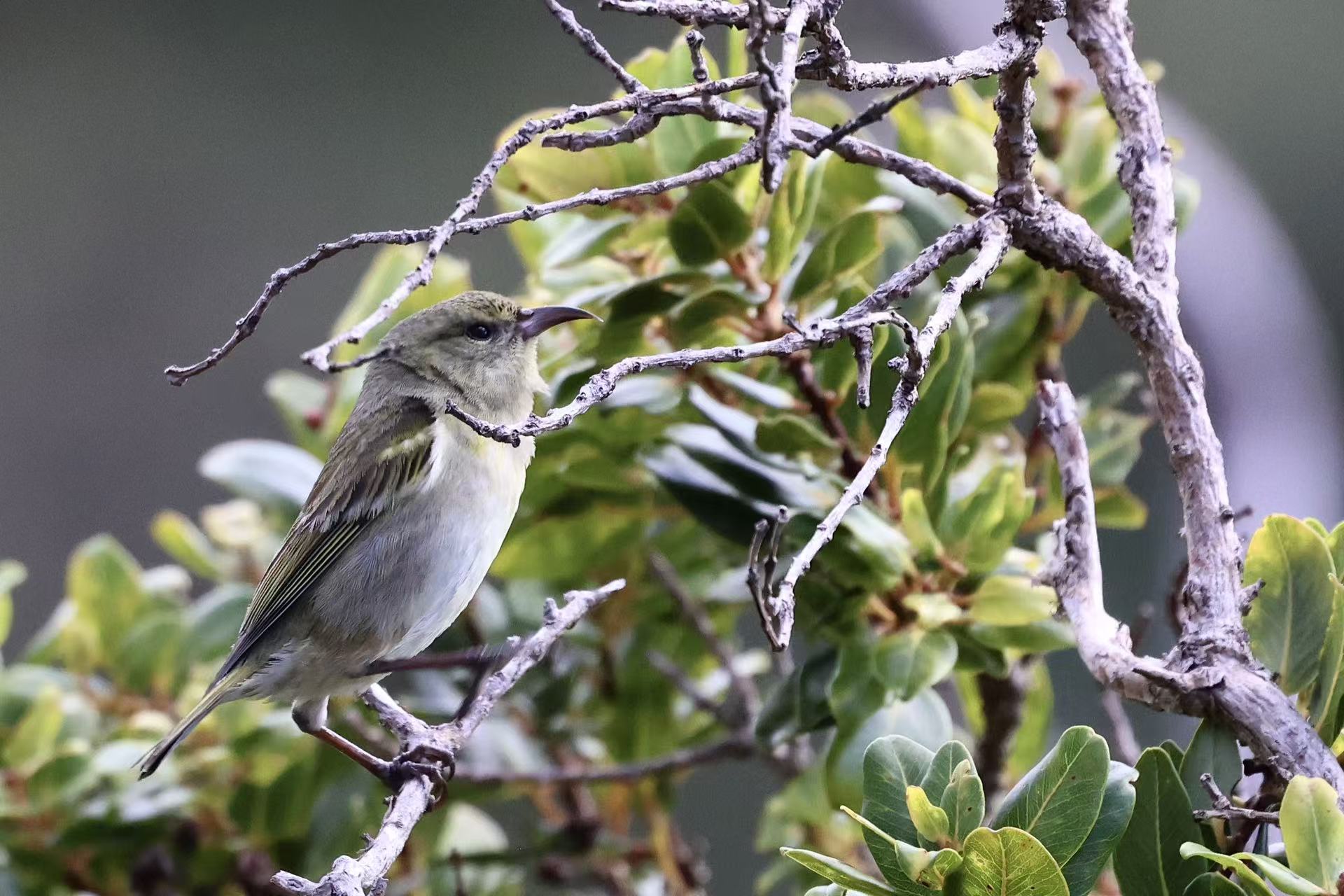
After a great start on day one, we headed into day two. On this grueling day, we finally experienced what truly definesThe Extinction Capital of the World.
Early in the morning we headed again into ʻAiea Loop Trail at Keaīwa Heiau State Park. This time, we were completely focused on the Oahu ʻElepaio, the rarest non-extinct forest bird on the island of Oahu. We searched extensively at all the spots where someone have seen an Oahu ʻElepaio recently, but we yielded nothing. We did not hear a single call note and no Oahu ʻElepaio appeared.
The clock was ticking and we had to head back. We needed to catch a plane to our next island: the island of Hawaiʻi.
Upon arrival, we immediately experienced the single floor open air airport of Kona and the amazing lava flow from 1801. We quickly rented our car and decided to go to R12 road of Mauna Kea Forest Reserve. We no longer needed to engage in our original plan of searching for Bristle-tighted Curlew (see previous post).
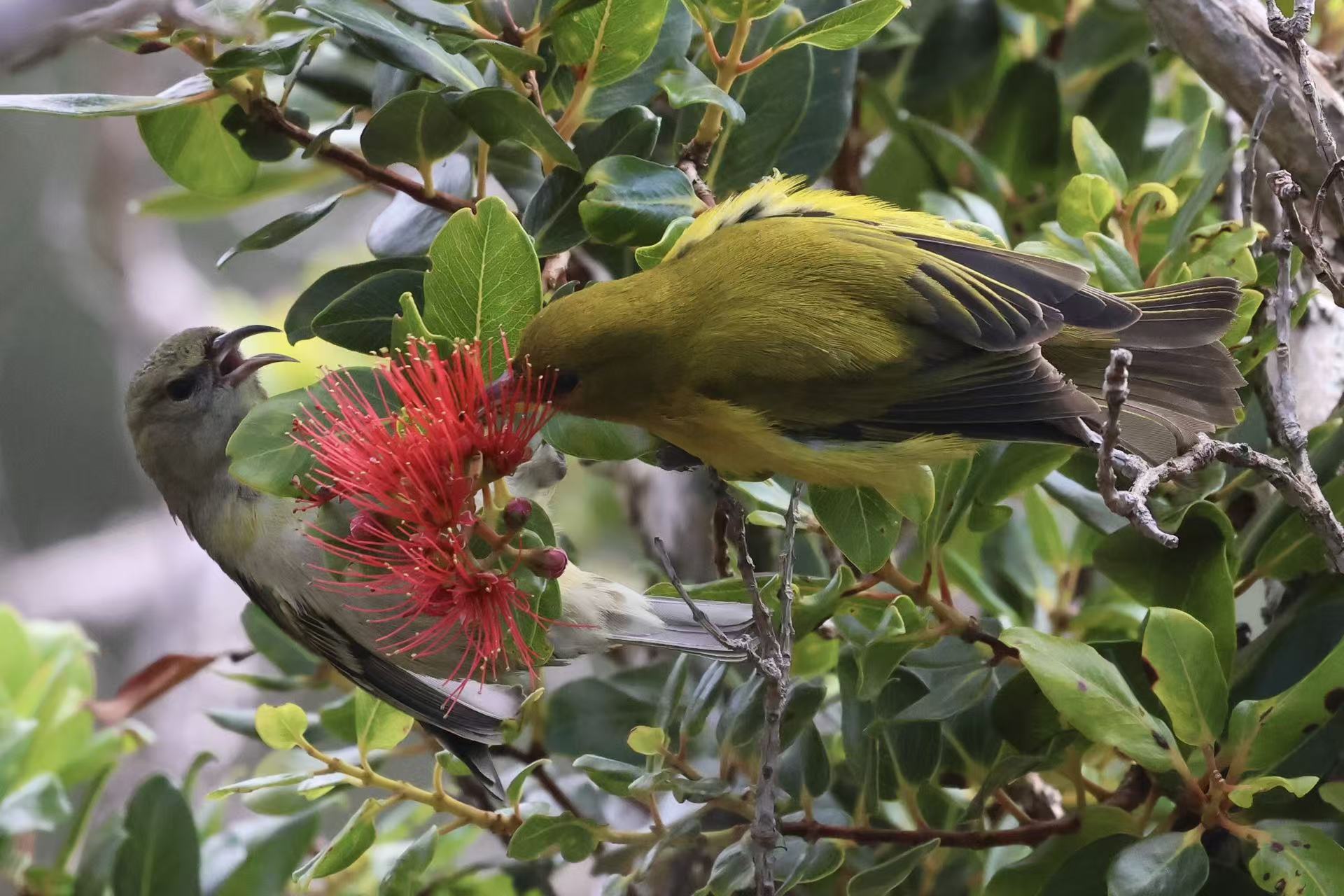
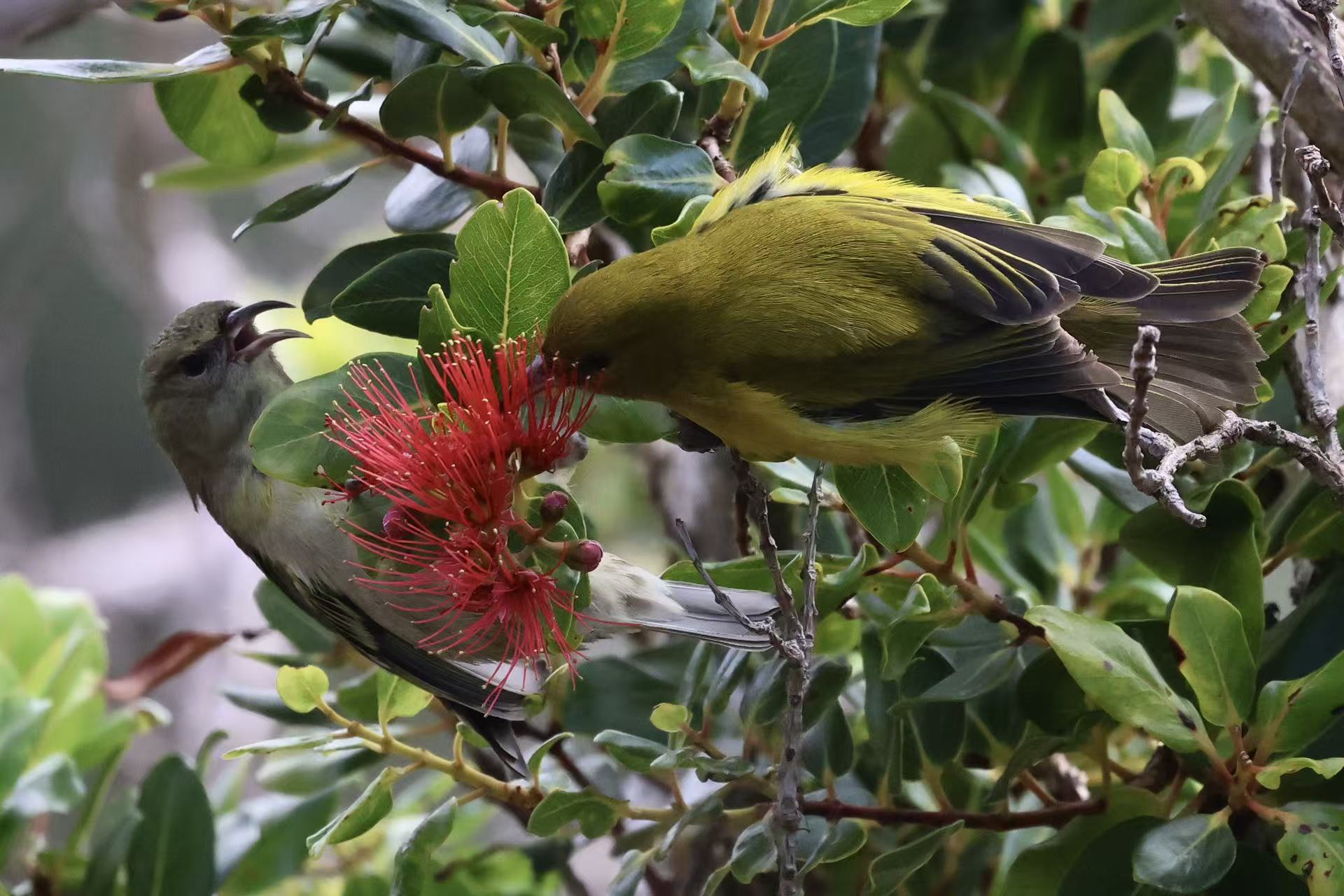
The small patch of Māmane forest between two pūʻu (volcanic hills) near the R12 road of Mauna Kea Forest Reserve is now the only place where birders can still reliably find Palilas. The Palilas have evolve for millions of years to be able to consume the toxic seeds and flowers of the māmane bush. But now the lush māmane forest that they rely exclusively on have decreased dramatically. They have become one of the most endangered bird of the world, numbering fewer than 600 individuals. They now survive solely within a patch of forest covering less than 10 square miles on the western flank of Mauna Kea, and face a high probability of extinction in the near future. Their historical range once extended all the way to the coast, covering the entire western slop of the Mauna Kea. However, following western colonization’s arrival on the island, the cattle, sheep, and pigs introduced by settlers nearly obliterated all suitable habitat within the birds’ distribution area. Furthermore, invasive plants made it difficult for native flora to take root, while mosquitoes transmitted avian malaria to the unprepared Hawaiian honeycreepers. Those western colonists’ activities swiped out all the Parrot-billed Honeycreepers on the main Hawaii islands except the Palila, which is now also going to face extinction within a few decades.
The drive up to R12 was no easy task, even with a Jeep Wrangler Rubicon with off-road tires. The 6-mile dirt road before you can enter R12 took us almost one hour to complete. We even almost got stuck in several occasions.
Upon arriving at the R12 intersection of the “main road”, we got off our car to hike our way around the pūʻu. The lush māmane “forest” on the other side of that pūʻu is the only remaining place on Earth where birders can still reliably observe the Palila.
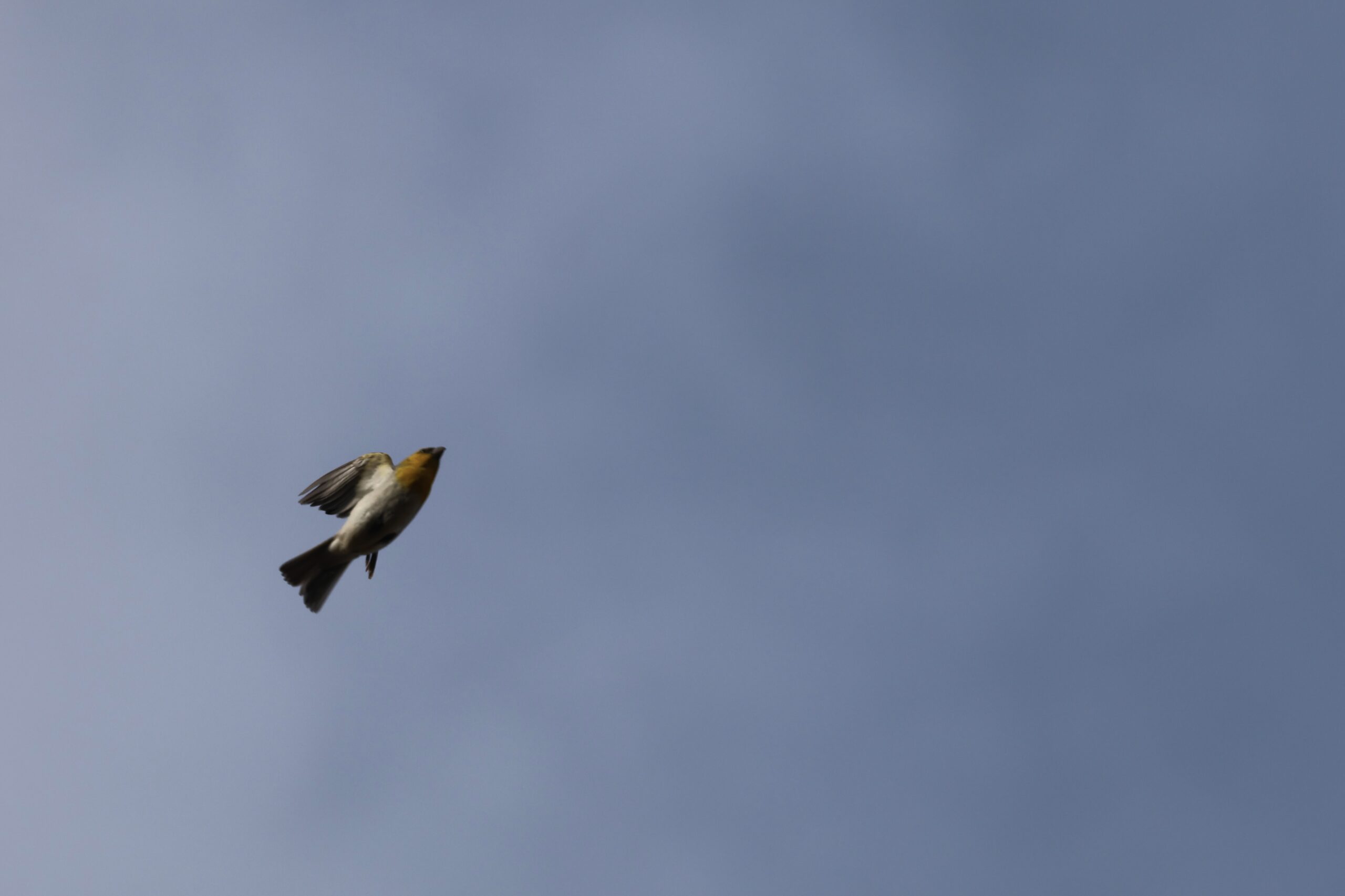
Already hearing faint whistle from the Palilas, we slowly approached the forest. As soon as we got close, a Palila swooped down to a māmane right in front of us. As we approached, we soon realized that there were two more Palilas in that bush. We carefully climbed near that bush, and suddenly, a Palila flew over calling loudly. The Palila triggering the Palilas in the bush to came to the top of the bush. That was truly spectacular! I quickly raised my camera and captured the moment. I was just in time as they soon followed the fourth bird and flew away into the “vast” māmane forest further down the road.
With another Palila singing in the distance, we slowly walked back to our car. Such a lovely, yet so endangered bird! It is devastating to know that such a beautiful creature might be gone forever in the soon future.
The way back down the mountain was an even harder mission. Not long after we started to go down, we got stuck in a trench on the road. Fortunately, our vehicle was four-wheel drive, which enabled us to get it unstuck. The rest of the drive was more or less quite a lot smoother. With the relaxing sun setting in front of us, we got back on the paved-road.
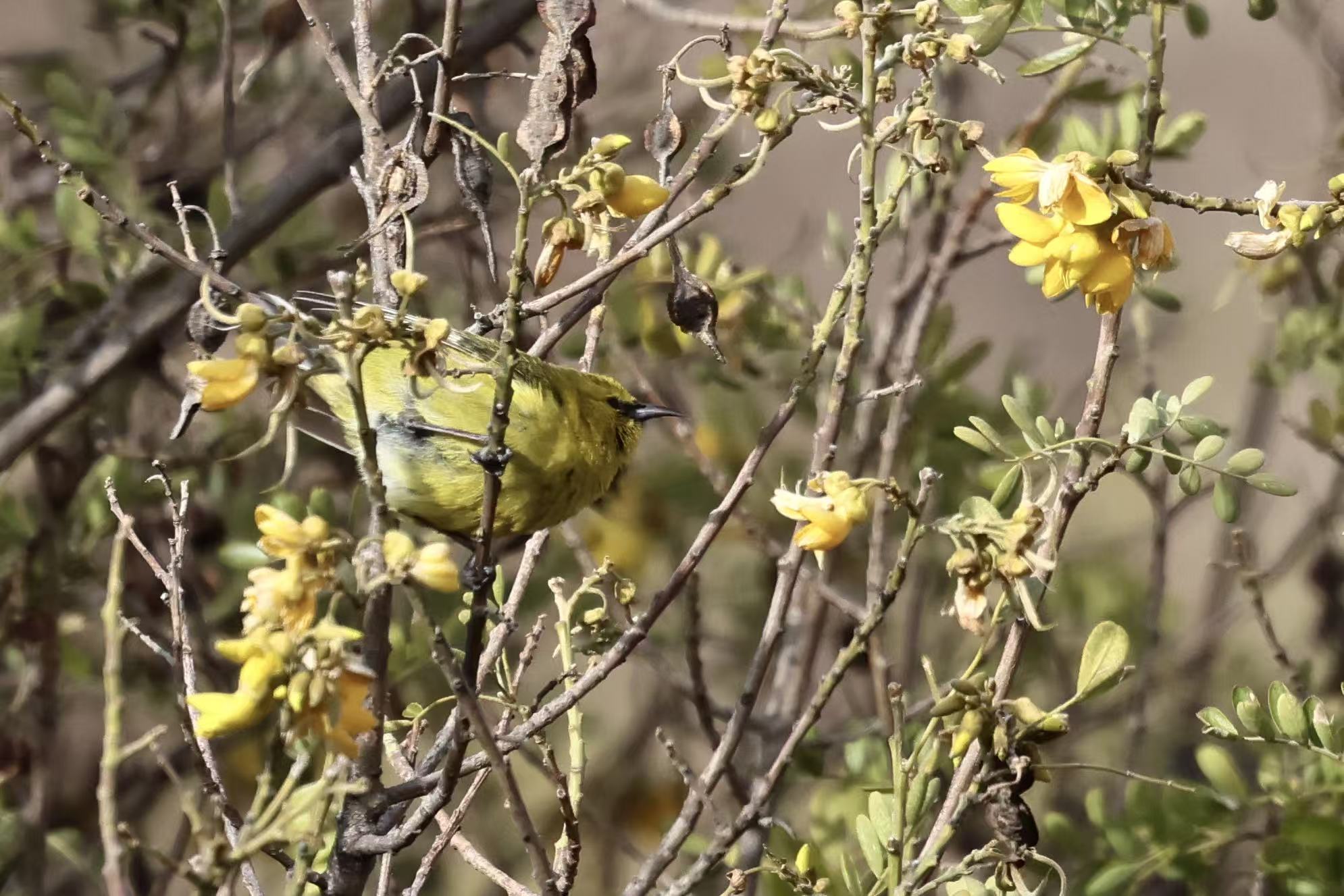
Although, we got only two lifers today (Palila, Hawaii Amakihi), getting the Palila have become one of the most memorable moment of the trip.
eBird checklists: