
This article has been published in the Wrentit newsletter of the Pasadena Audubon Society. Click to download the whole page.
The Legend of the California Condors
Words and photos by Shuxing (Miles) Wang
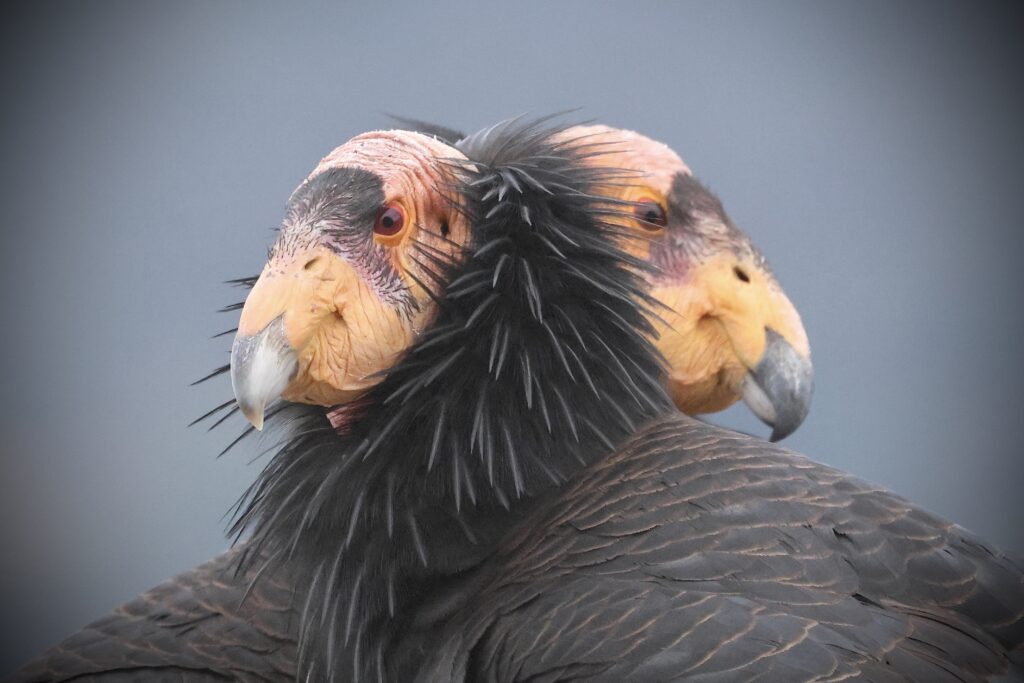
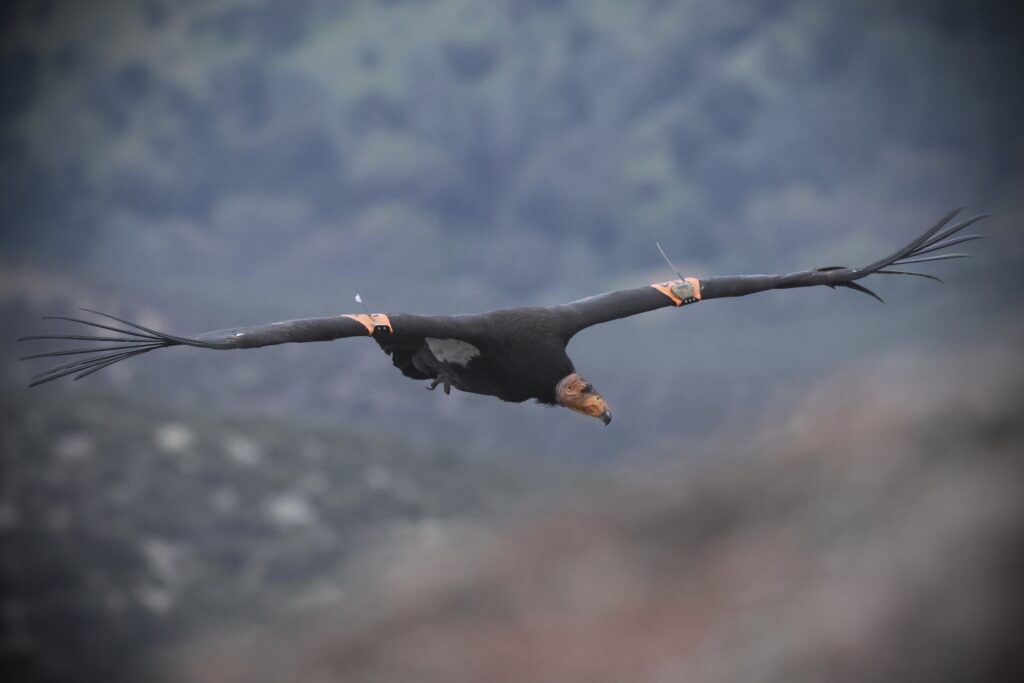
A huge shadow soars over the magnificent Bitter Creek canyon. It circles slowly above me, quietly searching the hills below. It is a California Condor.
As I watched the condor circle above me, I thought back to the previous spring. On the second day of our road trip to Monterey during last spring break, we visited Pinnacles National Park, famous for its California Condors.
The first condor of the day was seen right away at the visitor center, but we still hiked up the Condor Gulch Trail to get better views. We met a birder who had just seen a few condors and gave us the location of his sighting. Soon, we got to the place he mentioned and saw quite a few condors, and thought it was the best viewing point.
When it was time to head back, we decided to go another way. Soon, we found ourselves getting closer to the peaks, and some people were climbing it. We thought they were just climbing it for fun, but soon we found out that it was not optional at all: We must do it too. It was the famous “steep and narrow section.”
After climbing this difficult section, we reached a high flat point, and a California Condor was sitting just a few feet in front of us, and a perfectly full-grown adult was sitting in a cave right underneath us. More condors kept hovering over us. The condors in the sky above kept changing frequently. Unbelievable! It was such a fantastic place to go and definitely worth the climb.
After watching them for a long time, the California Condors over our heads dropped down and so many other condors started to join them—like all the California Condors of the world were coming to meet us. Then they started to perch all around us, and suddenly we were surrounded by condors, not knowing where to look and where to point our camera.
They fought to get to higher rocks and trees, and they were gliding so close to us that we could even feel their enormous bodies moving around. It was just breathtaking and so amazing! Finally, condors had covered every single rock around us and even several trees. This was really one of the best birding experiences I’ve ever had. As we climbed downhill, we found that they were all roosting on some trees below where we had just been, hiding from the rain.
Seeing all those California Condors hopping and swooping, it is hard to imagine that they were once on the brink of extinction. By 1987, only 22 California Condors remained in the wild. They lived right at the sign at Bitter Creek National Wildlife Refuge, where I am standing now. The last wild birds were brought into captivity for an emergency breeding program.
From those 22 birds, the population slowly began to recover, though challenges remain, and they are now free-flying in several areas, including Central and Southern California, Northern Baja California, Arizona, Utah, and recently at Redwood National Park. As of 2022, there were 347 California Condors in the wild, according to the U.S. Fish and Wildlife Service.
Now, standing at Bitter Creek and thinking back to Pinnacles, it is hard to believe how all those California Condors around me have grown from a lone flock of just 22 birds to persisting in the canyon in front of me. Seeing them thriving in the wild makes the story of their recovery feel real to me, not just a story in books. It made me realize just how remarkable it is that they are still here.
All photos by Shuxing (Miles) Wang
View this article on the digital version of the Wrentit at https://www.pasadenaaudubon.org/newsletter/wrentit_2026_11.pdf
Special thanks to the Wrentit editor Renée Fabian for her thoughtful edits, which made this article more polished and fluent!