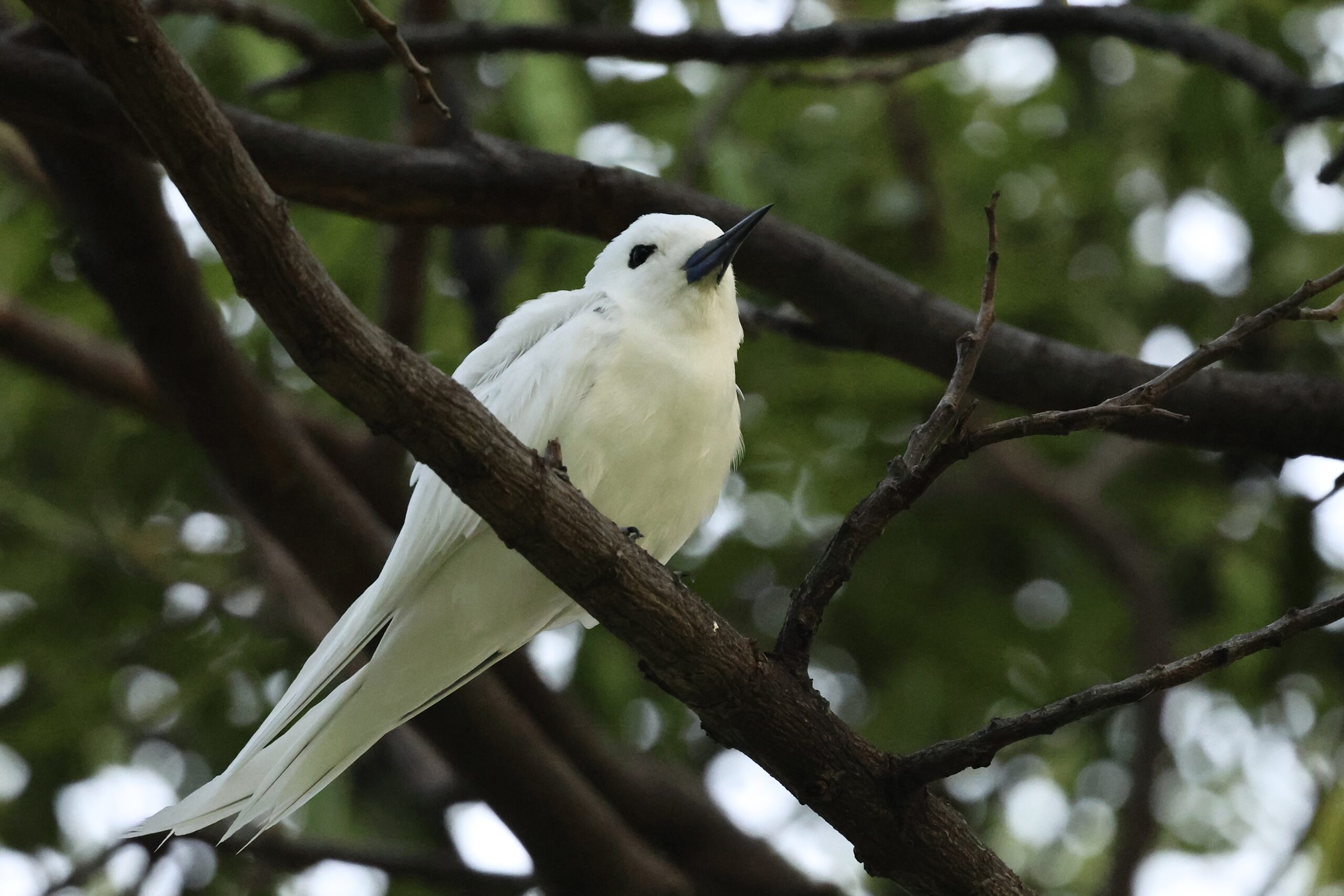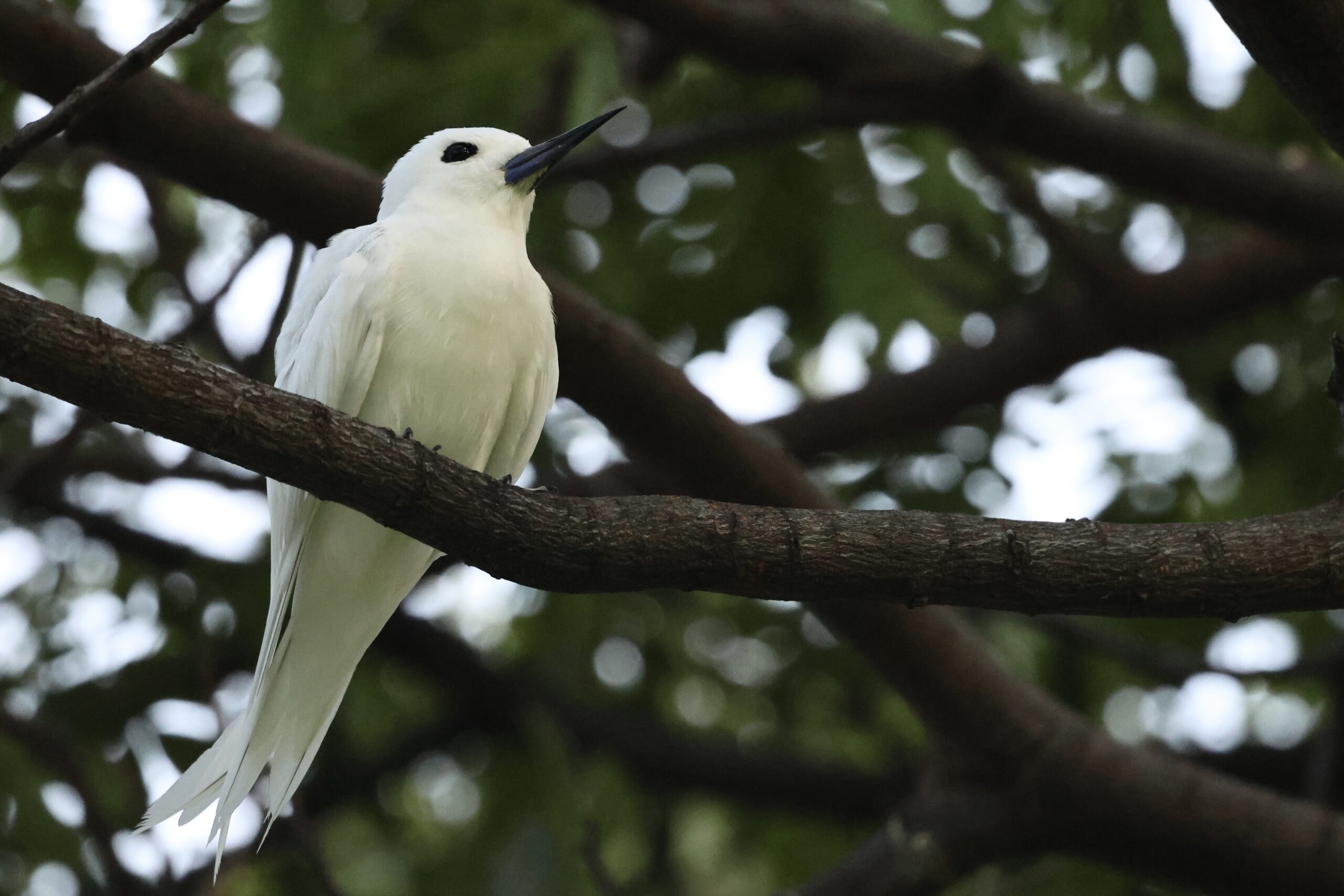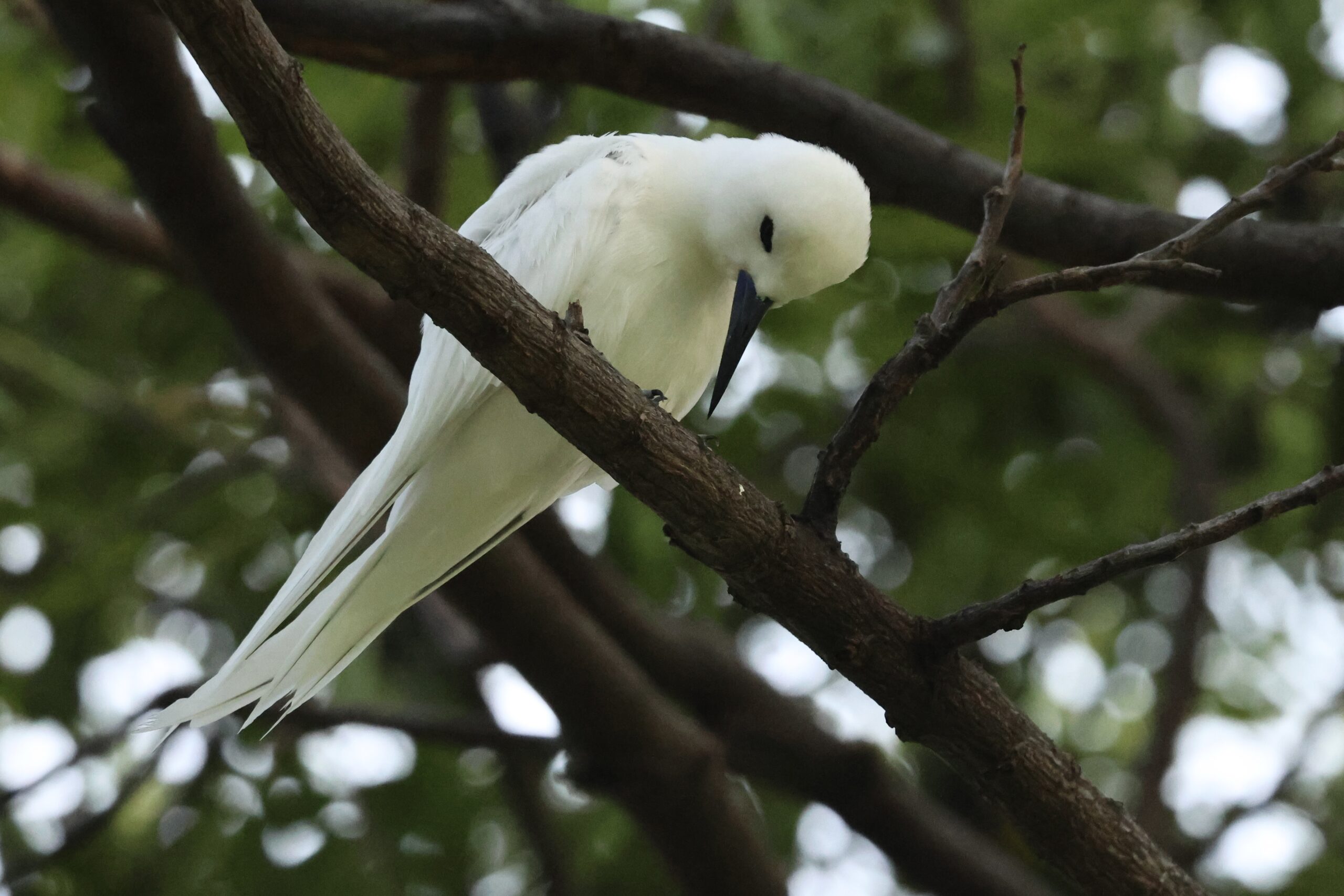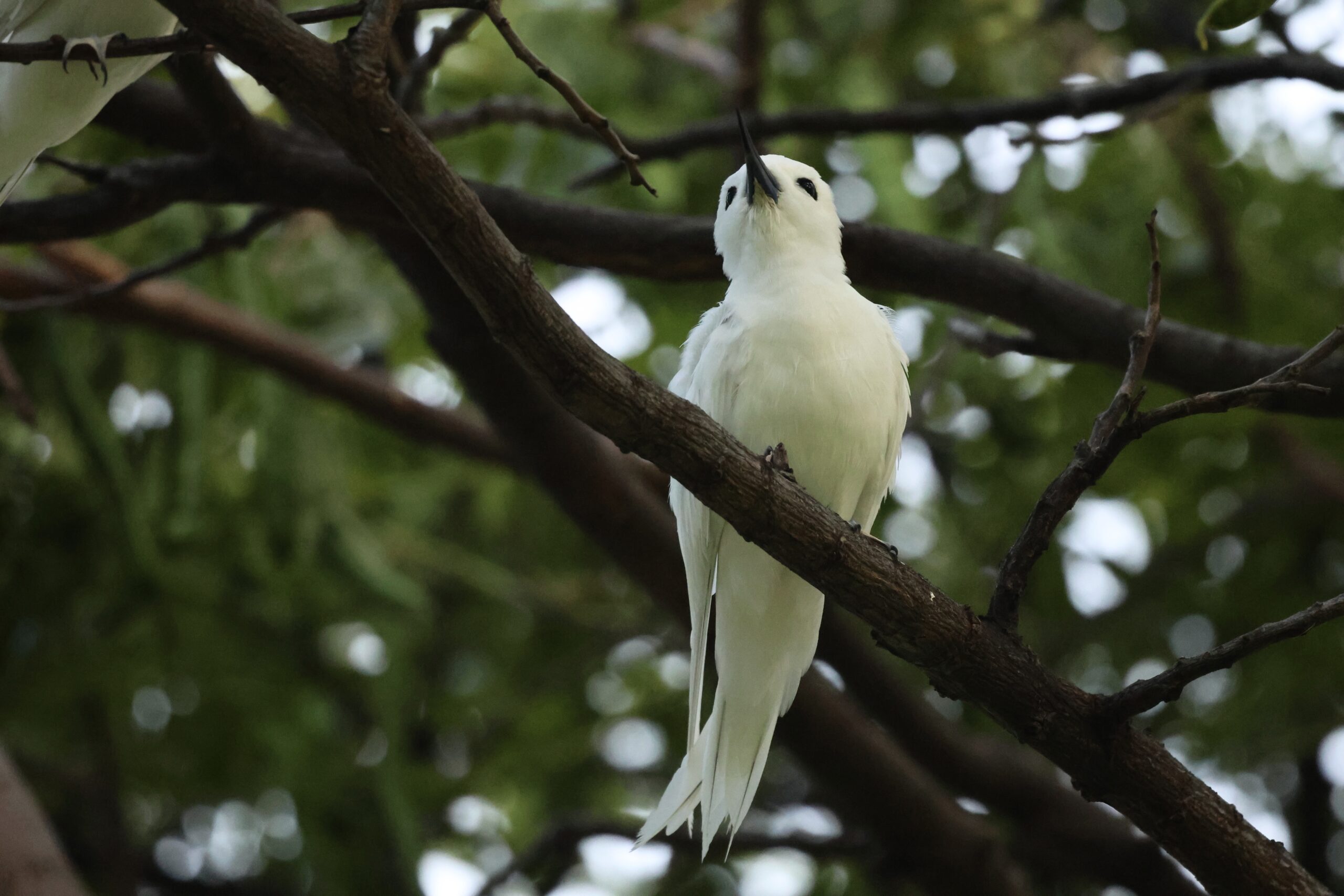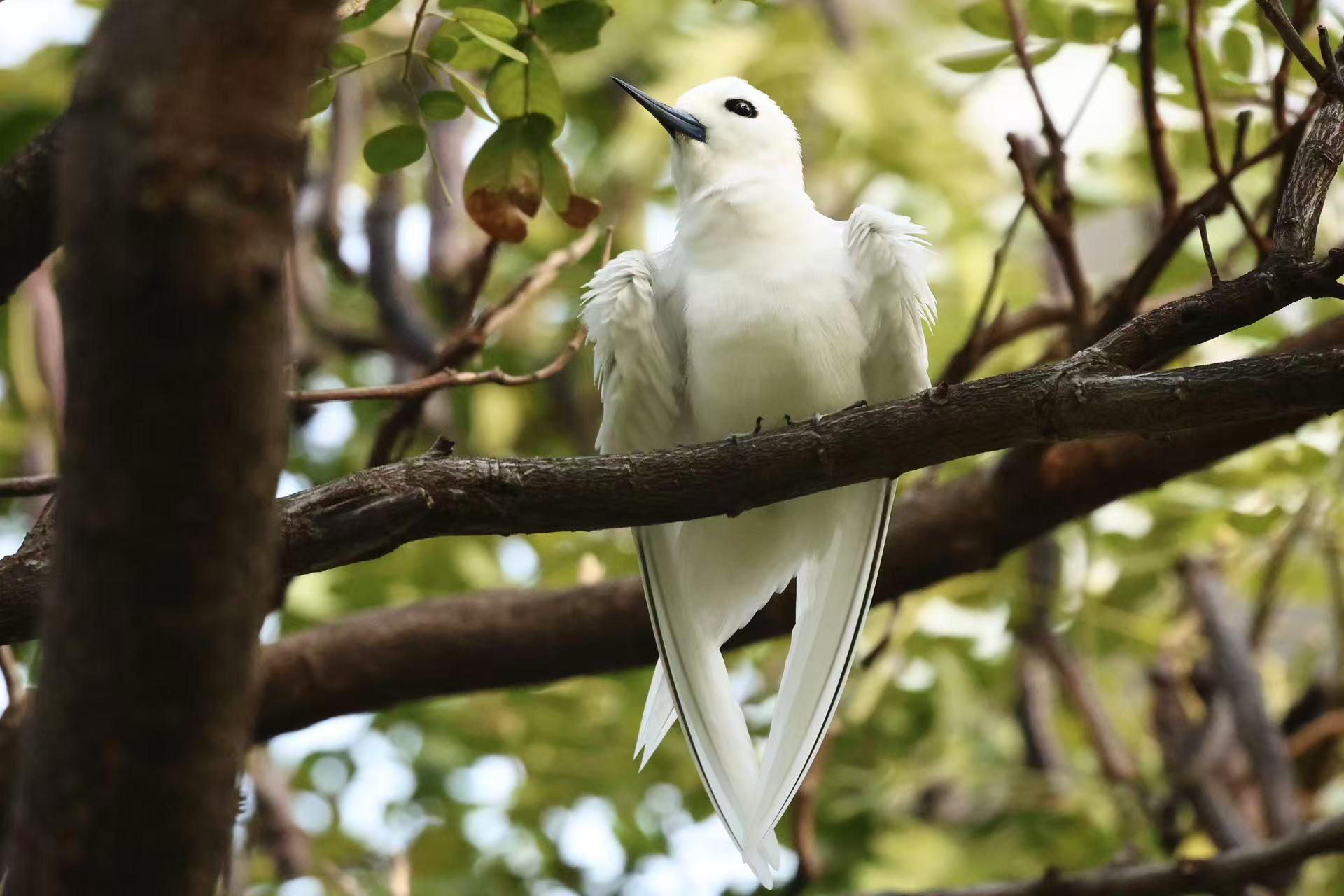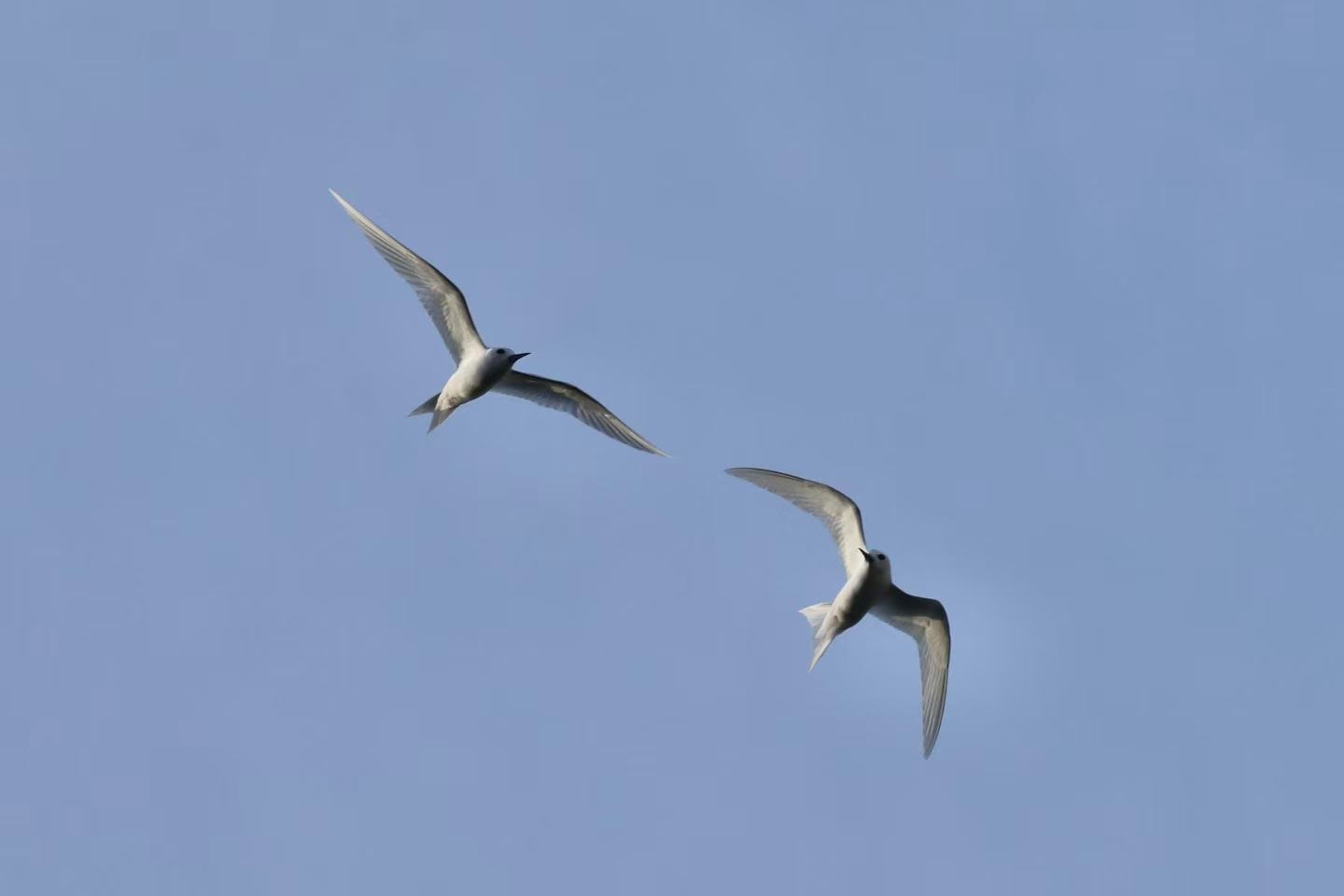
Hawaii, one of the most remote archipelago of the world, with endemic honeycreepers filling the rainforests, distinctive pelagic seabird breeding right nest to your feet, and White-Terns chattering in the busiest downtown, had become our destination for this year’s Spring Break. Being a remote archipelago hundreds of miles from both coasts, the arrival of western colonists have brought a devastation to the islands’ precious ecosystem. Nearly all native forest bird of Hawaii have gone extinct since the arrival of western colonists and the remainder have become increasingly endangered, with some classified as critically endangered or identified as at high risk of extinction in the coming years.
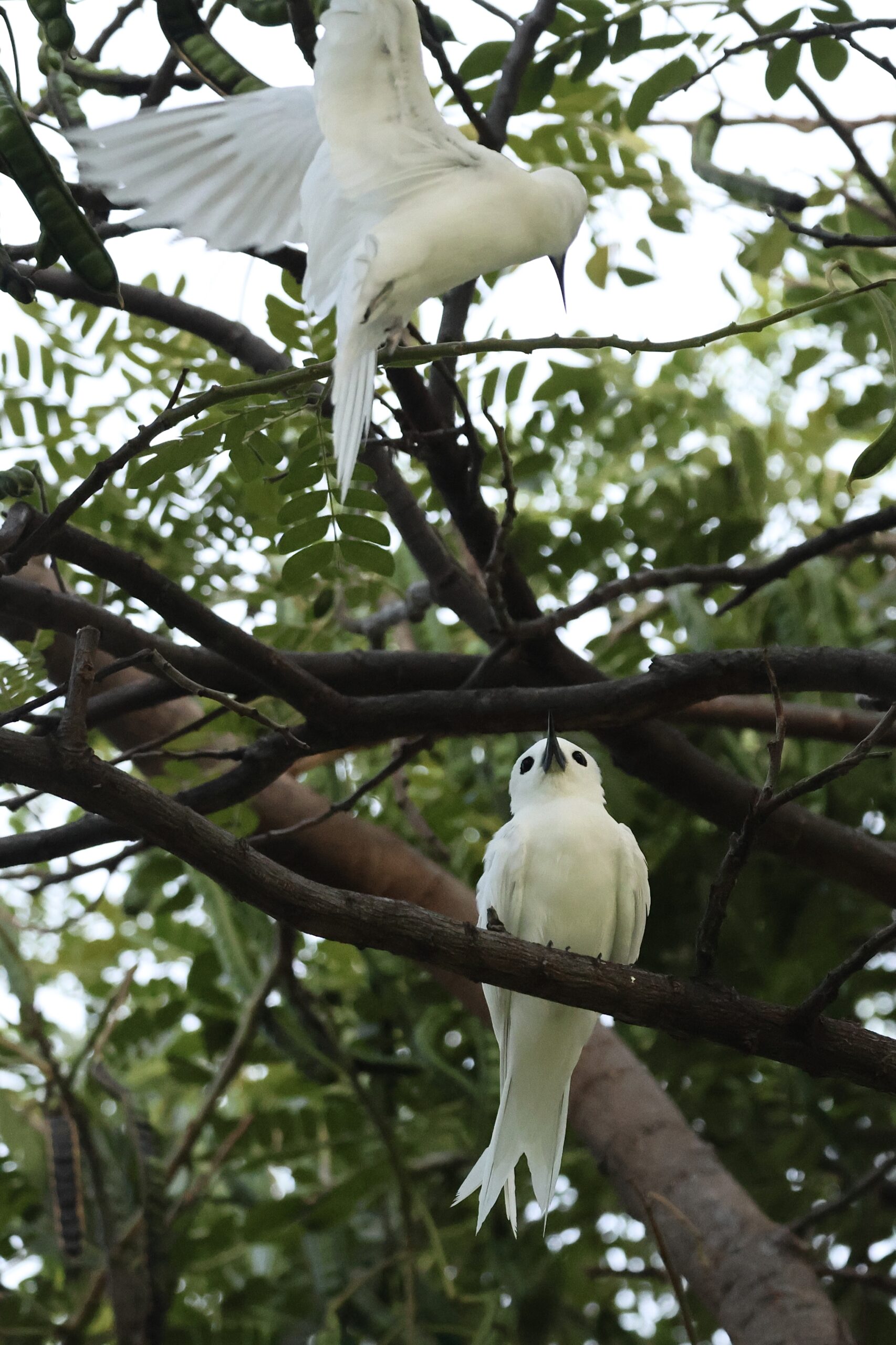
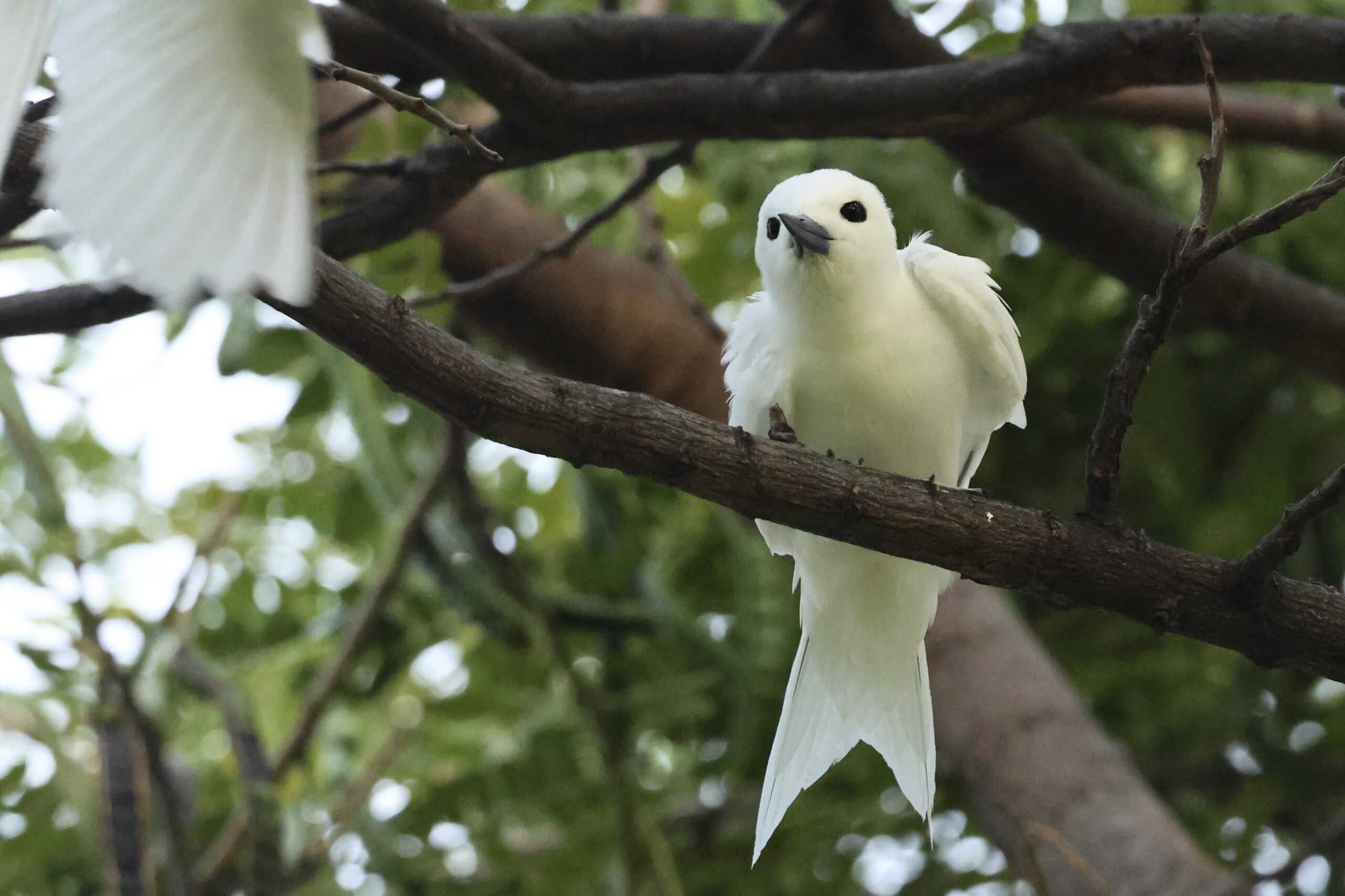
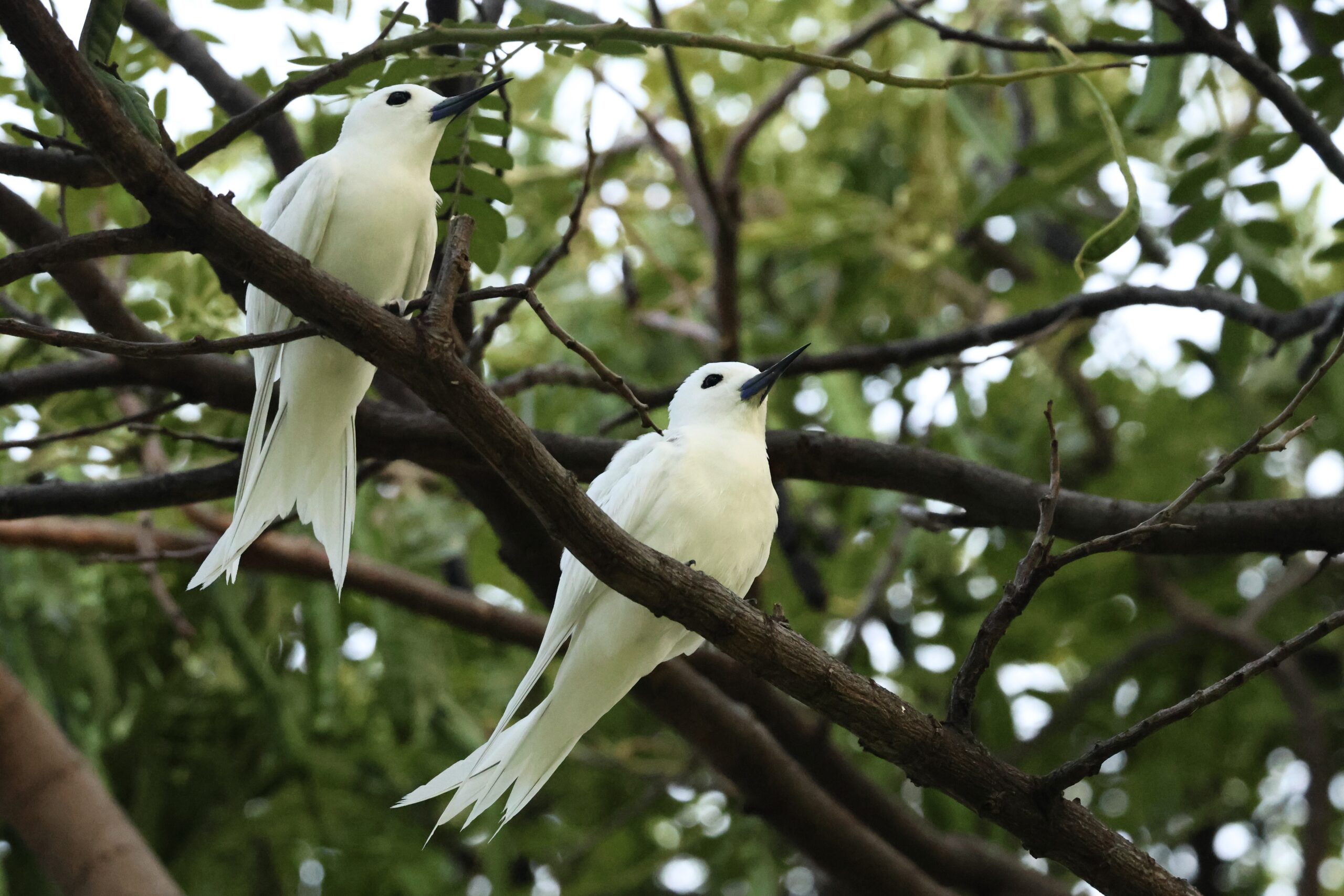
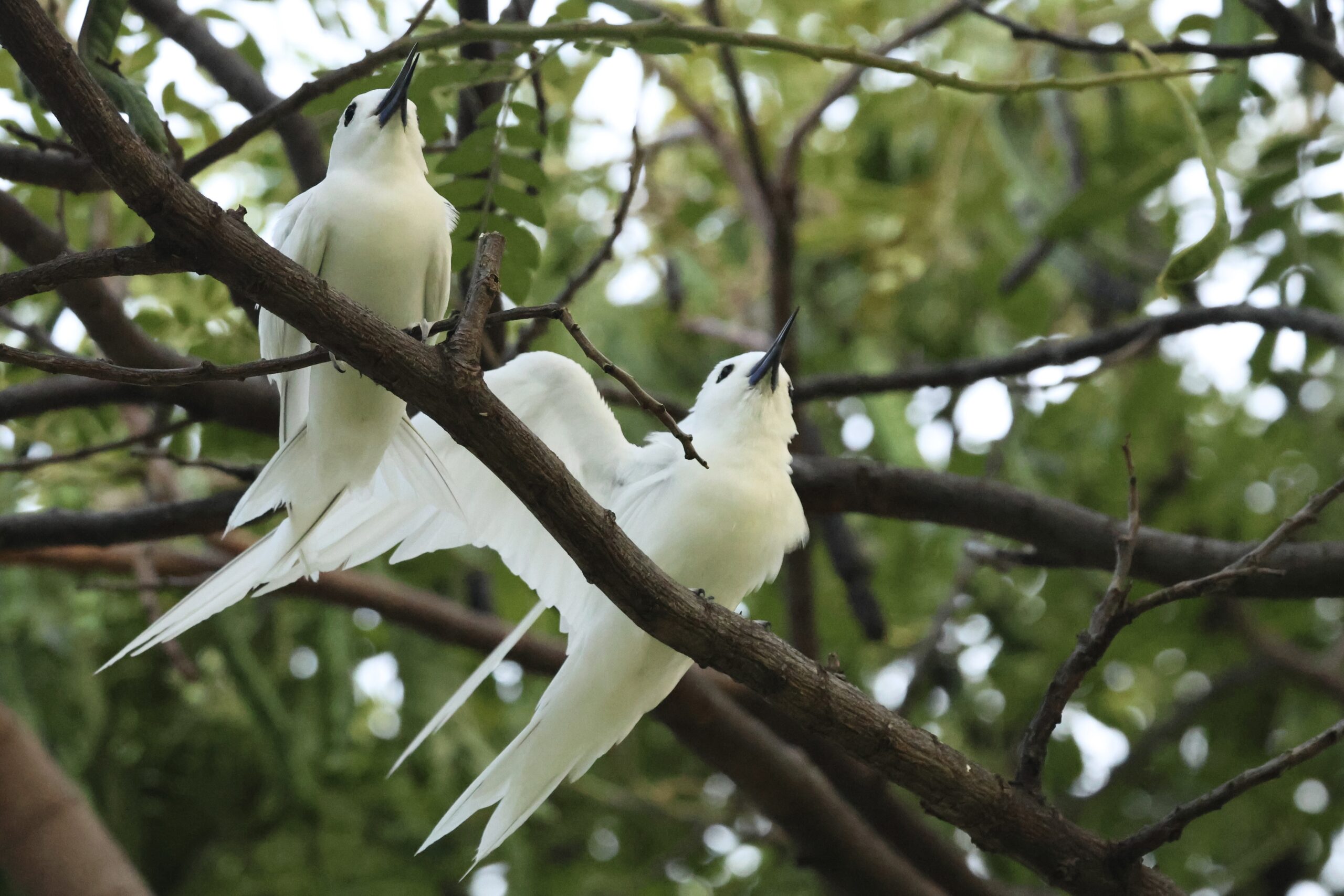
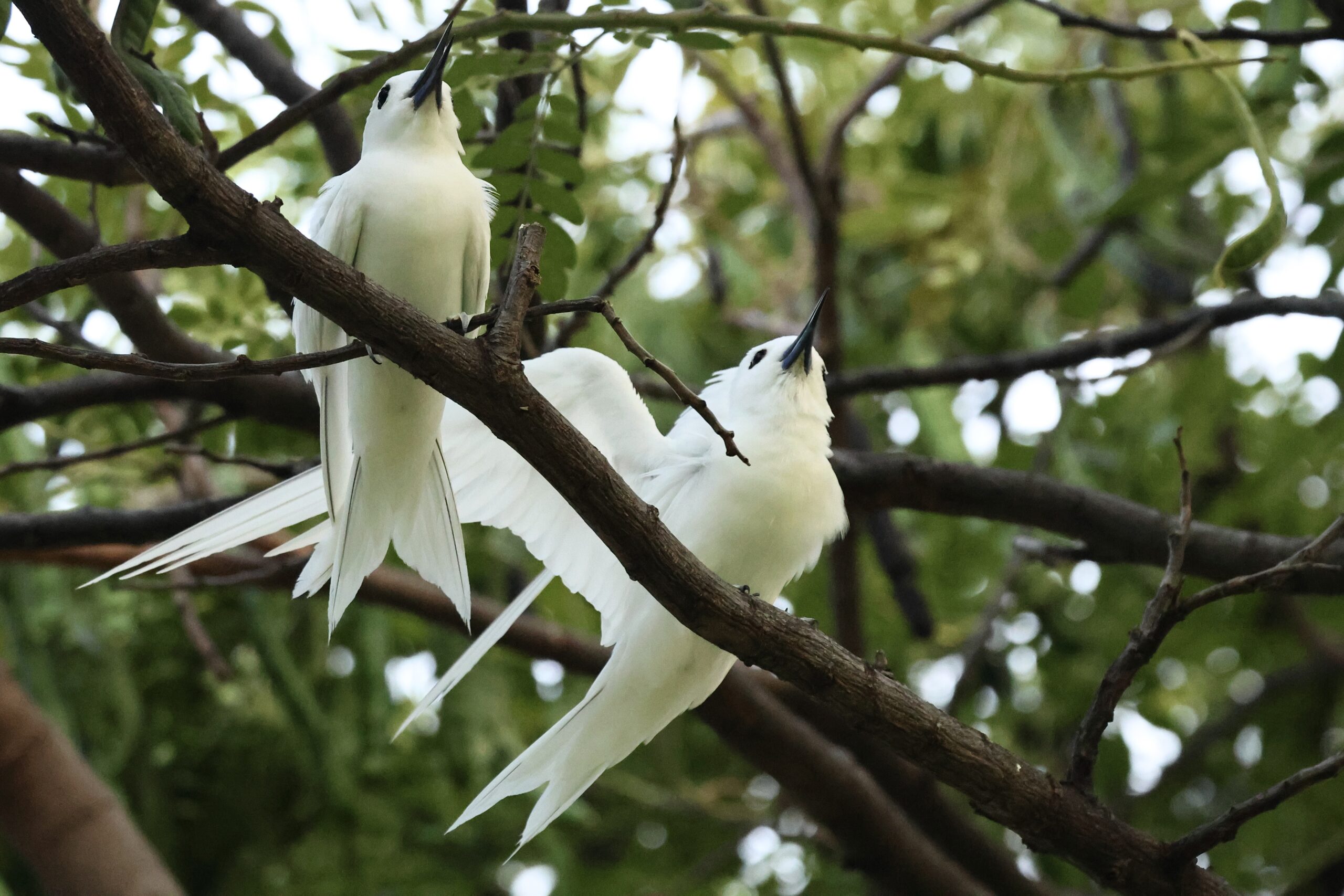
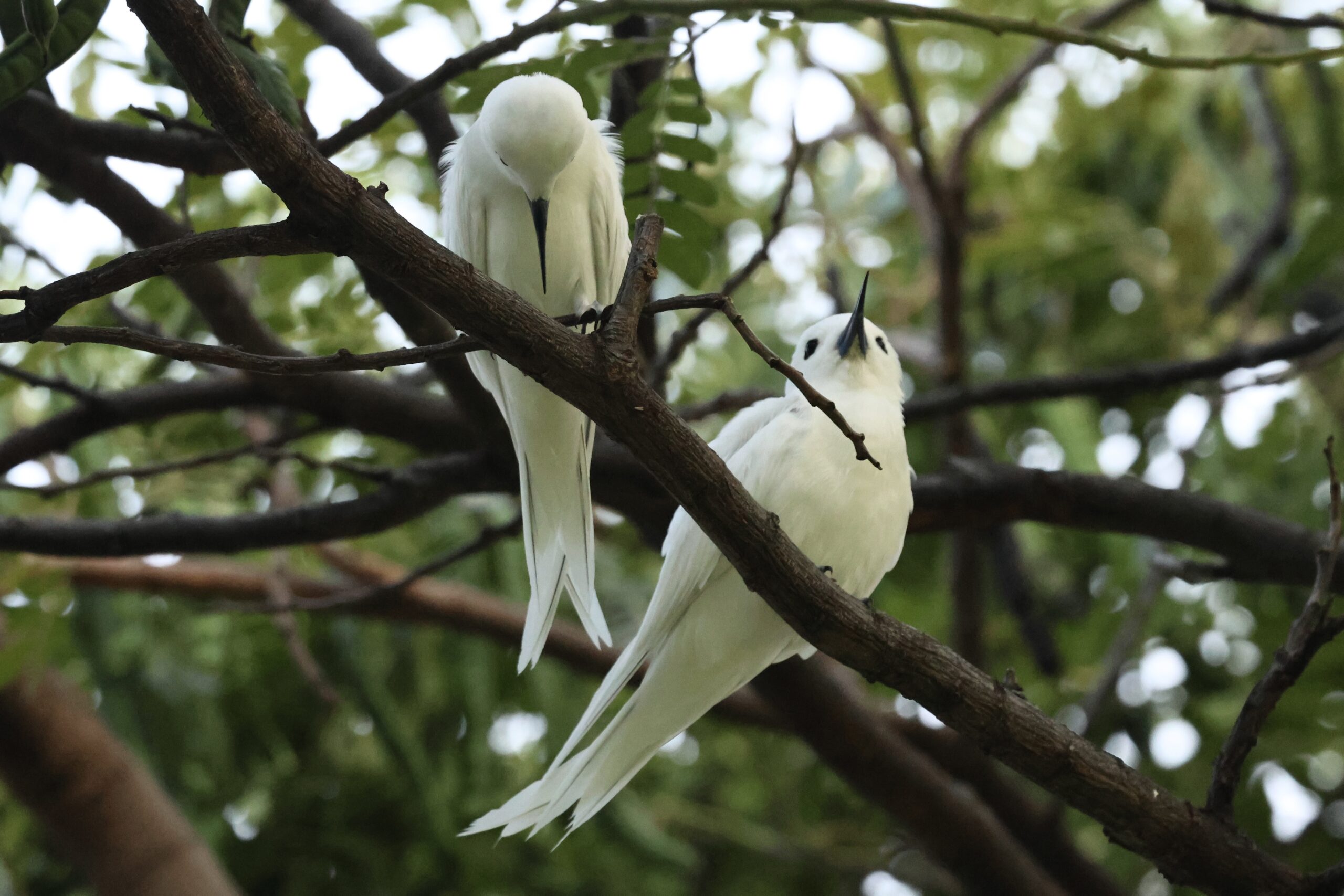
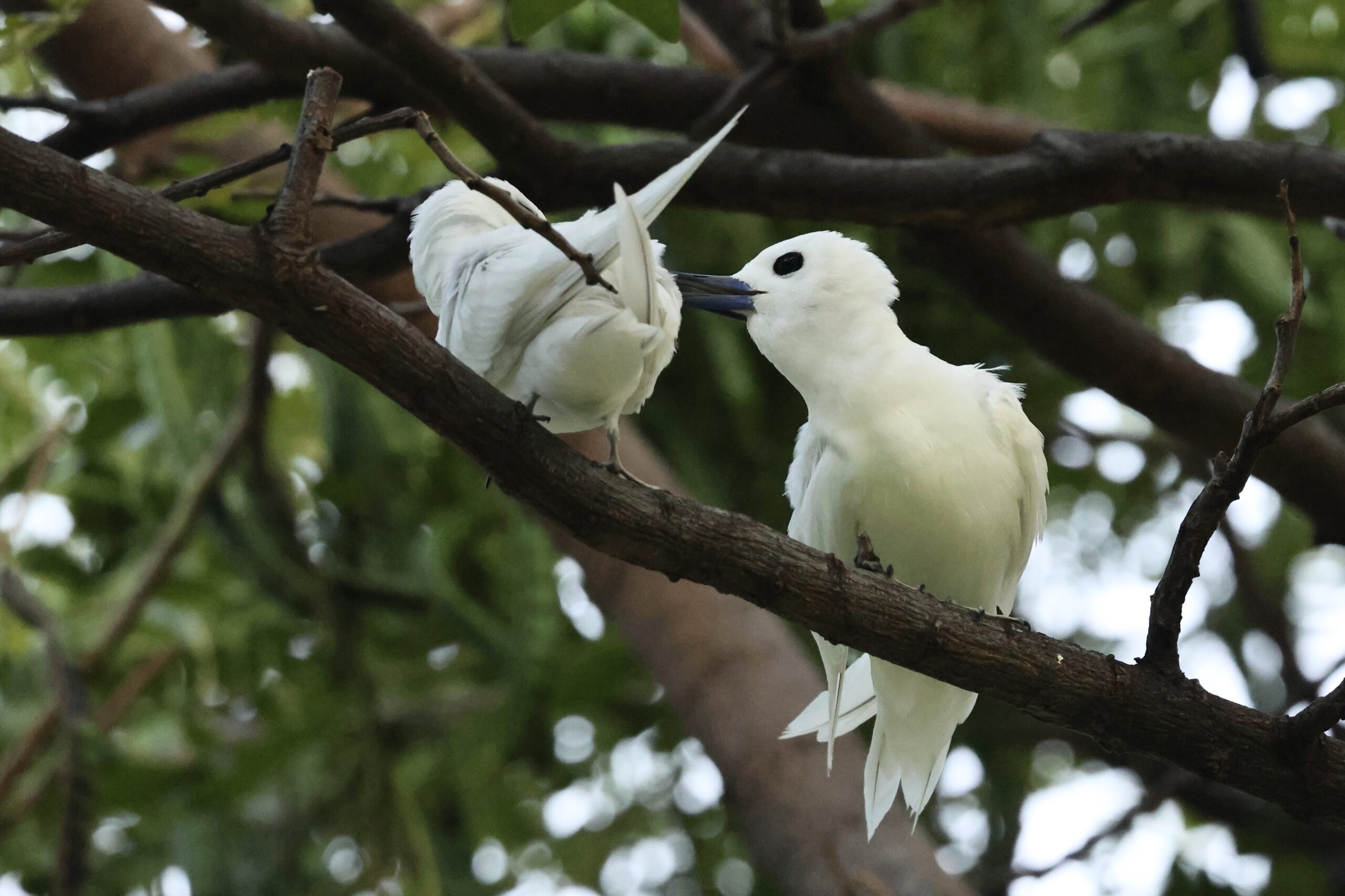
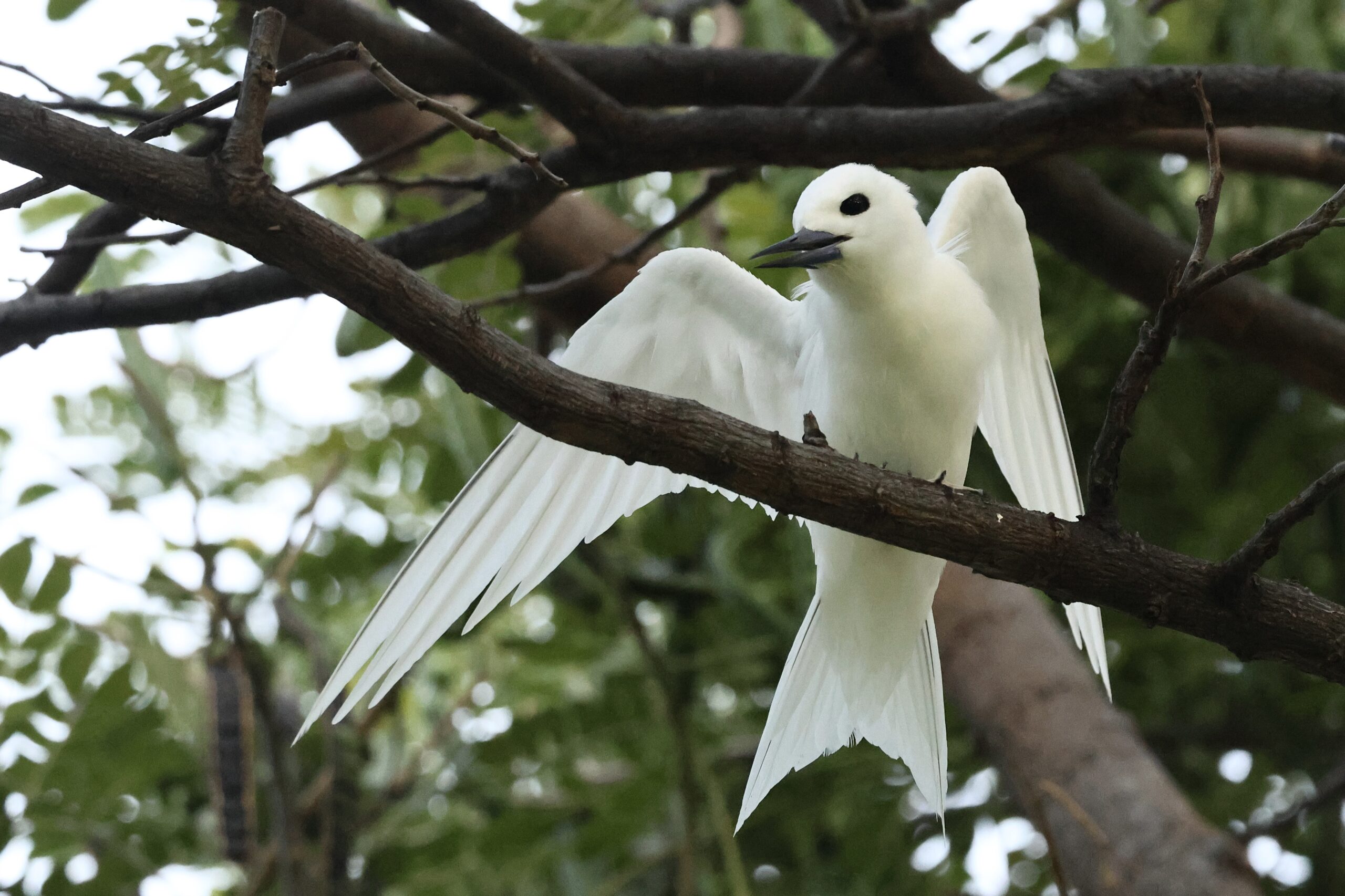
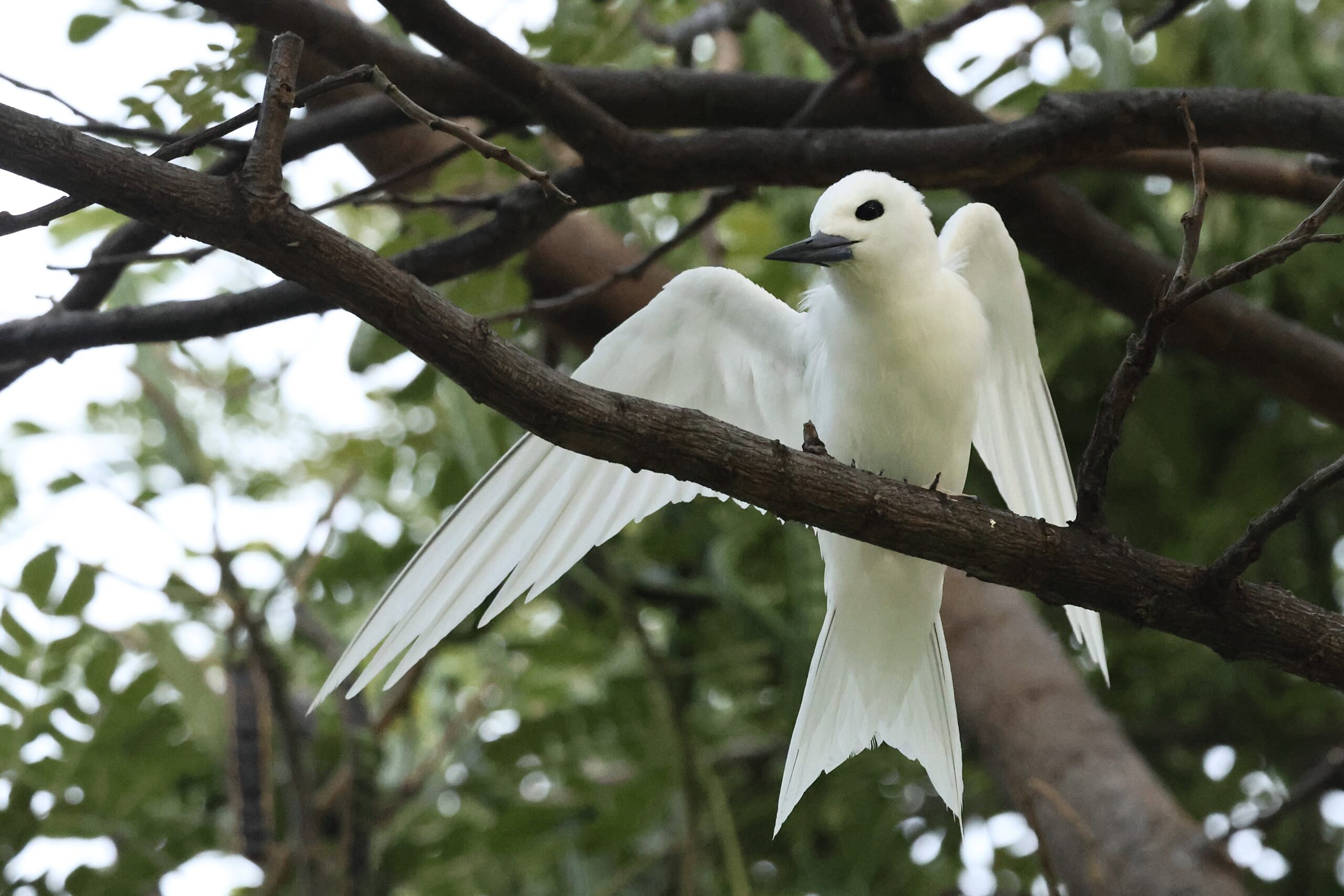
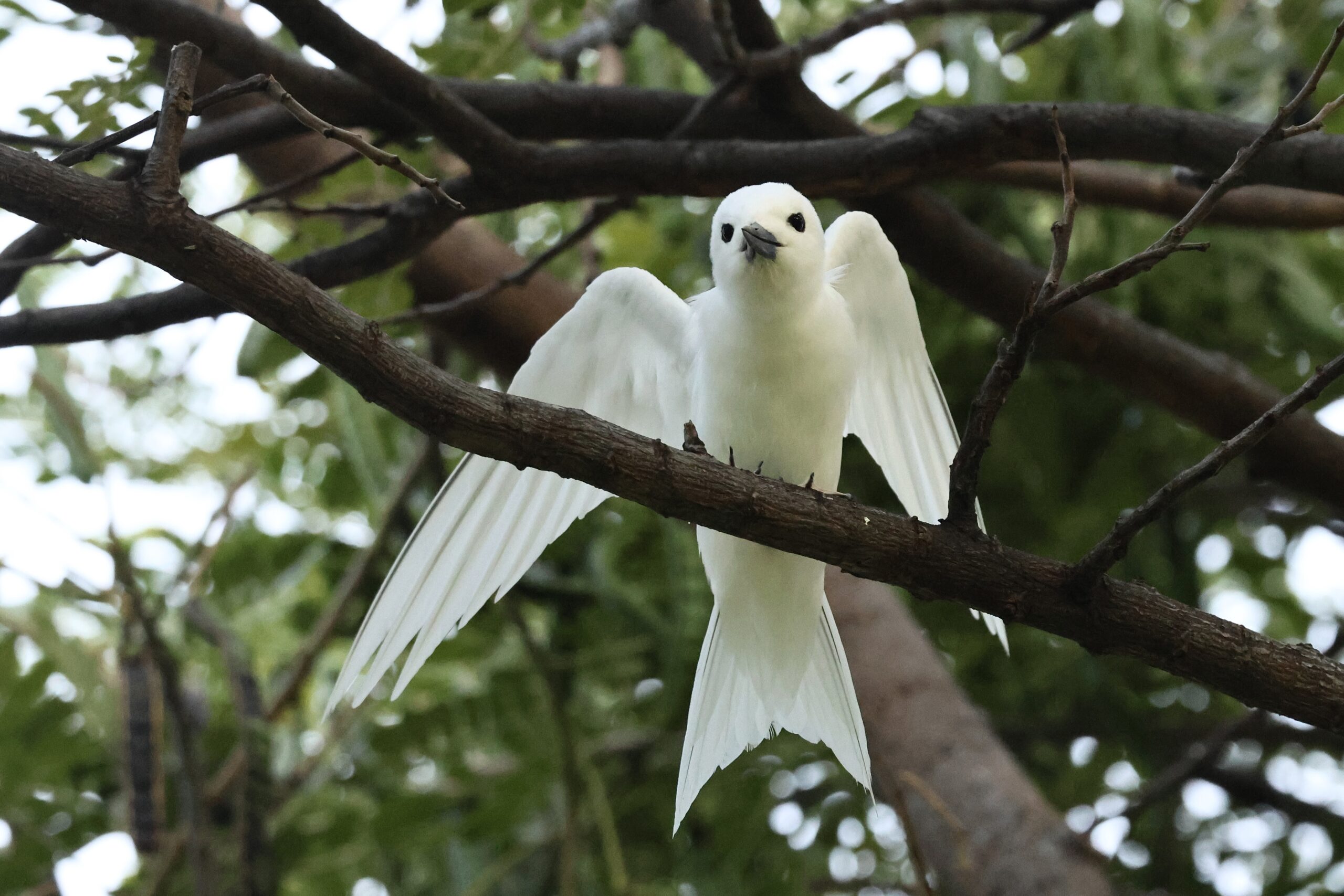
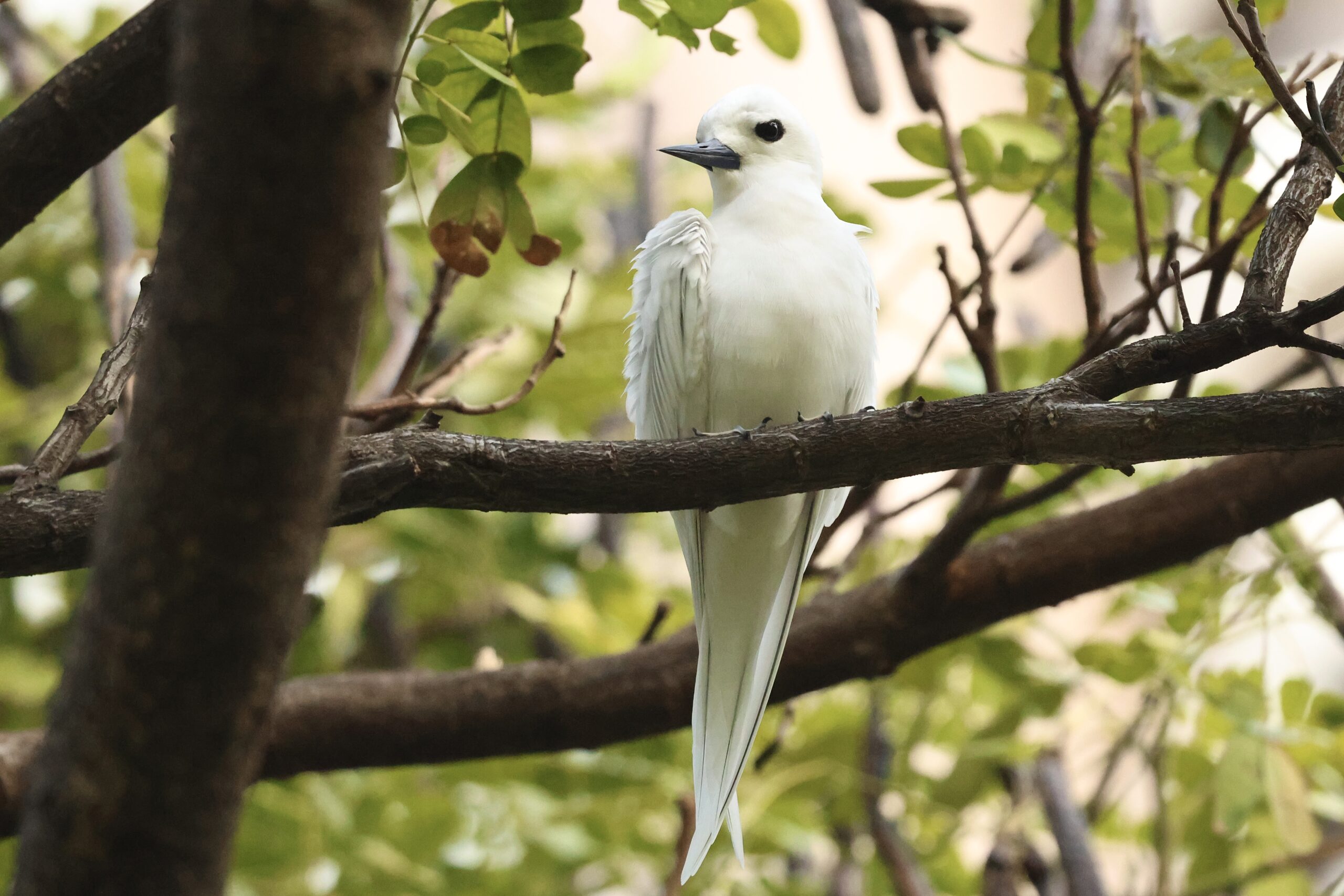
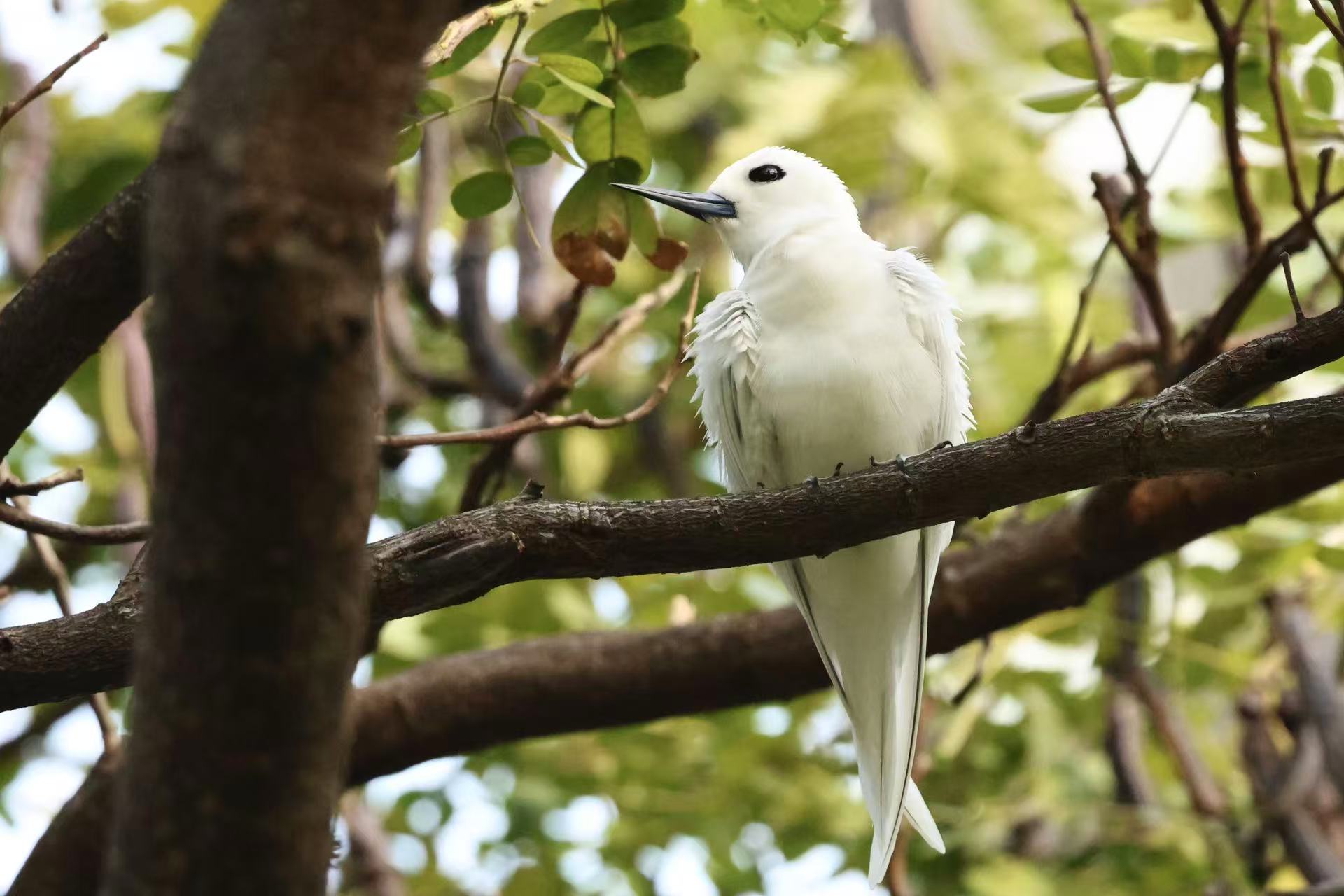
27 Mar, the first day of our trip, was an incredible start! We started our day by walking to a restaurant and checking the Blue-billed White-Terns at Fort Derussy Beach Park while waiting. Pairs preening and resting on every tree gave excellent photo opportunities.
Right after breakfast, we drove up to ʻAiea Loop Trail at Keaīwa Heiau State Park. Here we were going to be looking for the endangered Oahu ʻAmakihi and Oahu ʻElepaio. The ʻAiea Loop Trail goes through a dense rainforest, with a mixed habitat of both native and non-native plants. It is the best spot in the world to see the endangered and declining Oahu ʻAmakihi and Oahu ʻElepaio (which is really hard even here).
It was a rainy day and bird activity was low in the morning. The only birds we saw for a while were the introduced White-rumped Shama and Warbling White-eye, and not a single native bird was in sight.
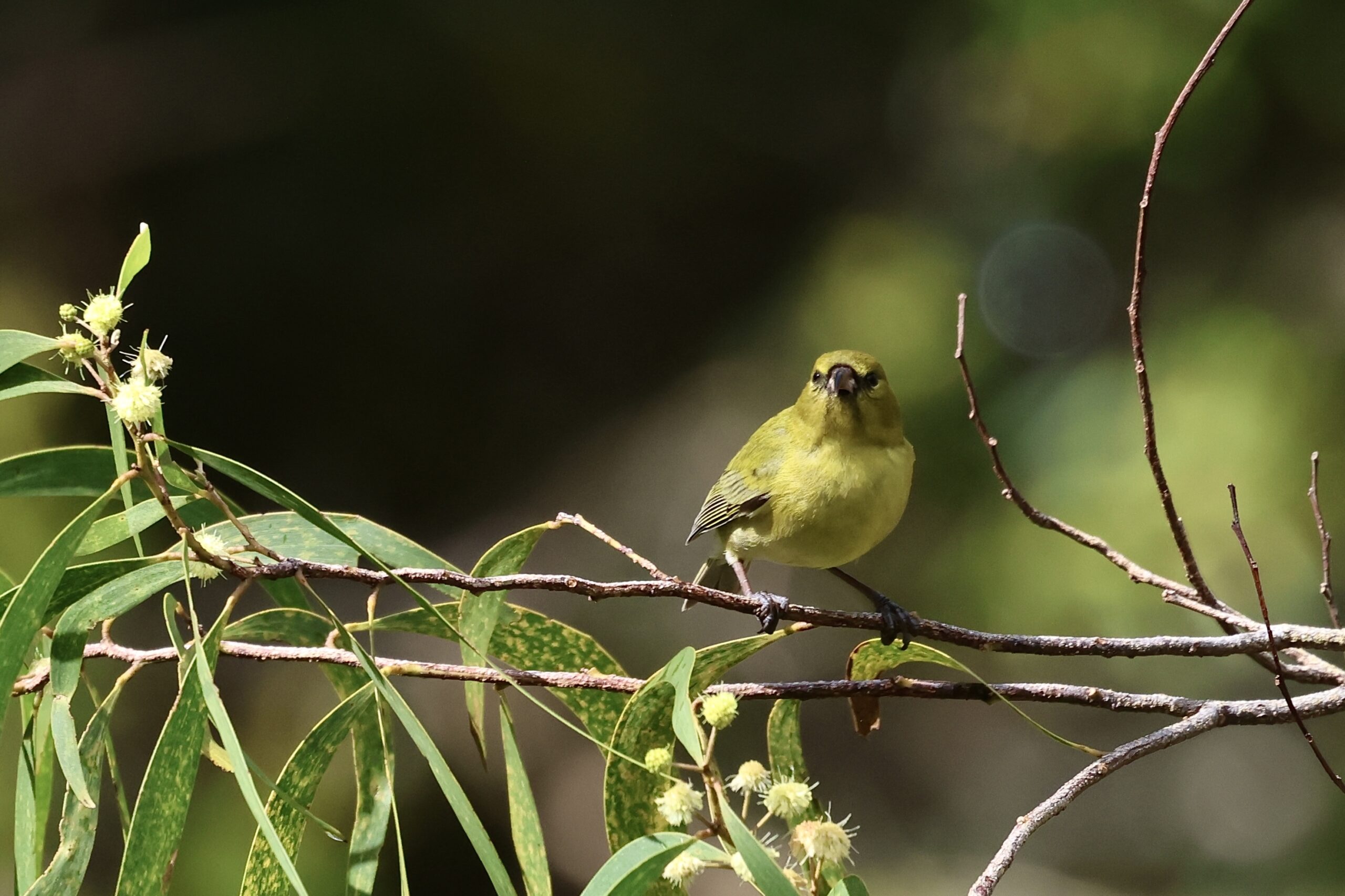
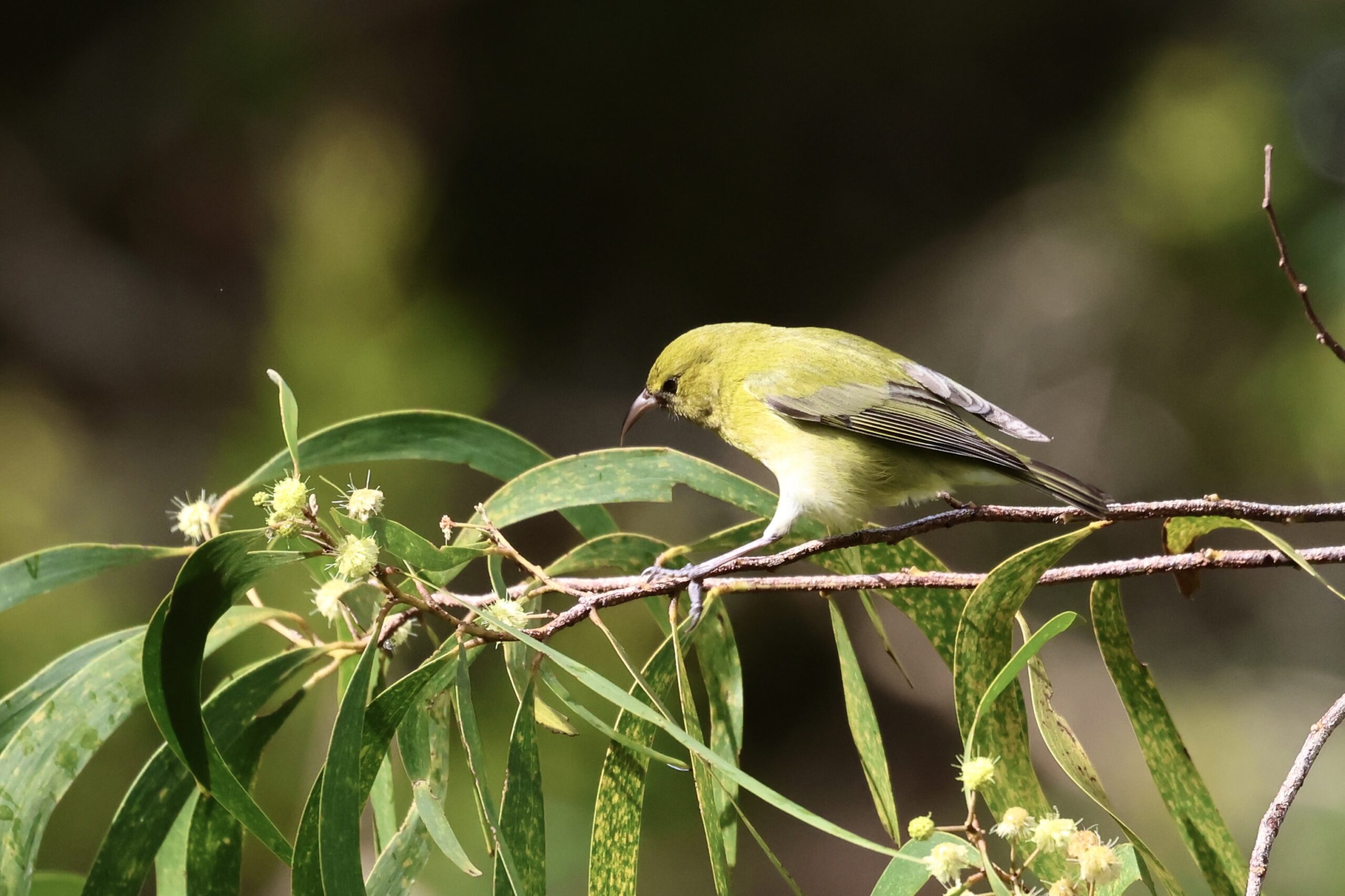
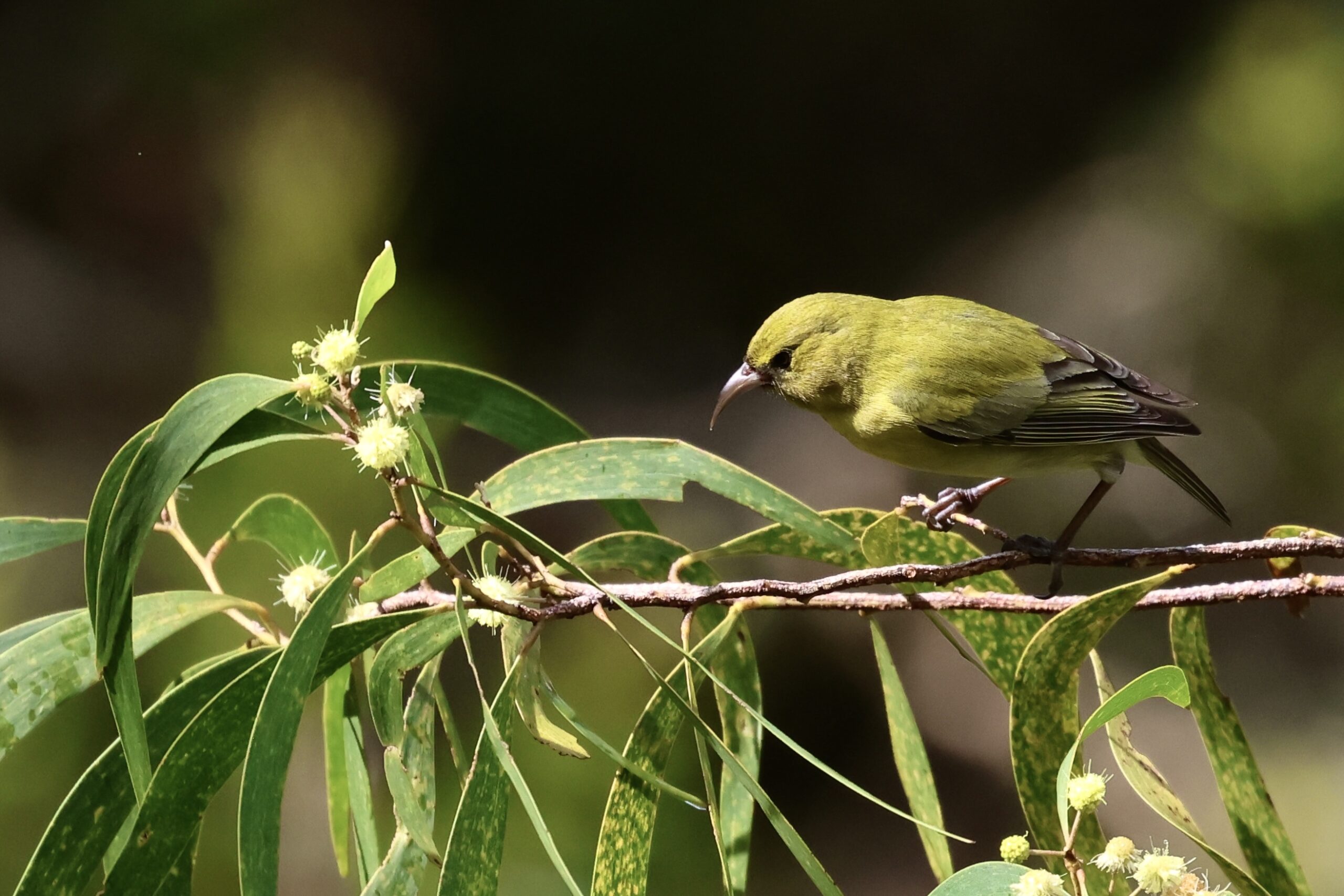
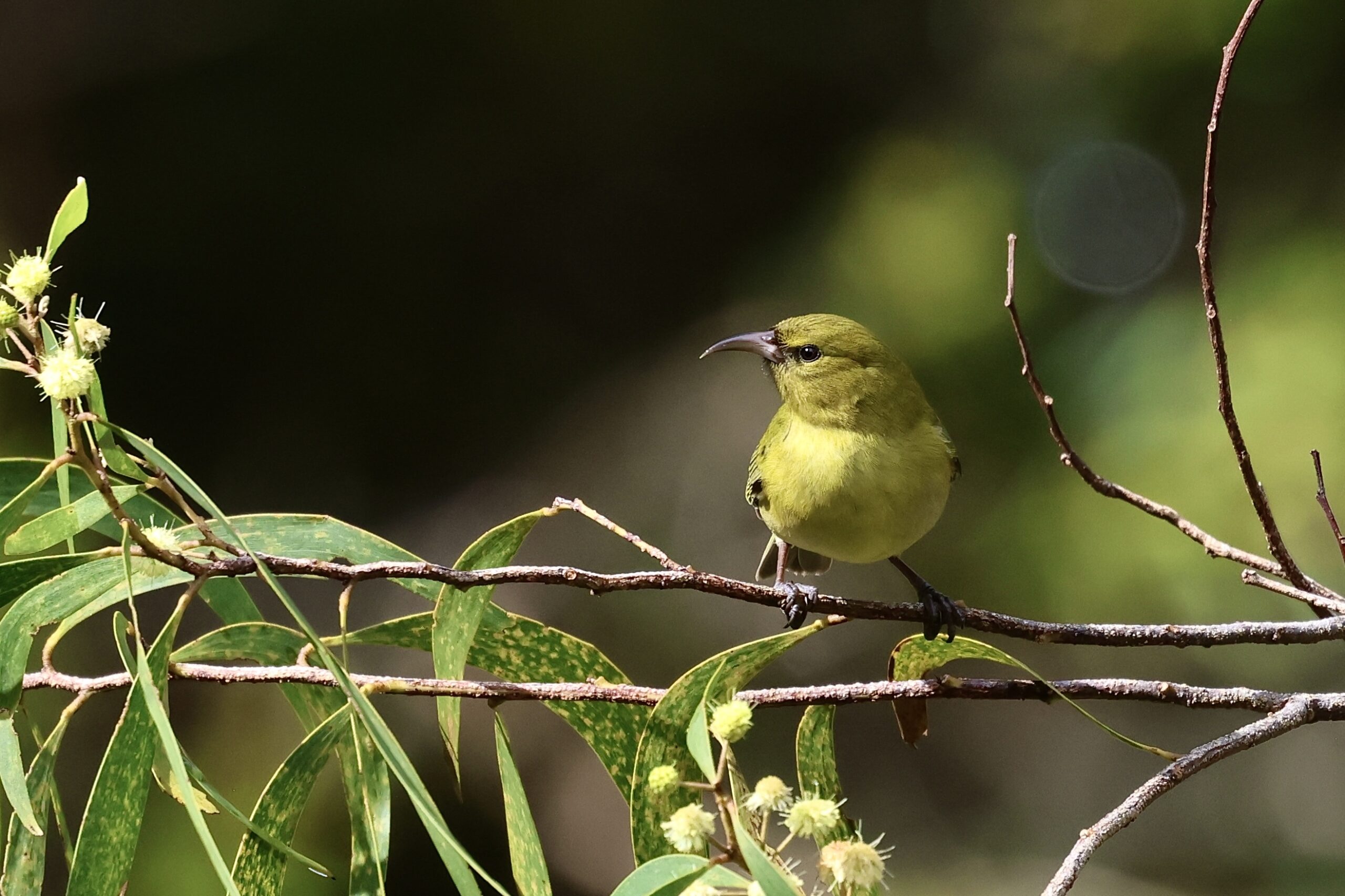
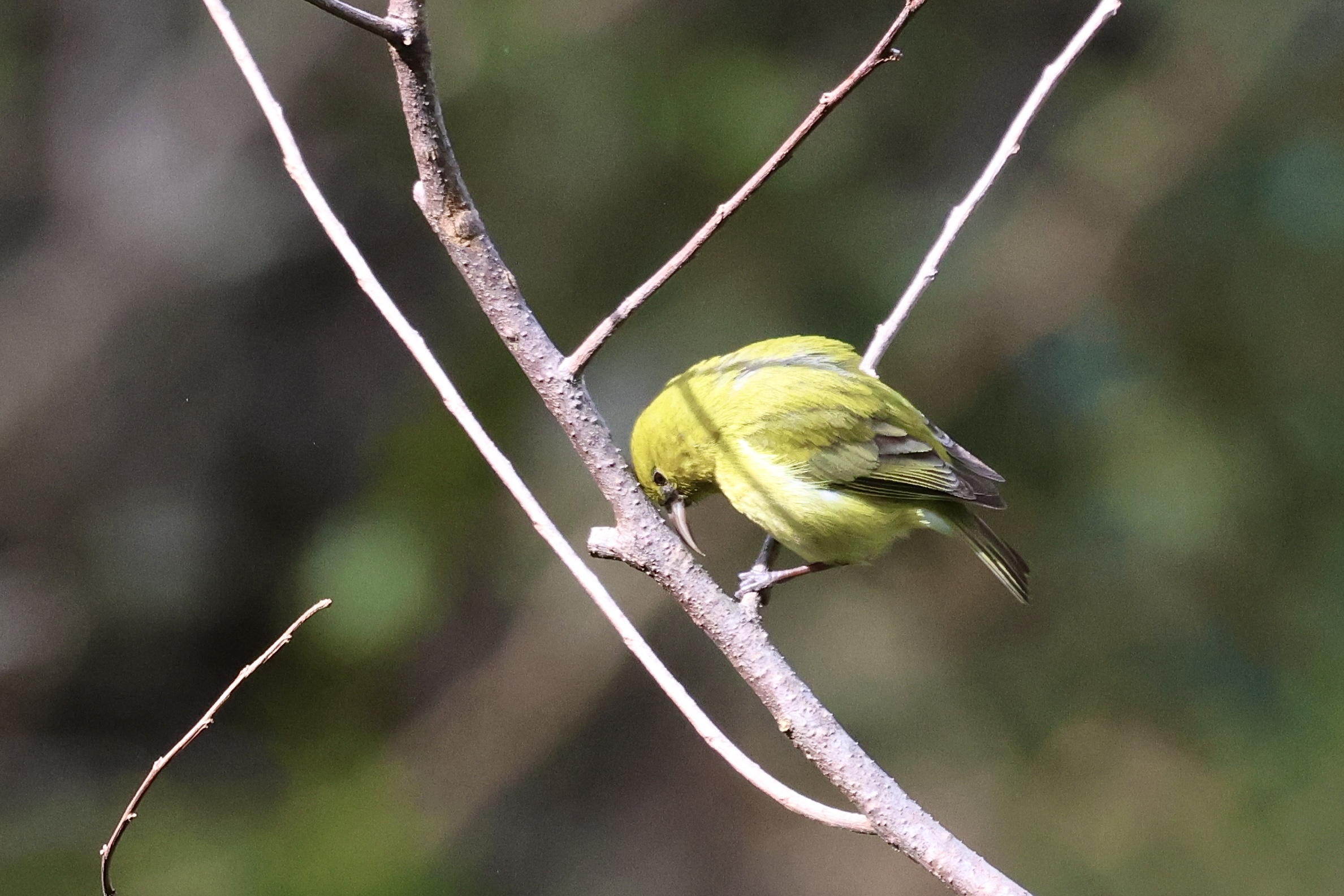
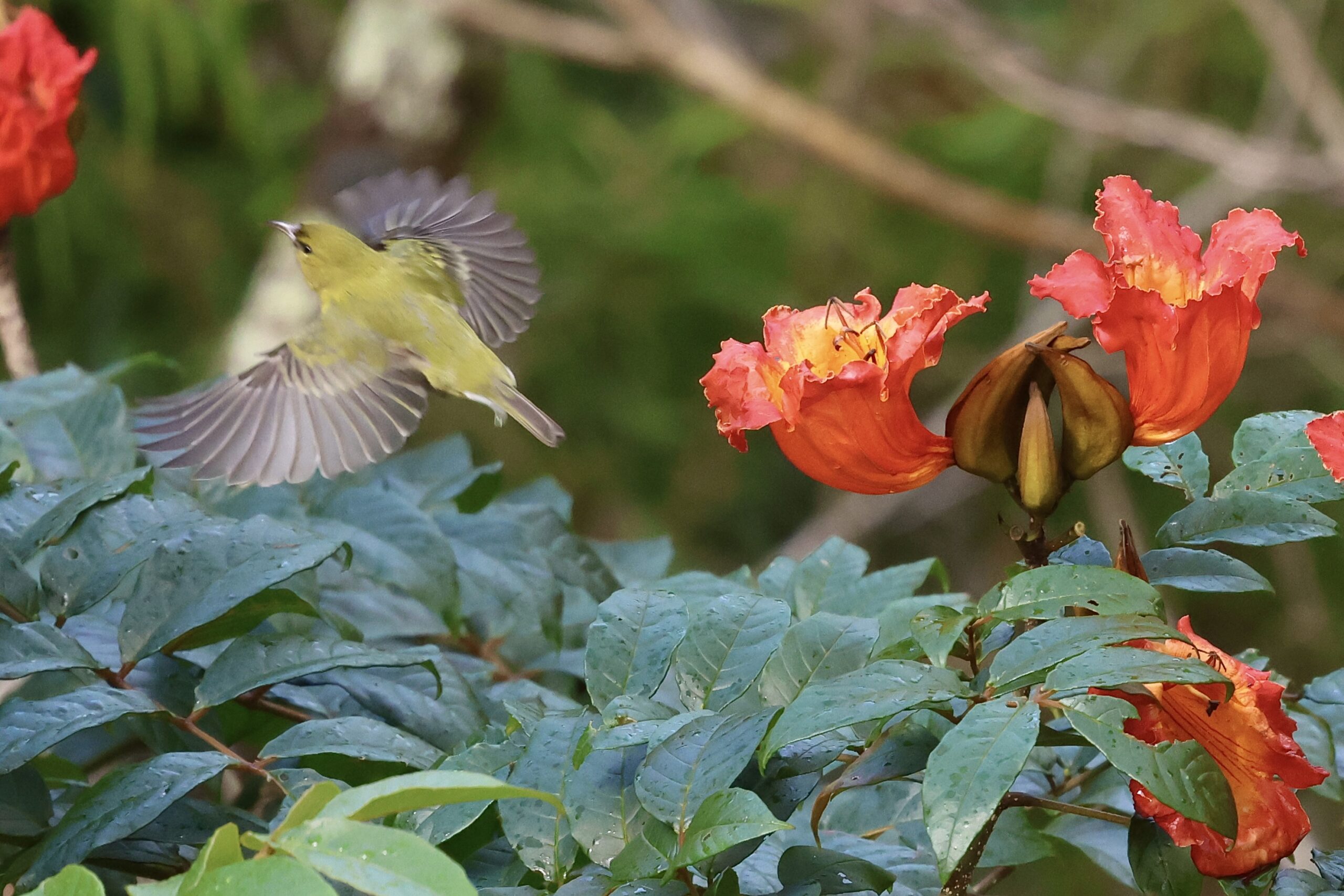
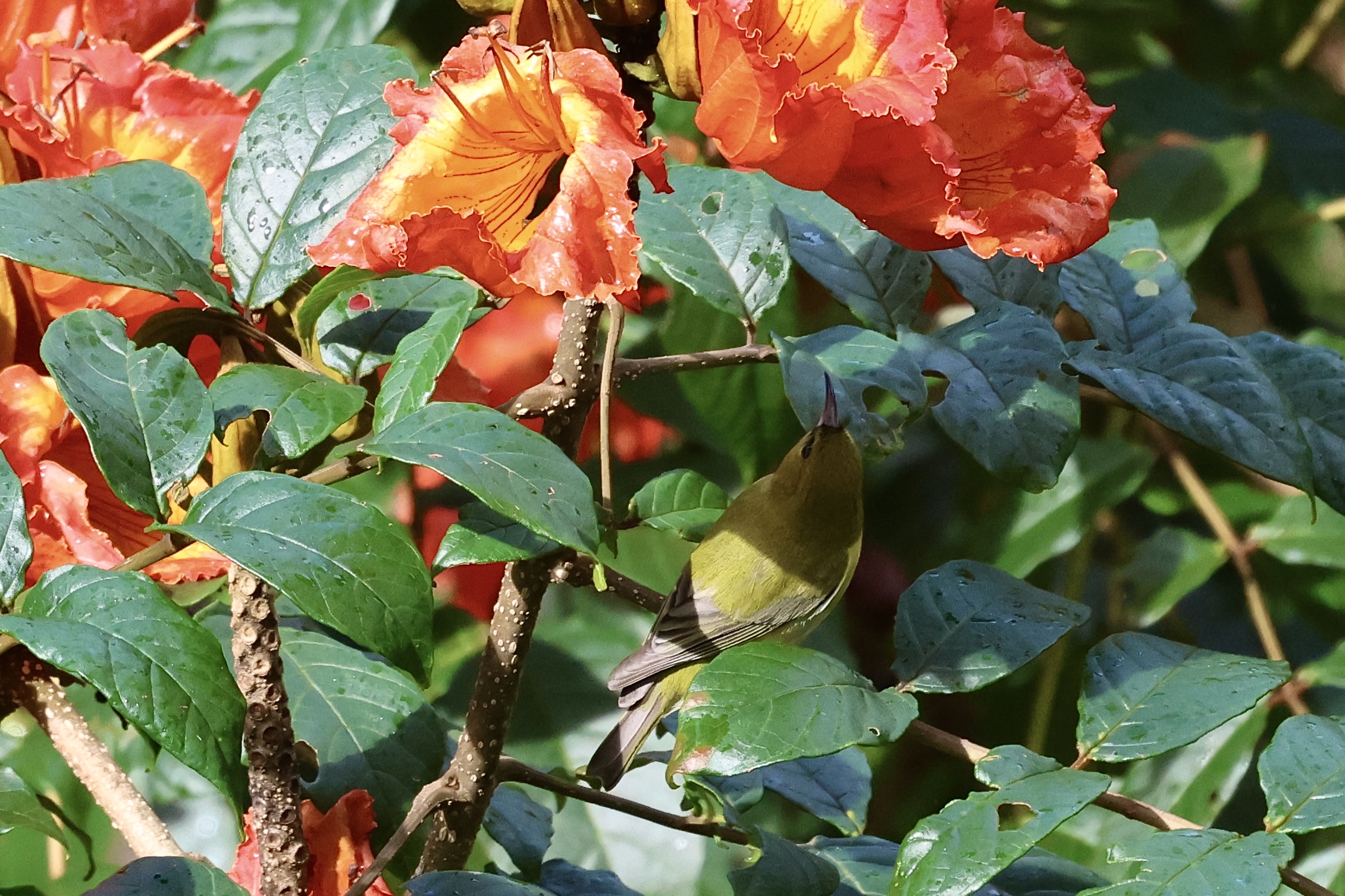
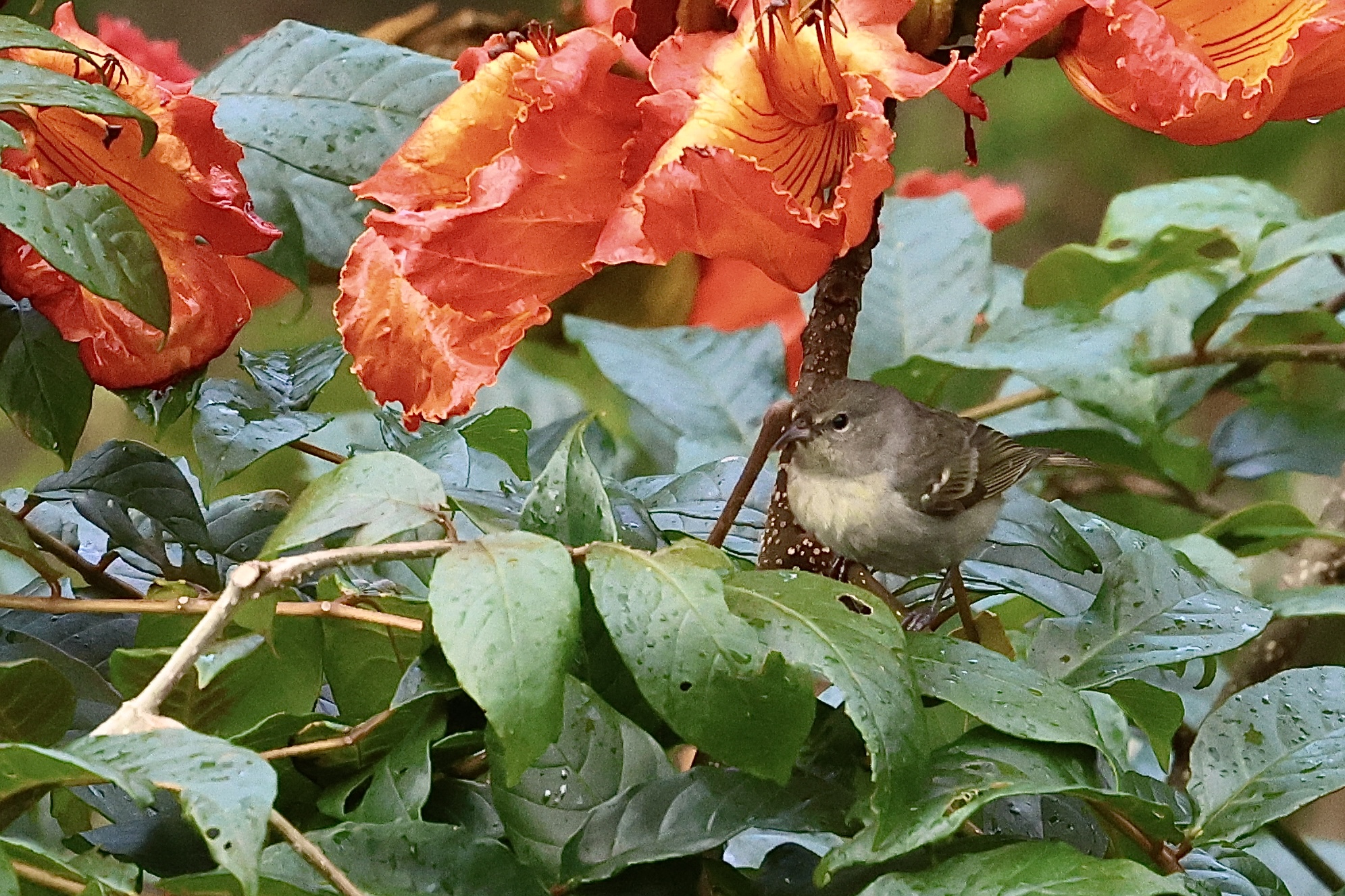
After the rain stopped we came across a bush of red flowers, where a little green bird caught our view. Pointing my camera at the bird, I clearly saw that it had NO white eye rings! It was a Oahu ʻAmakihi, our first native forest bird of the trip! The Oahu ʻAmakihi proficiently foraged on the red flower’s nectar, and was soon joined by a few other Oahu ʻAmakihis! The Oahu ʻAmakihi darted back and forth among the flowers, extending their specially evolved curved beaks into the blossoms to sip the nectar within. They were so lost in their joyful singing amidst the blossoms that it was difficult to fathom that they have become so scarce in number.
After observing them a while, we continued on our trip, in search of the rare Oahu ʻElepaio. After walking all the way to the “land slide” (created by the recent rain), we returned to our cars with no sign of any Oahu ʻElepaio around noon.
During lunch, we decided that we should do what is scheduled for tomorrow first. This will leave tomorrow morning for a second attempt on the Oahu ʻElepaio.
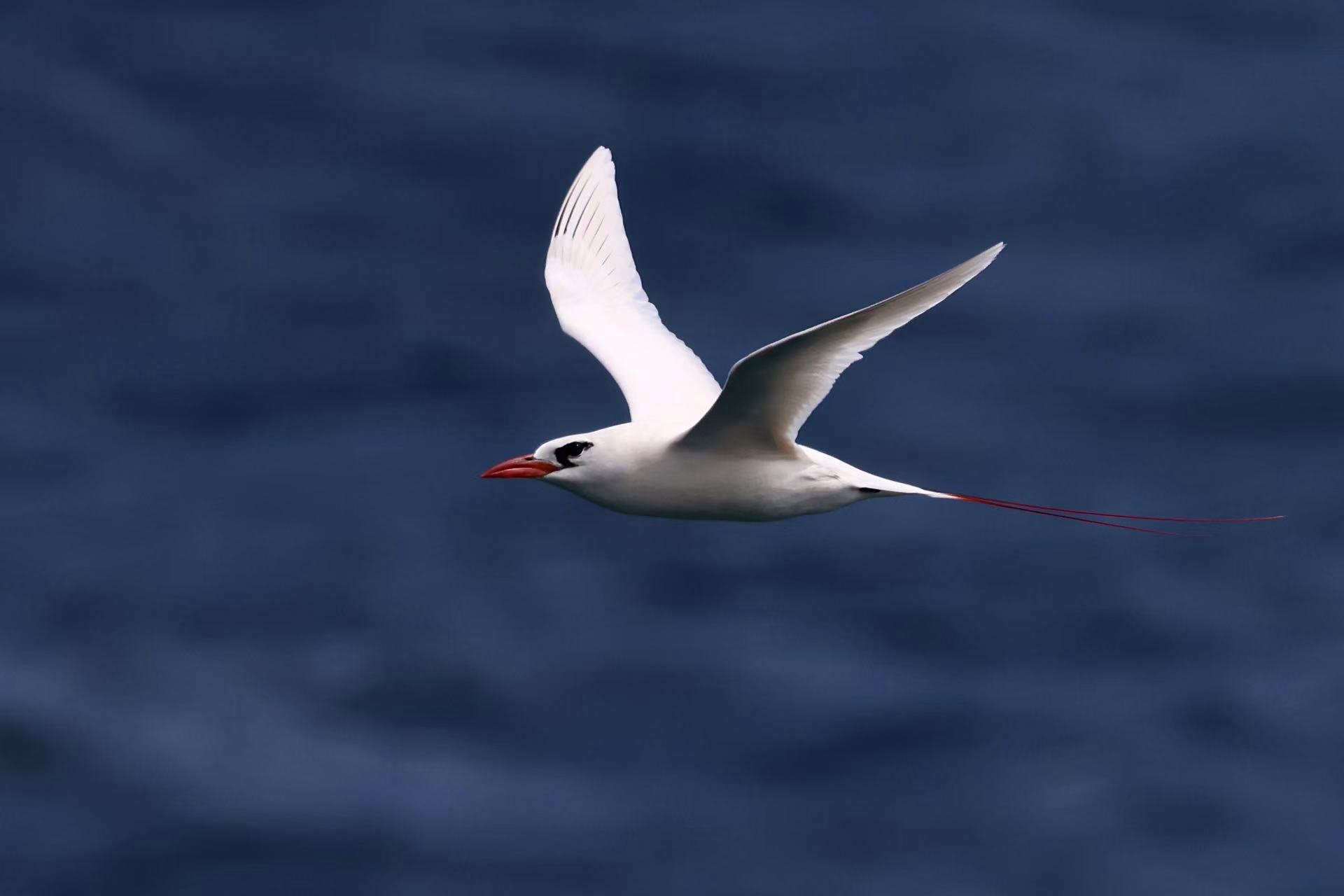
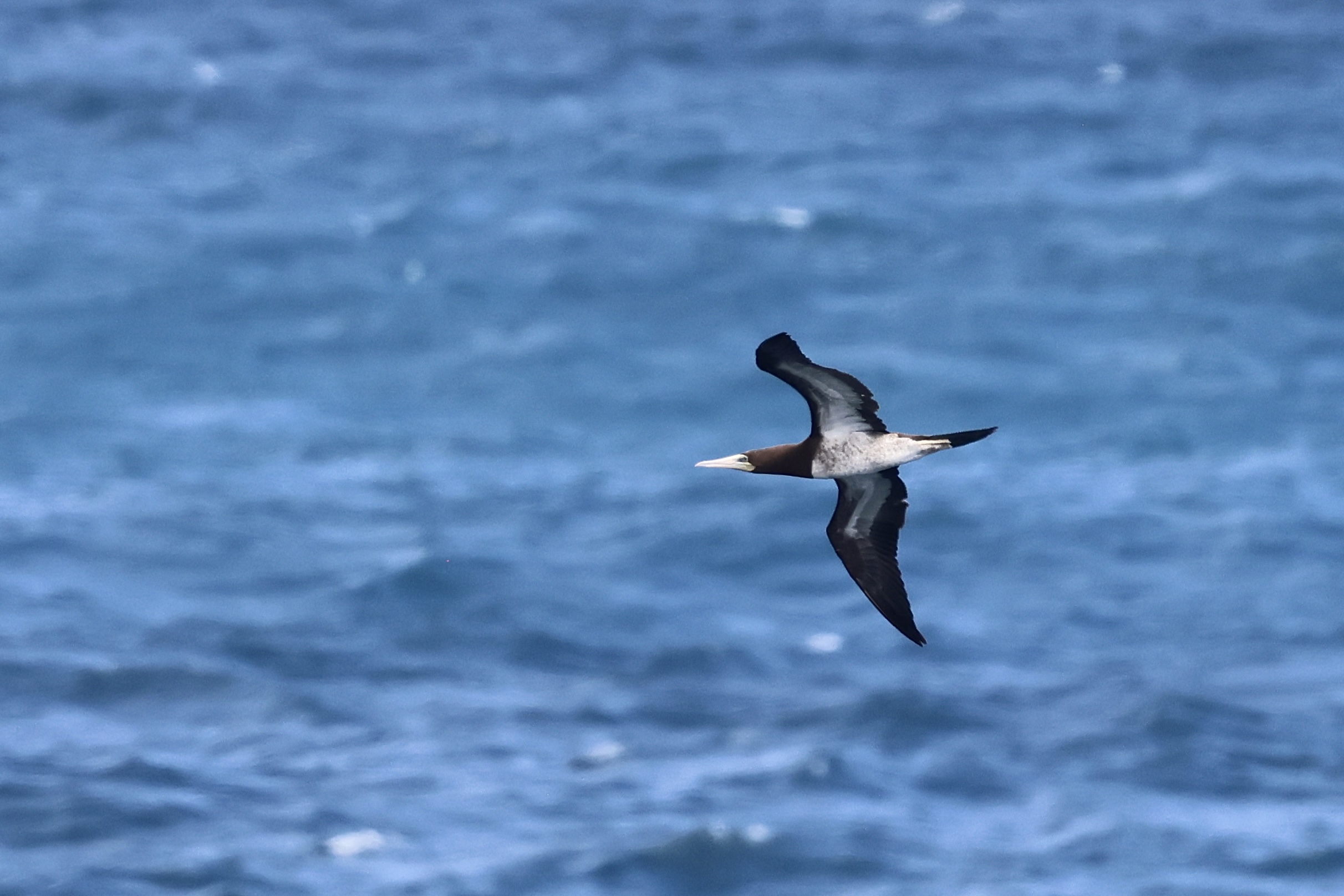
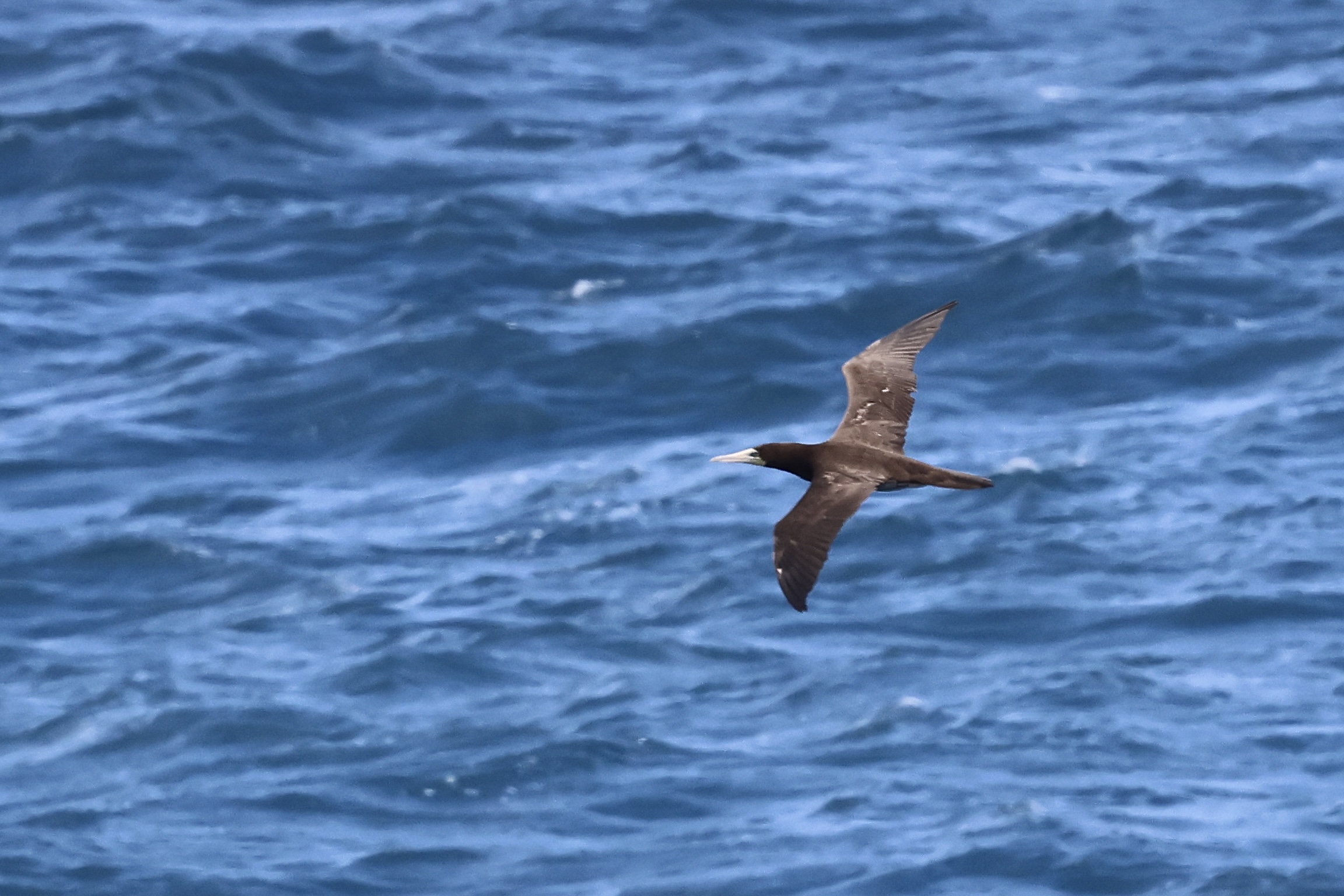
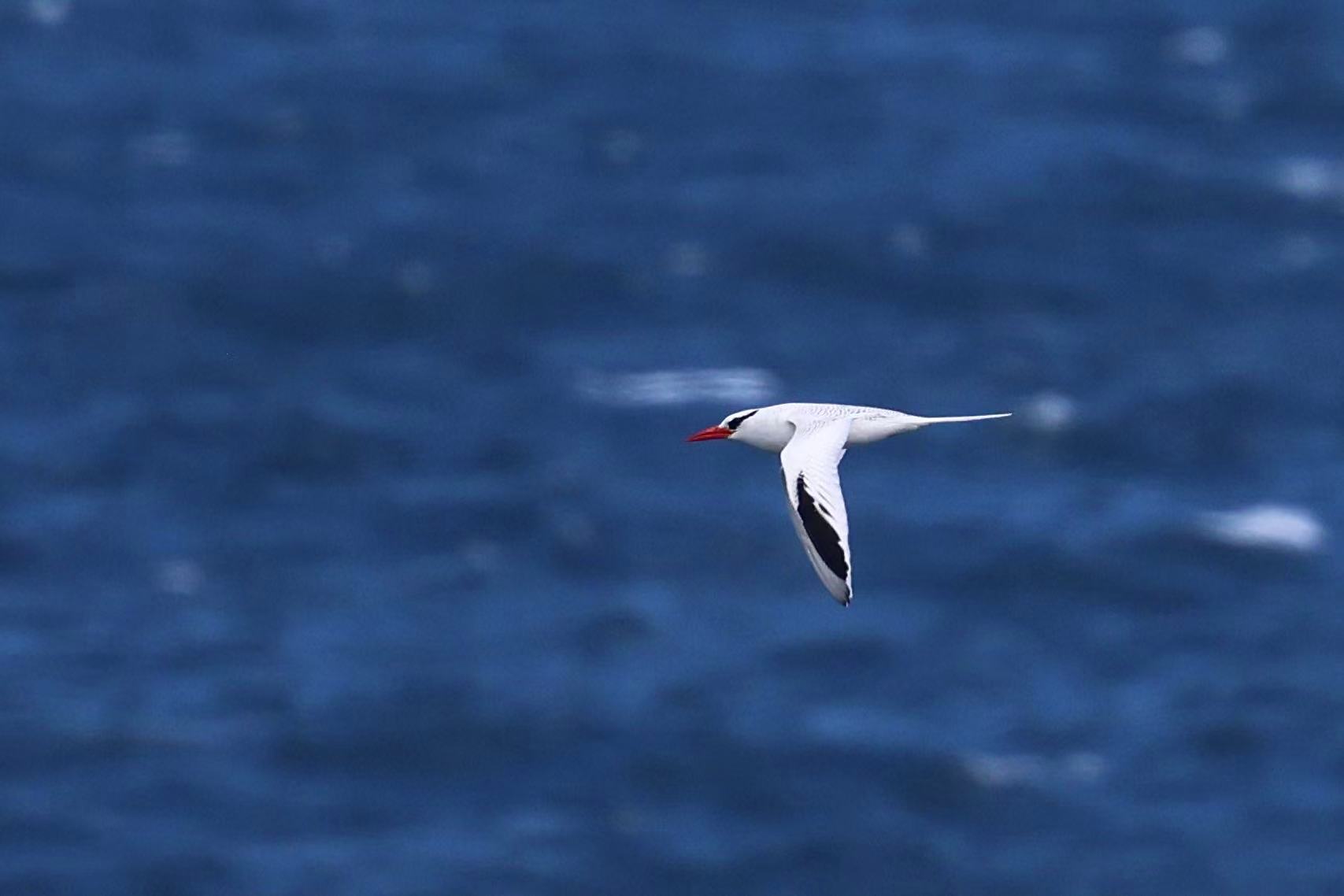
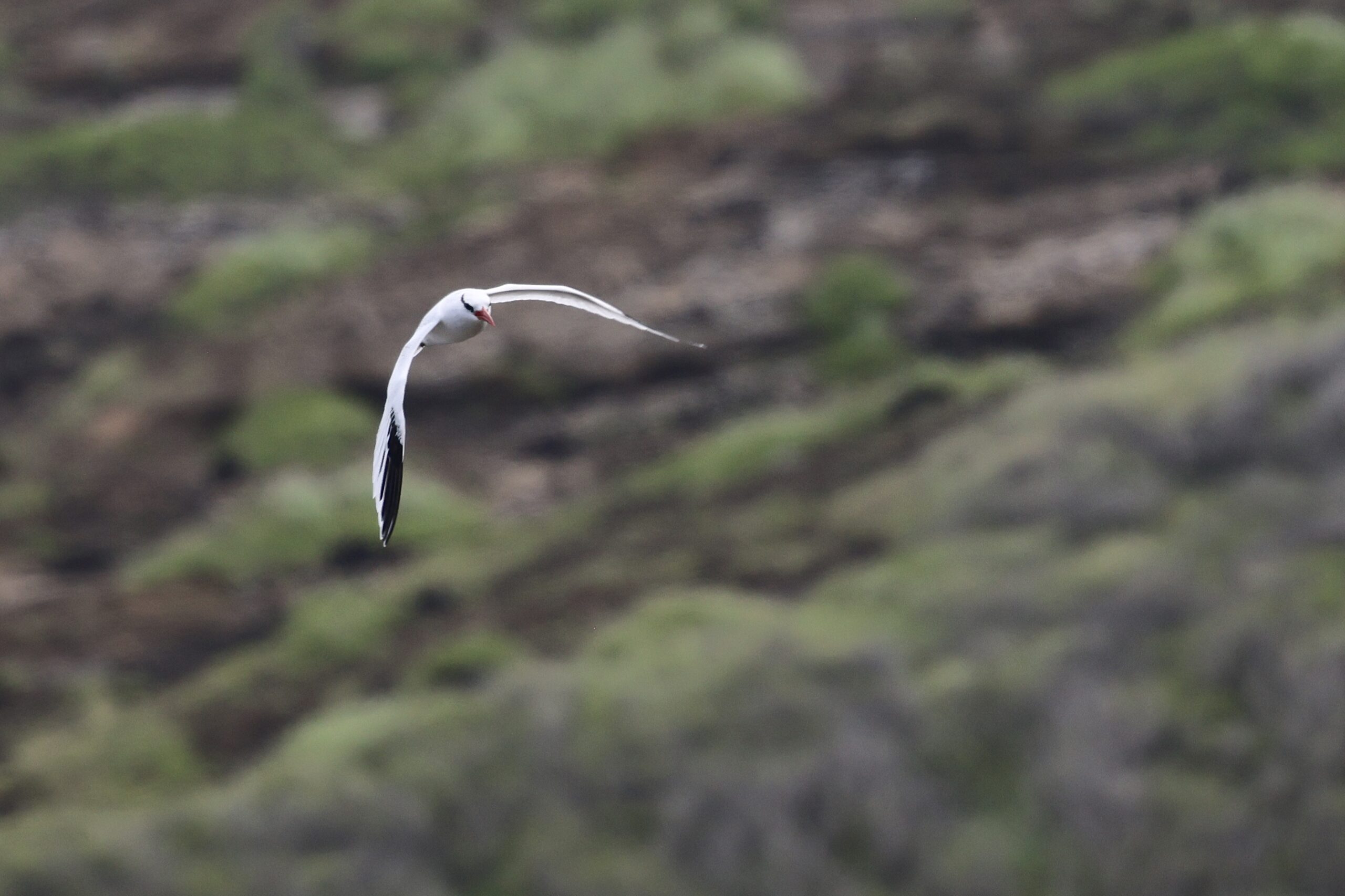
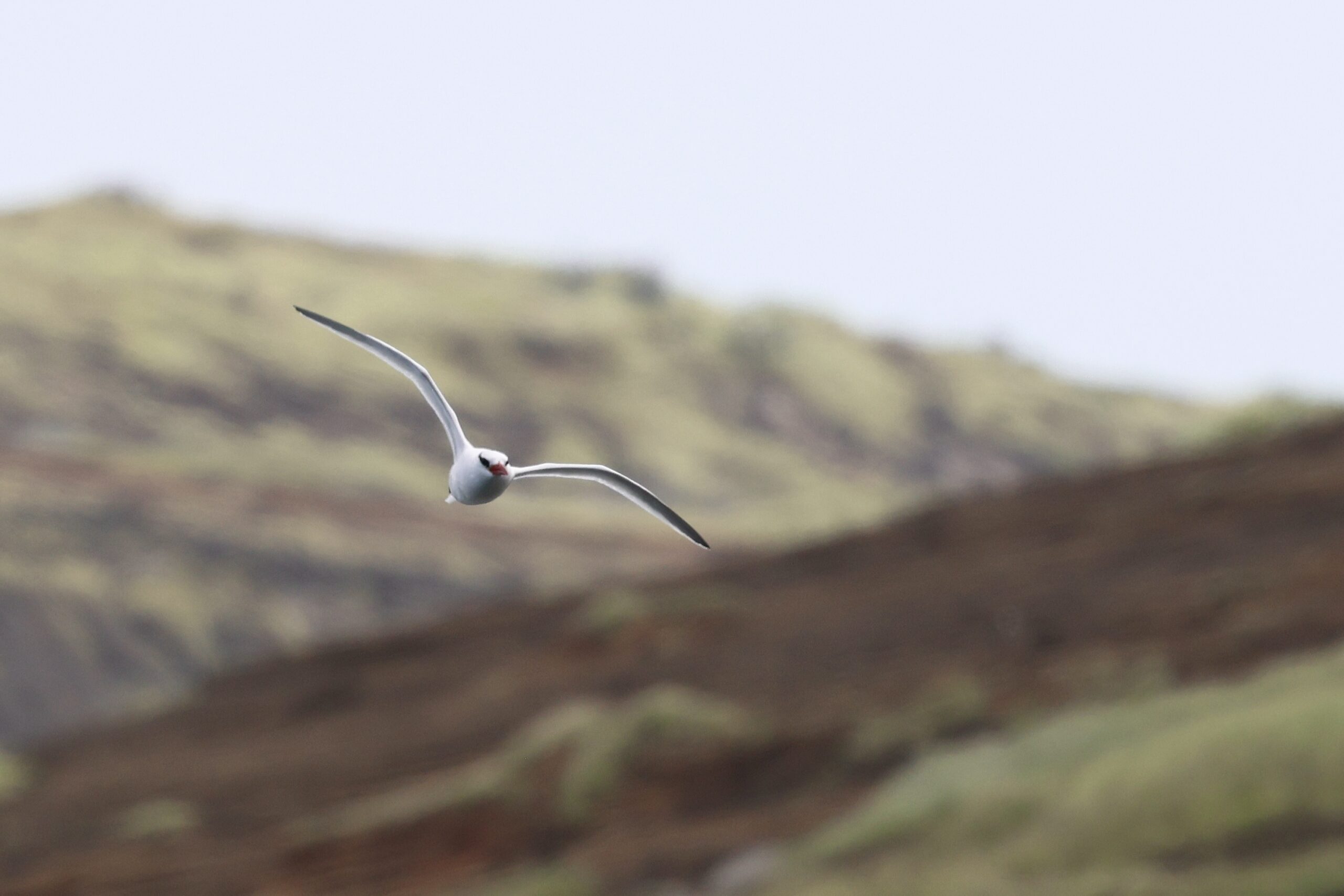
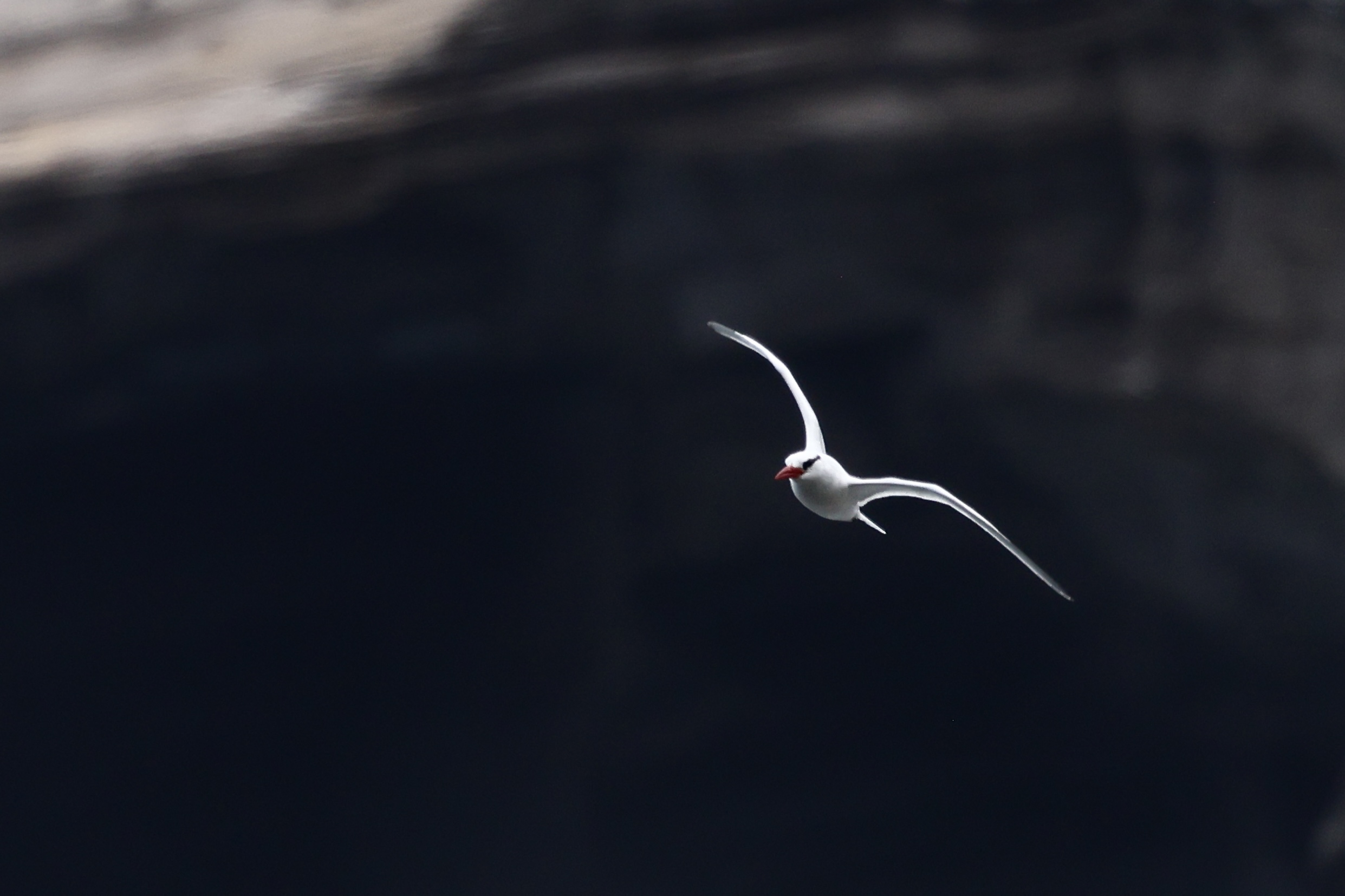
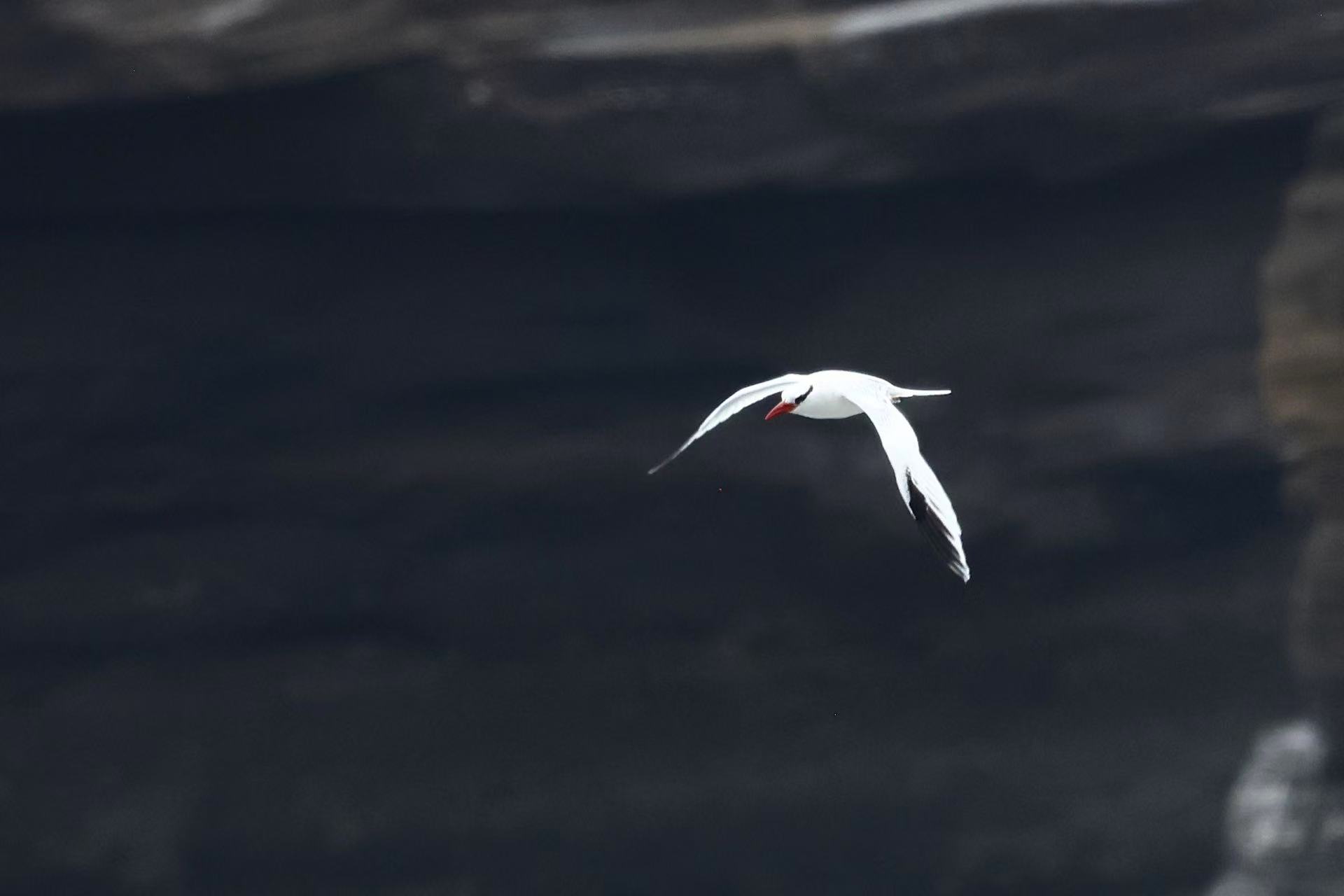
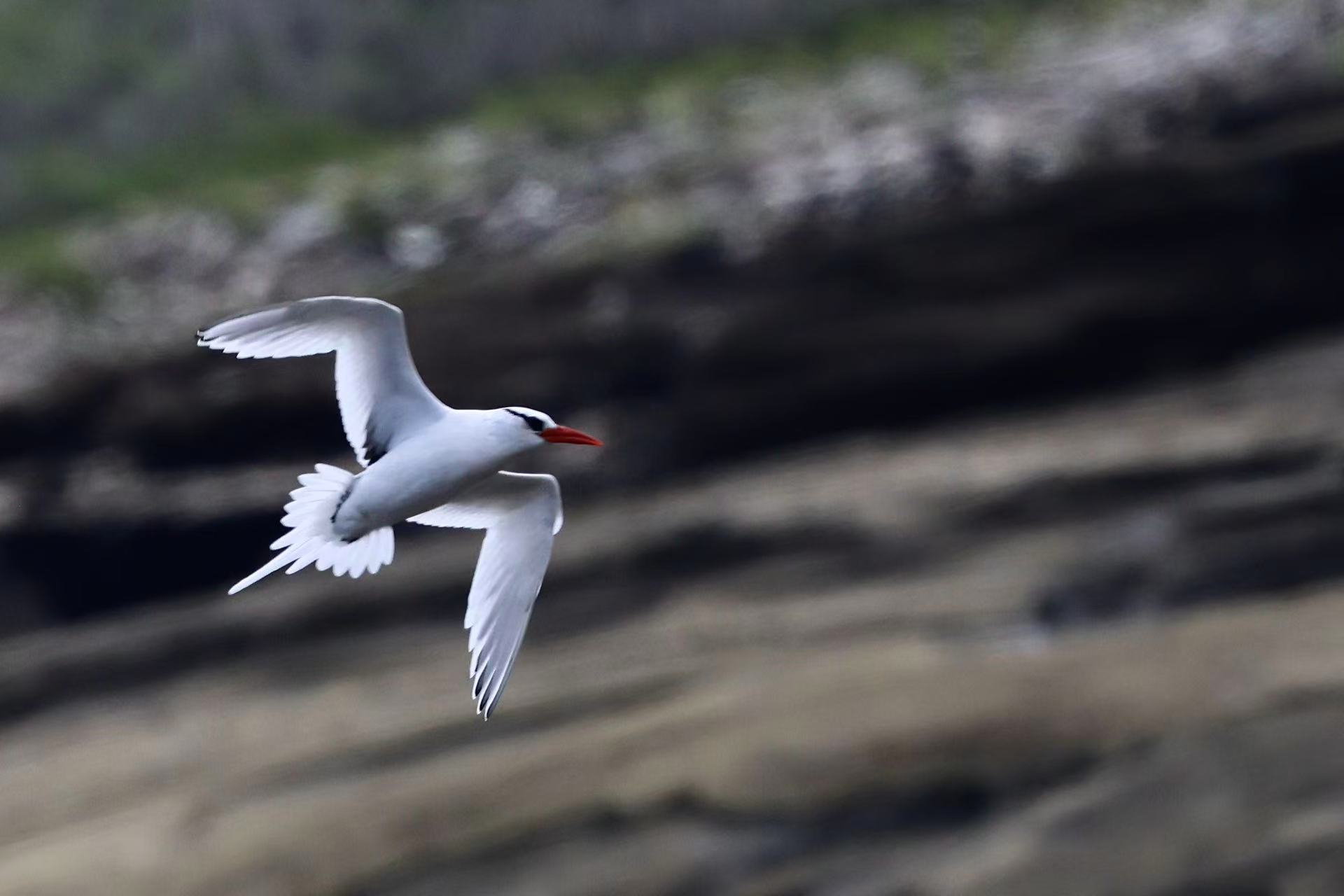
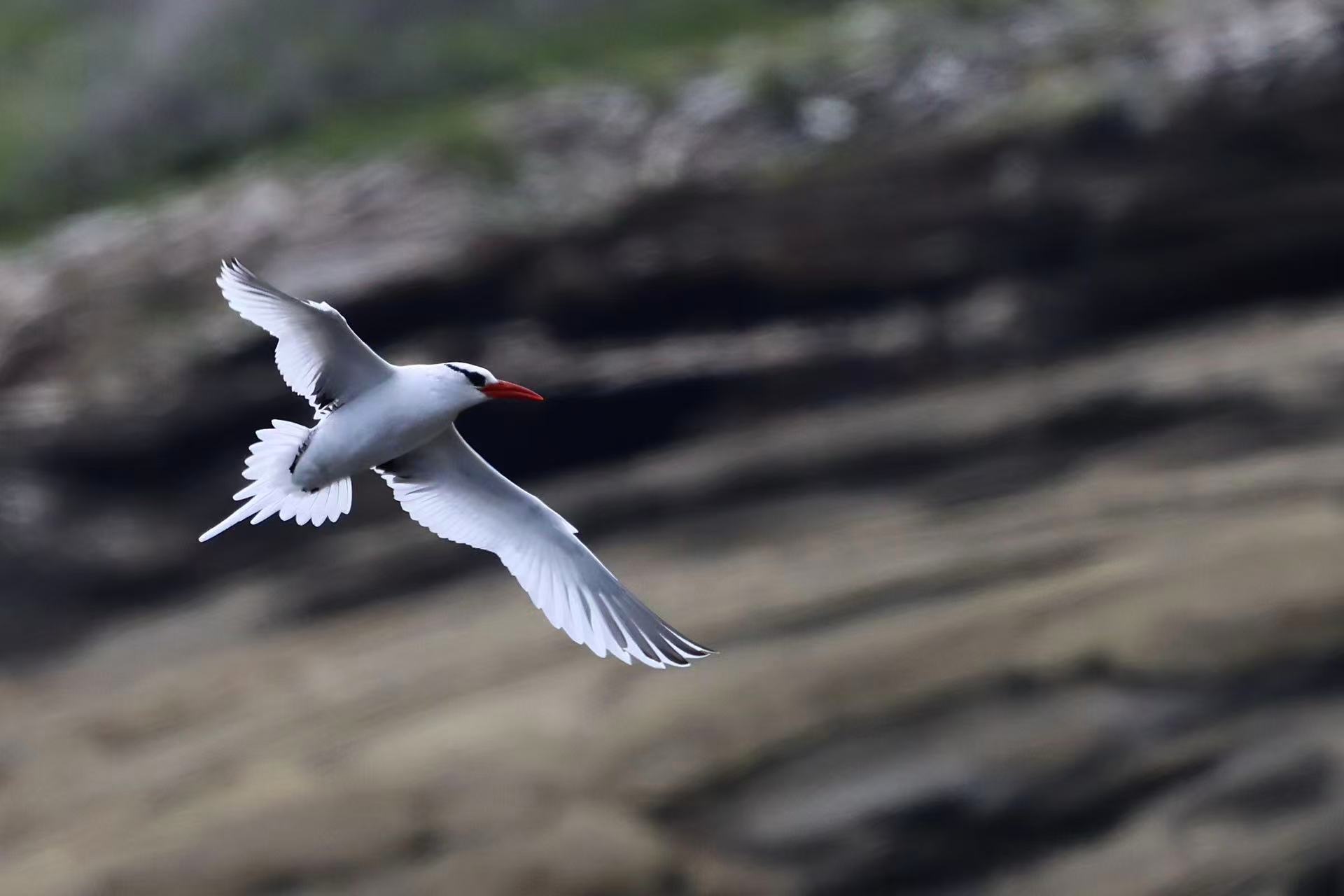
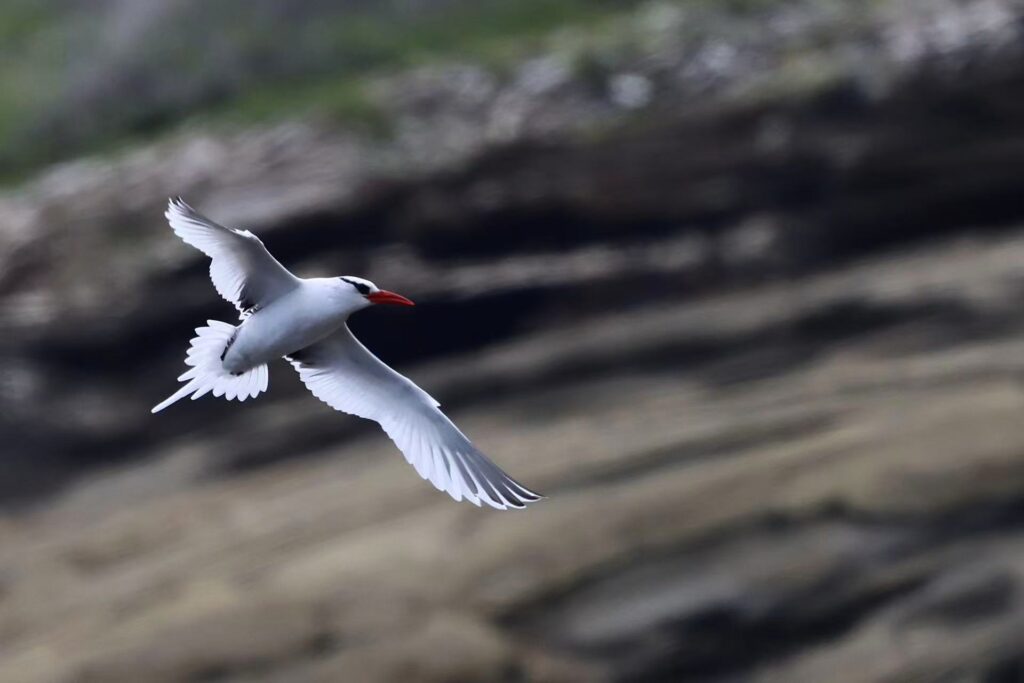
In the afternoon, our first stop was the pull outs between Japanese Fishing Shrine and Lānaʻi Lookout. Here, we would seek the vagrant Red-billed Tropicbird that had recently made friends with the resident Red-tailed Tropicbirds. Soon after we started scanning the tropicbird flocks with few other birders, I came across a tropic bird with black on its wing and pure white tail streamers. I quickly took a few photos before it flew out of sight. Upon zooming in, it was clearly the Red-billed Tropicbird! It soon circled back, allowing everyone to get excellent photos. Our lifer Brown Booby soon silently glided over the ocean, allowing us to check all the targets at this location.
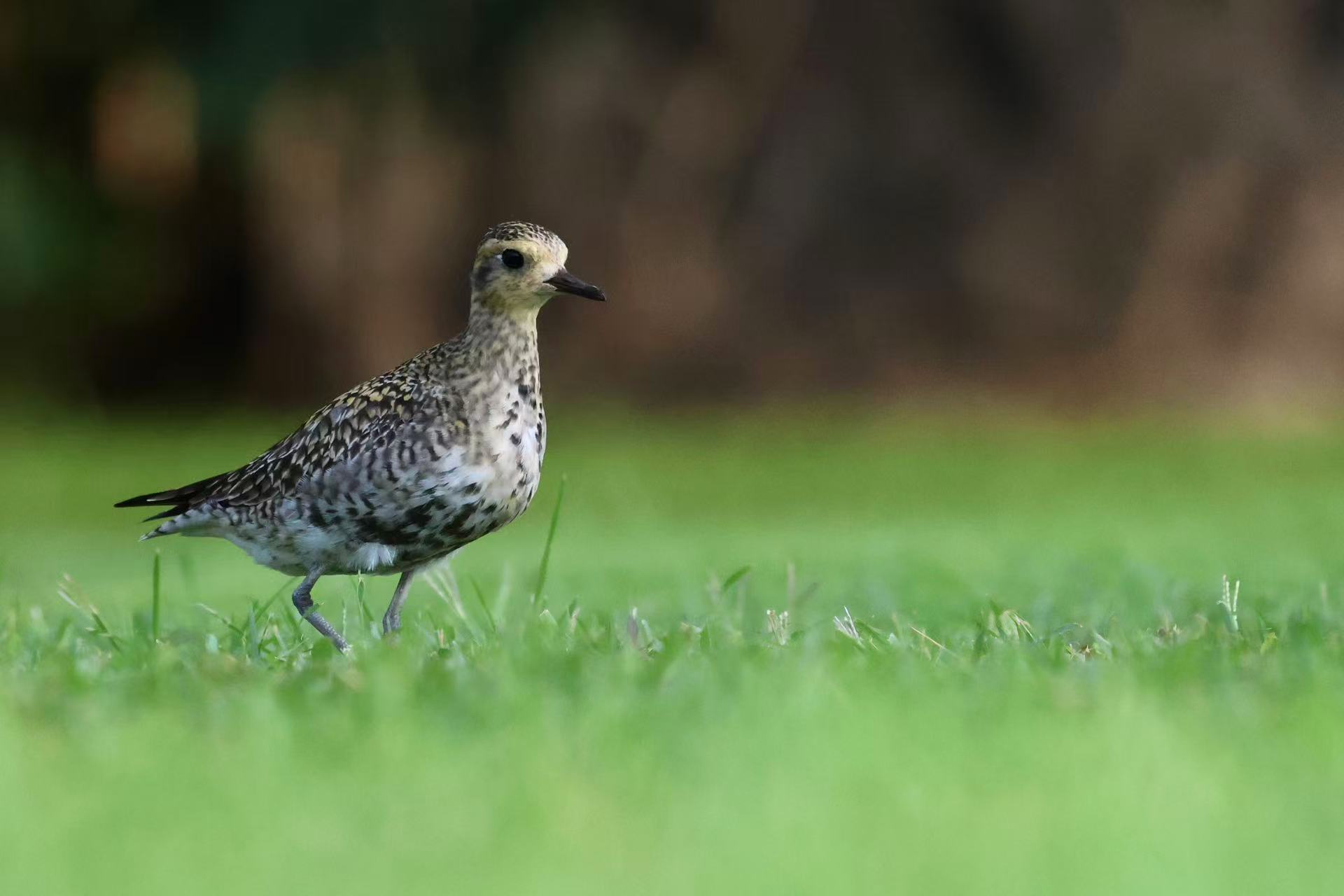
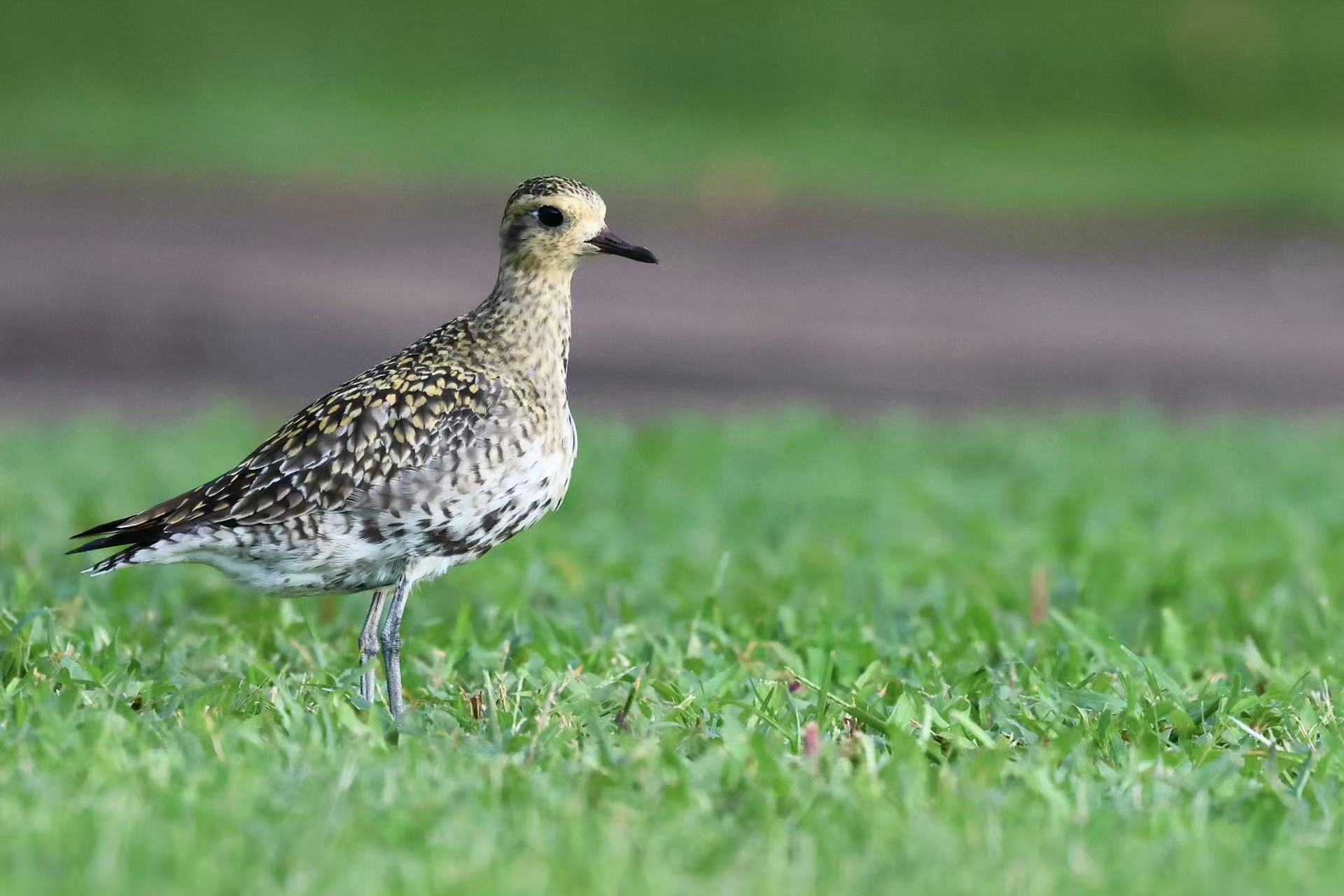
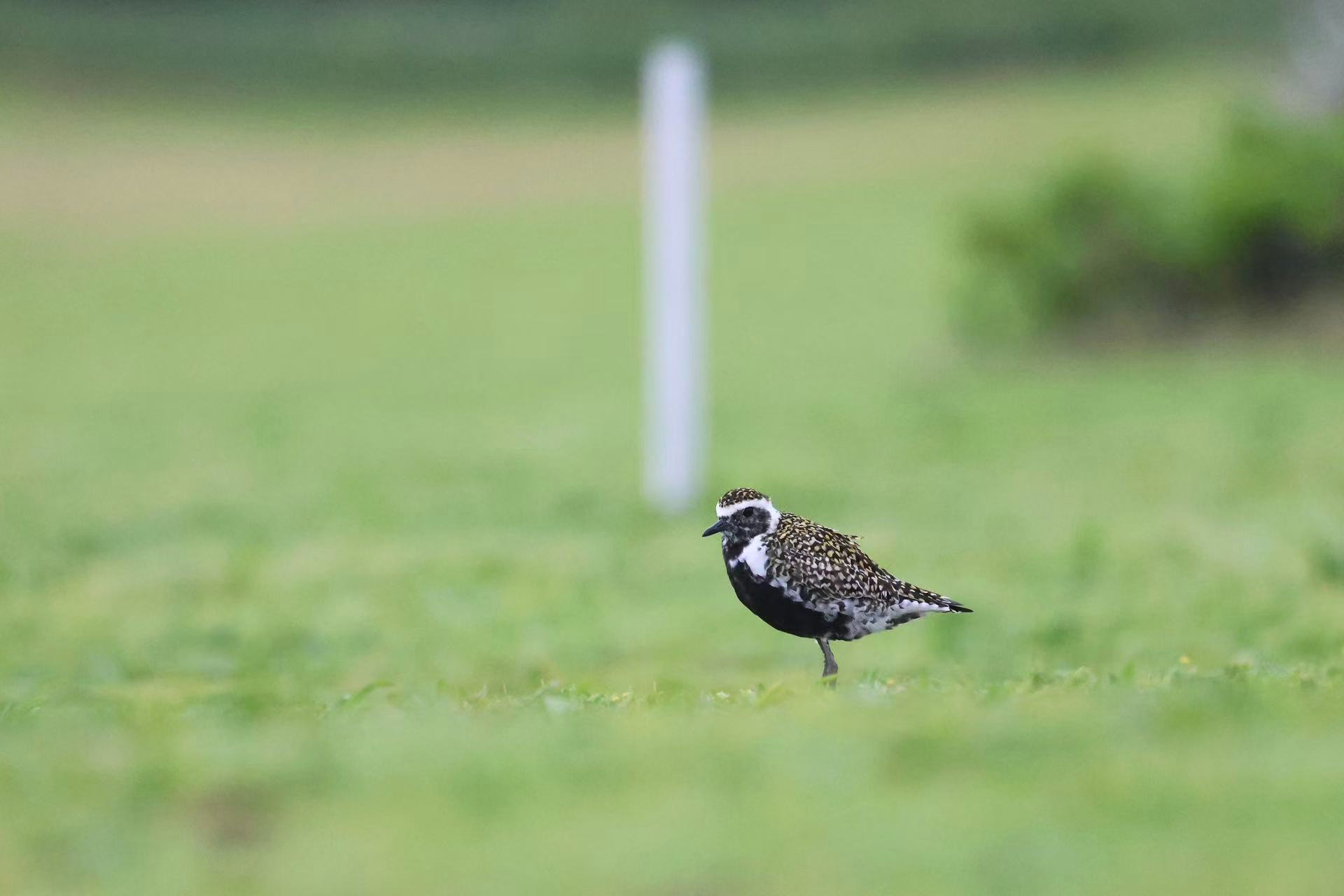
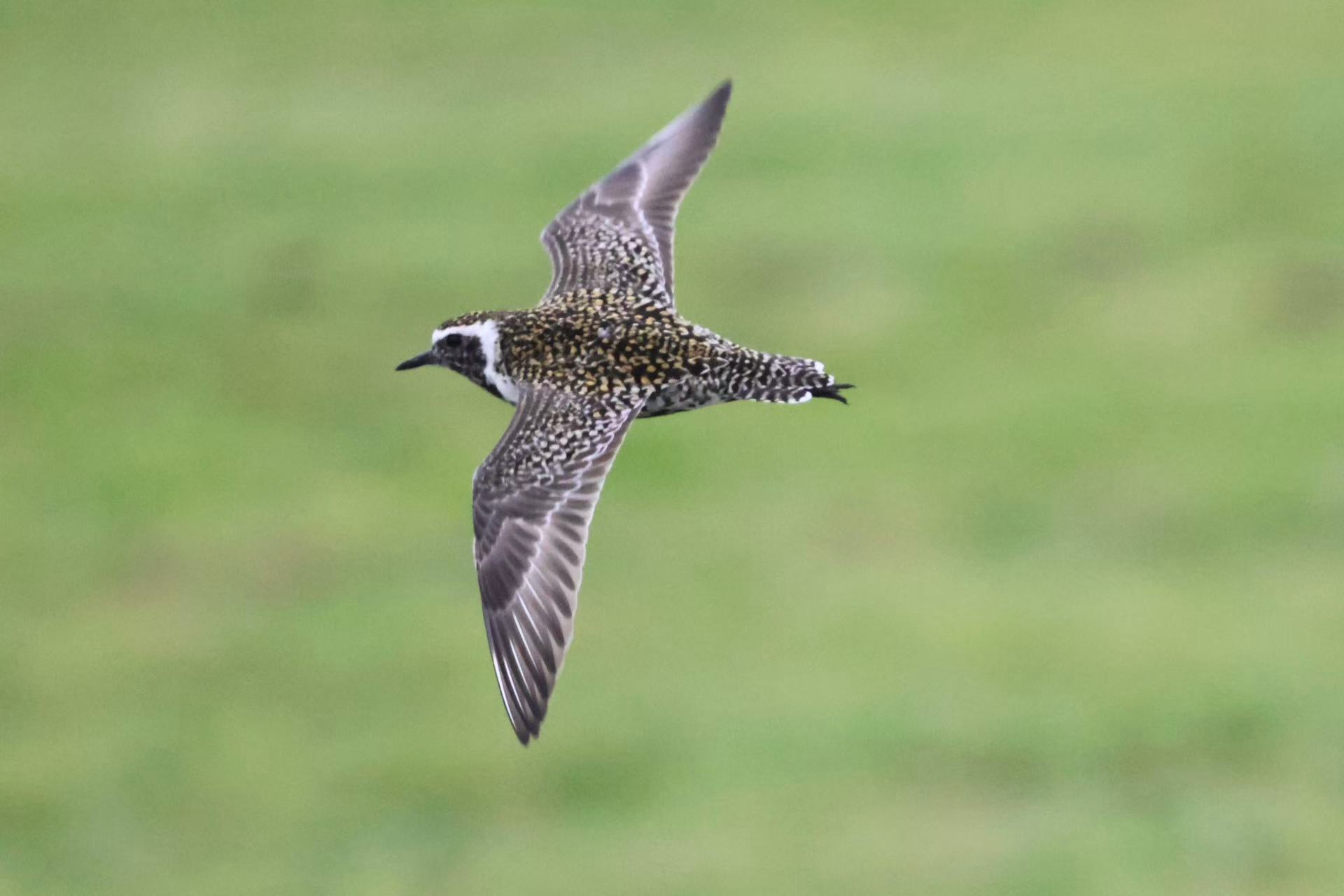
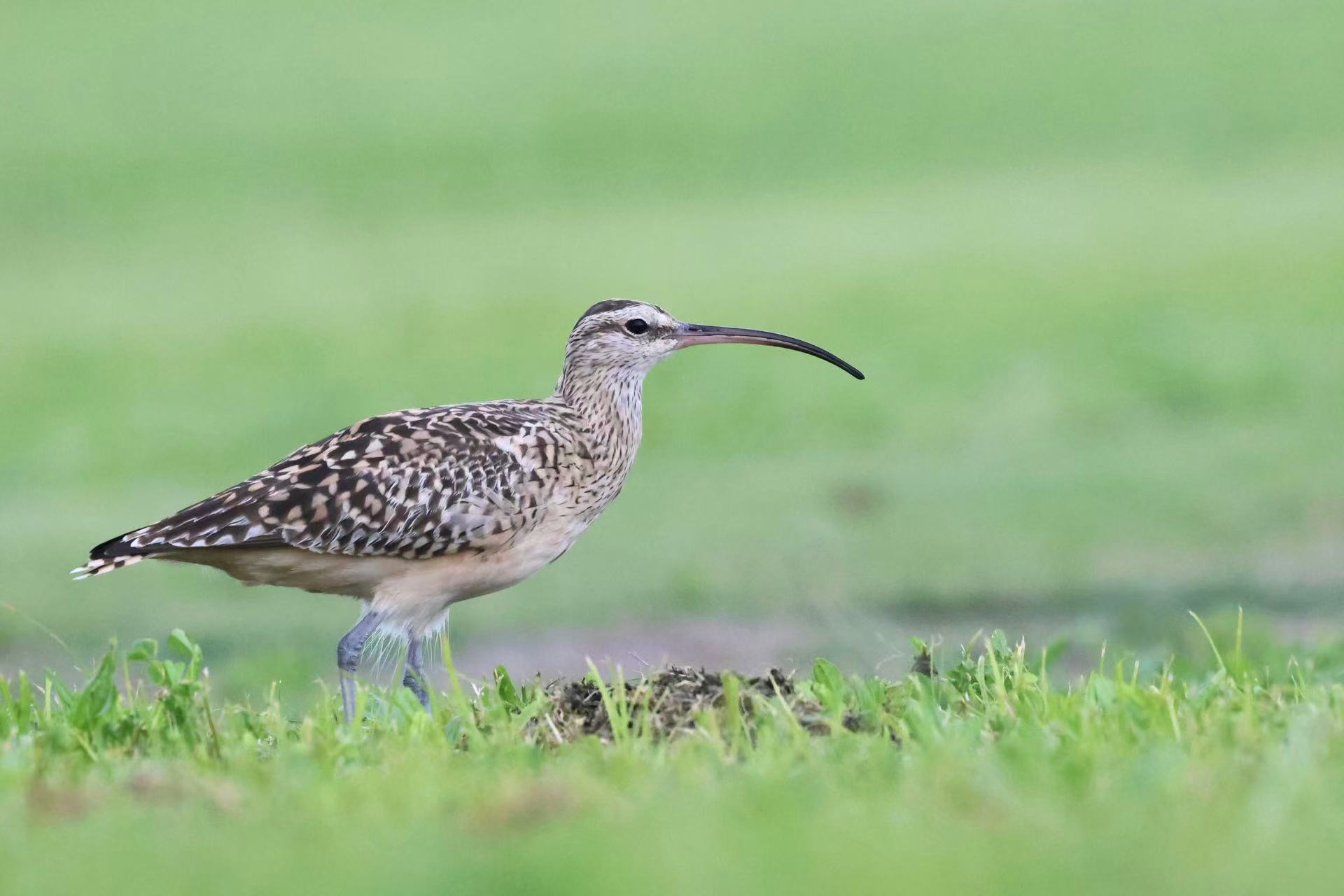
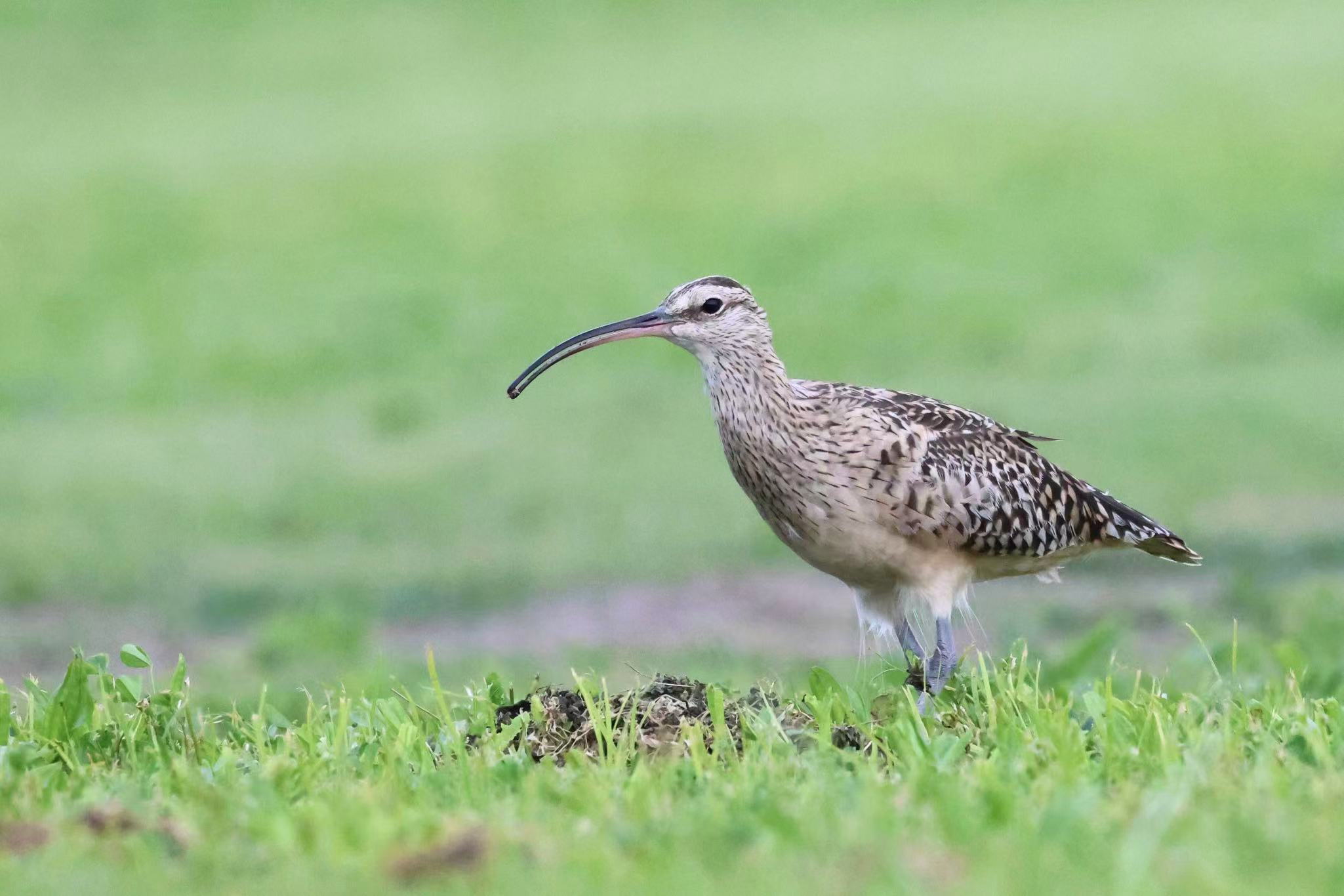
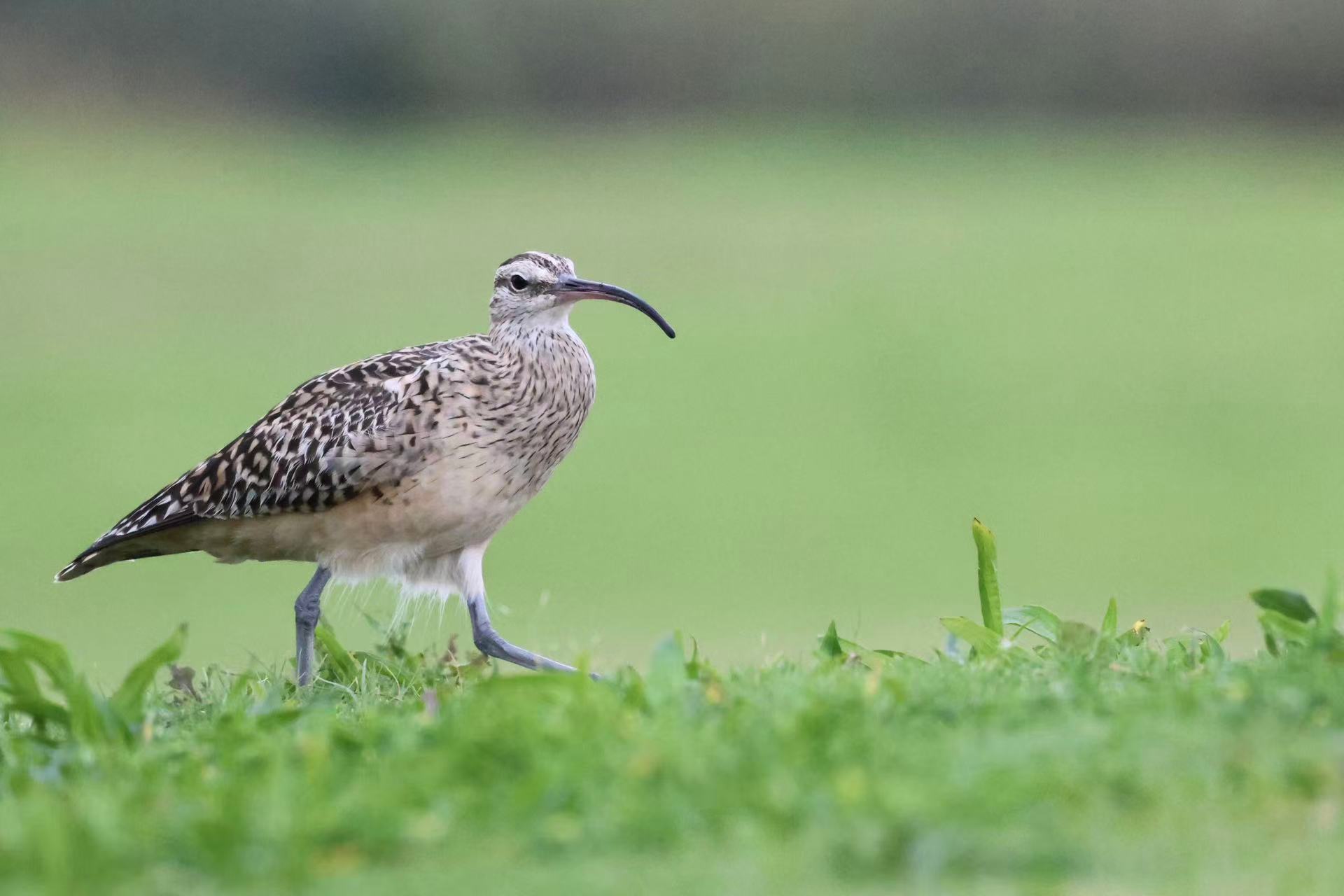
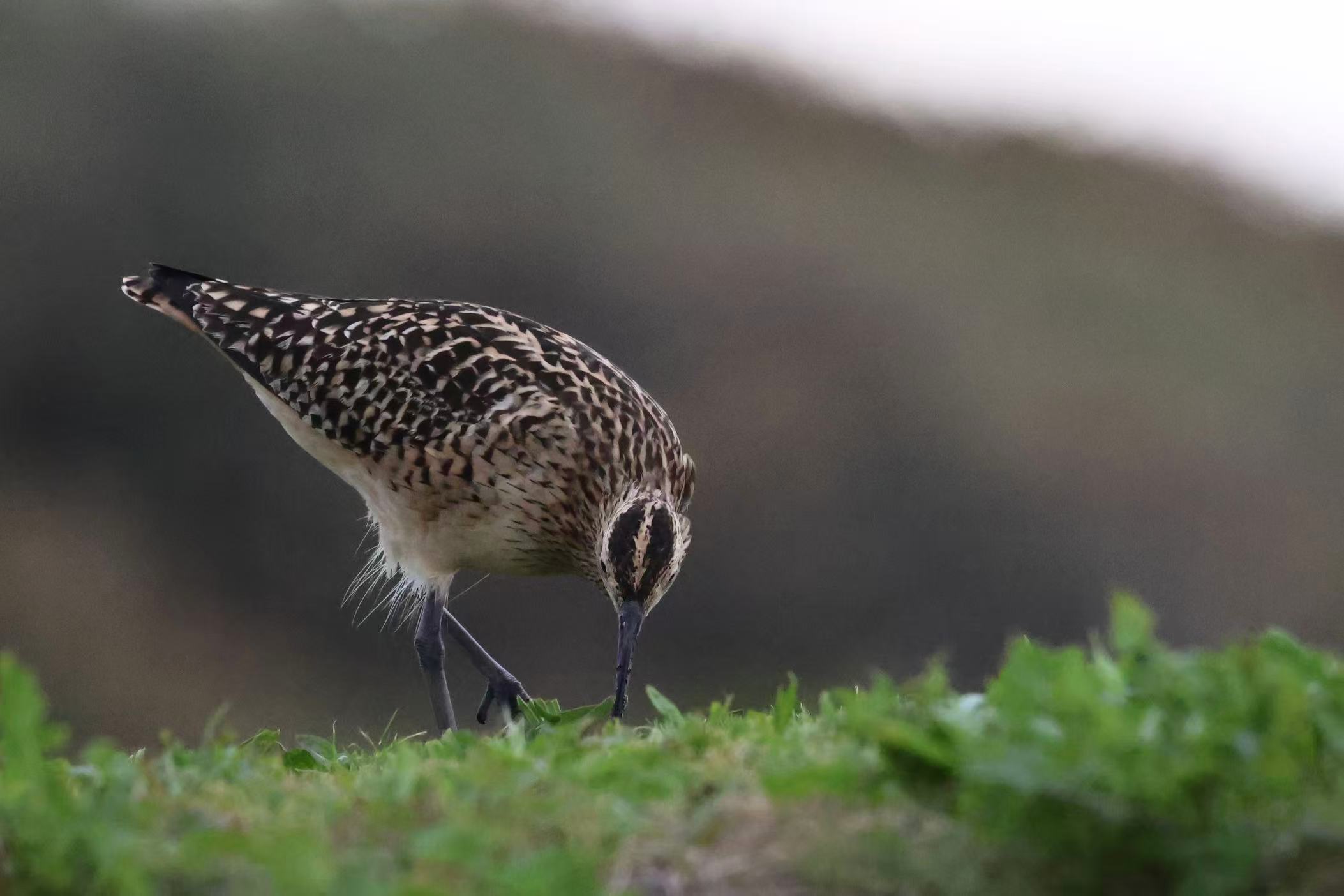
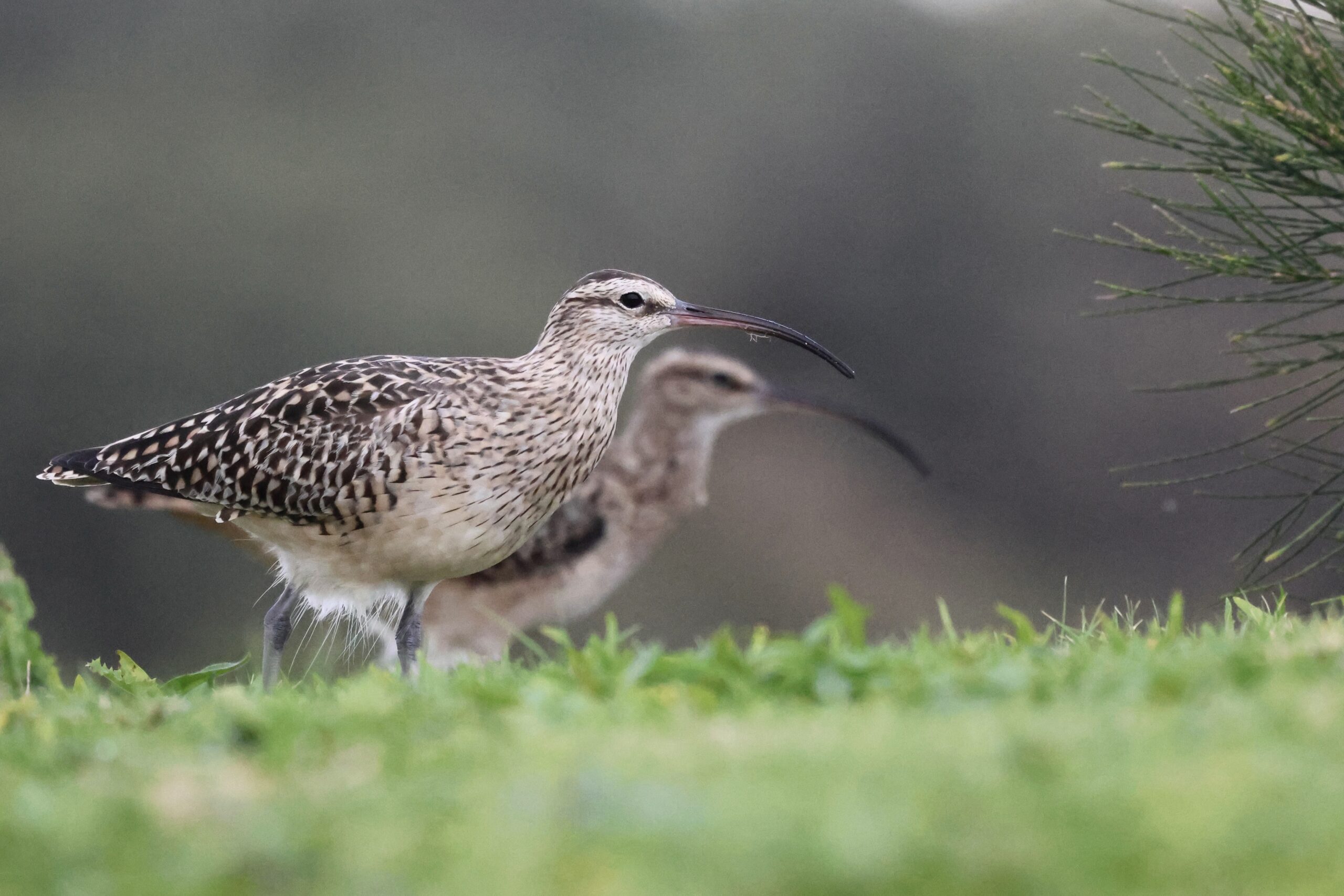
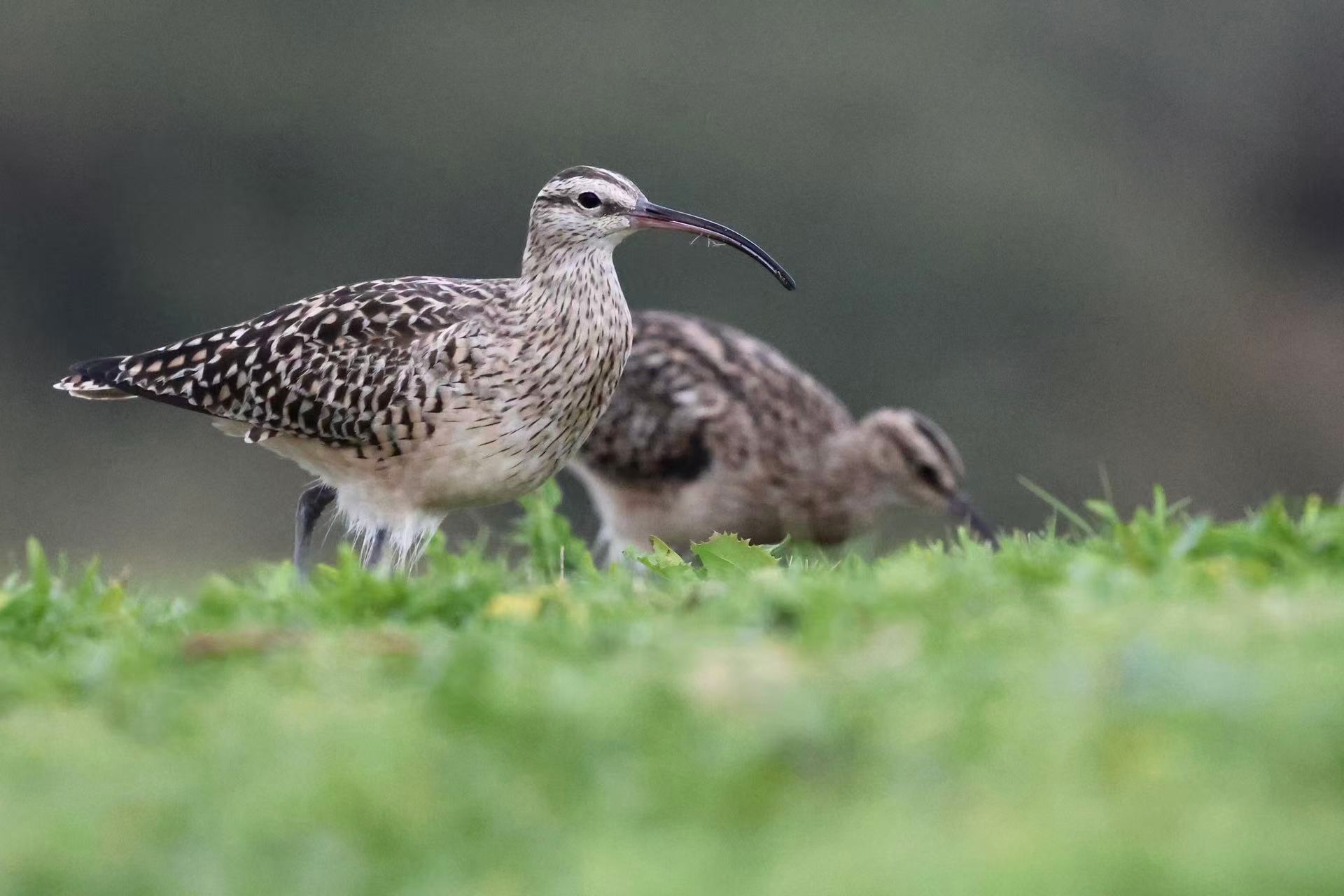
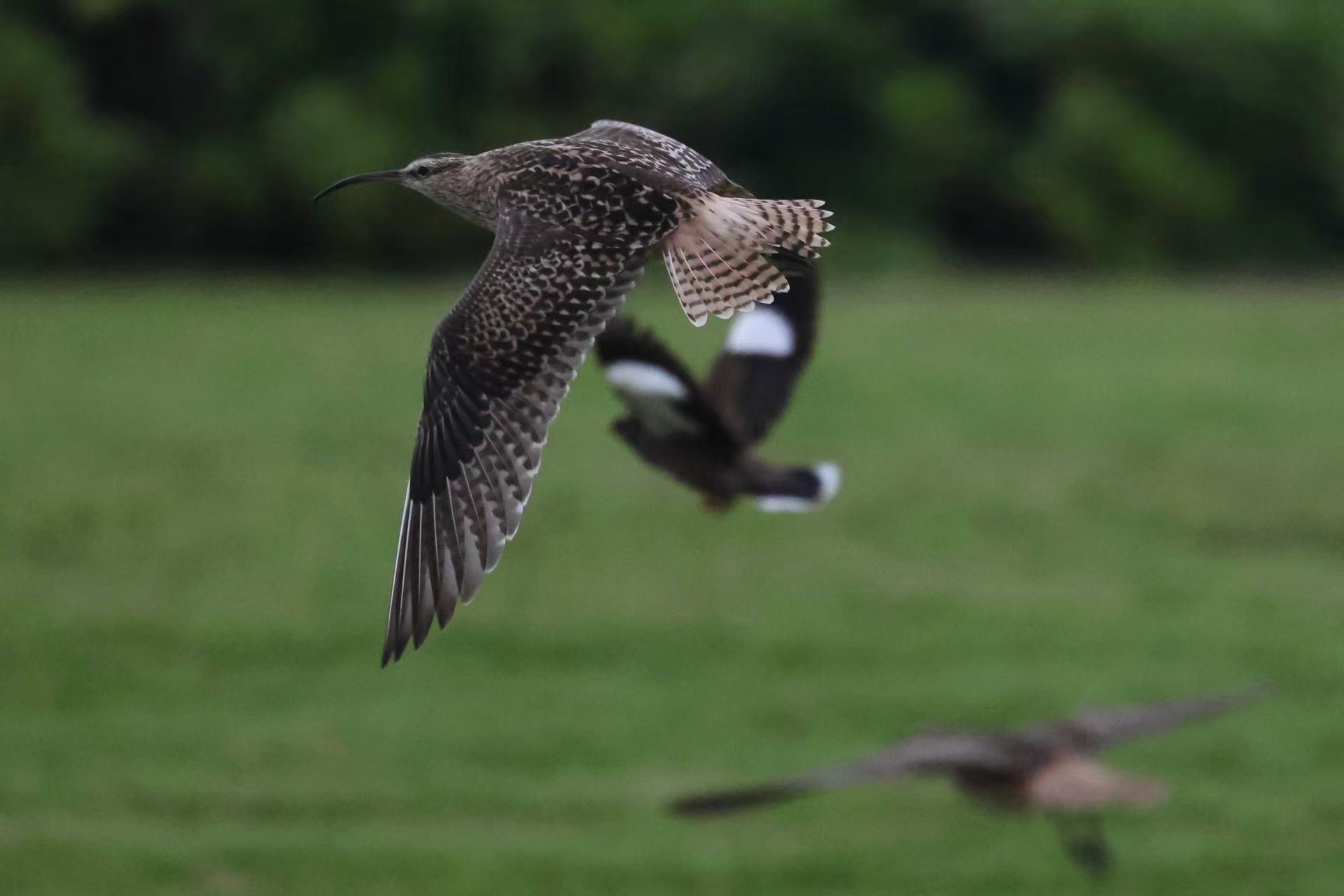
With plenty of extra time, we decided to add an extra stop to seek out the Bristle-thighed Curlews (we originally putted this bird as a target on Big Island) wintering at Kahuku Golf Course.
The golf course was marked as NO TRESPASSING all the way around but the ranger at the “club house” said that it is OK to bird on the course.
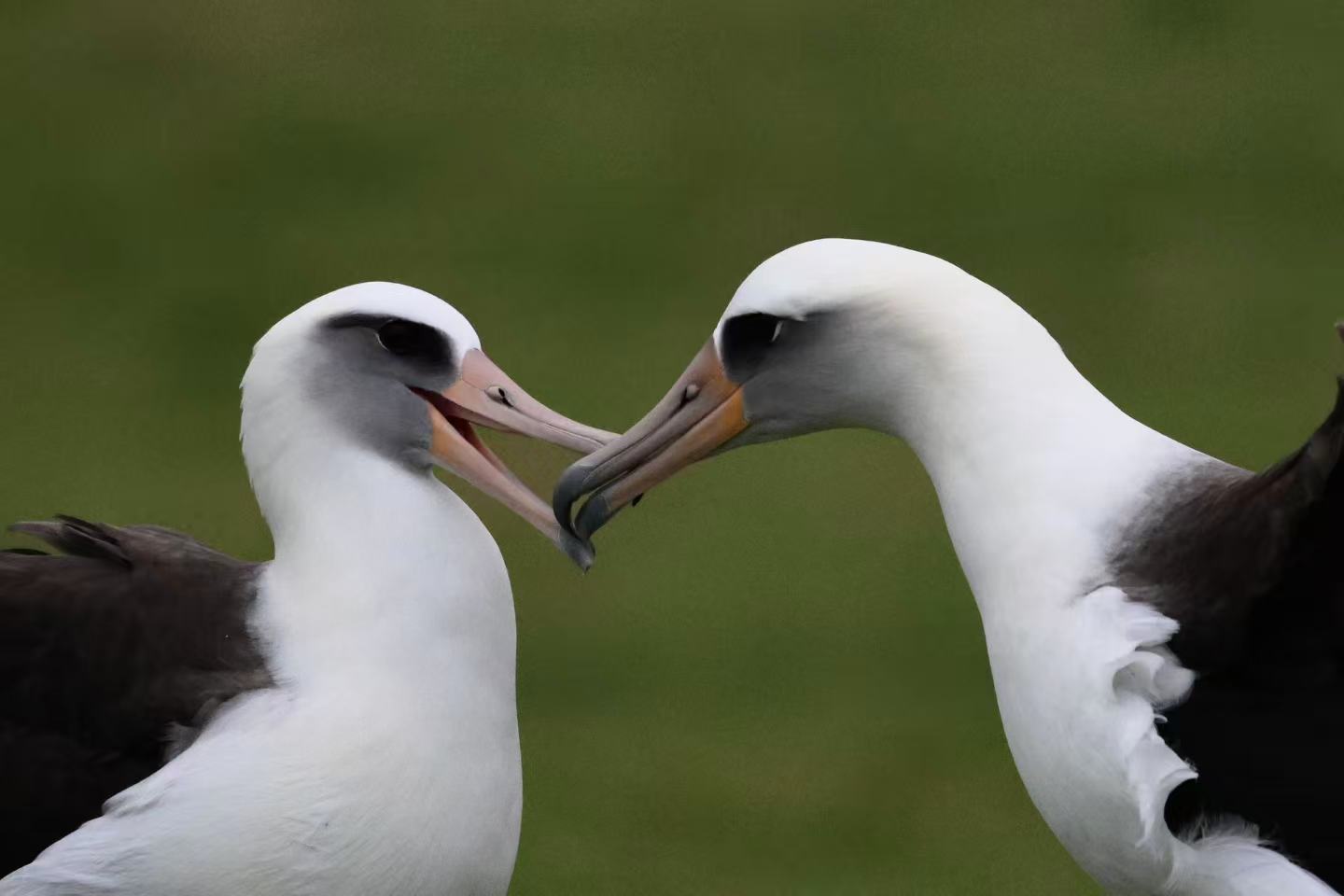
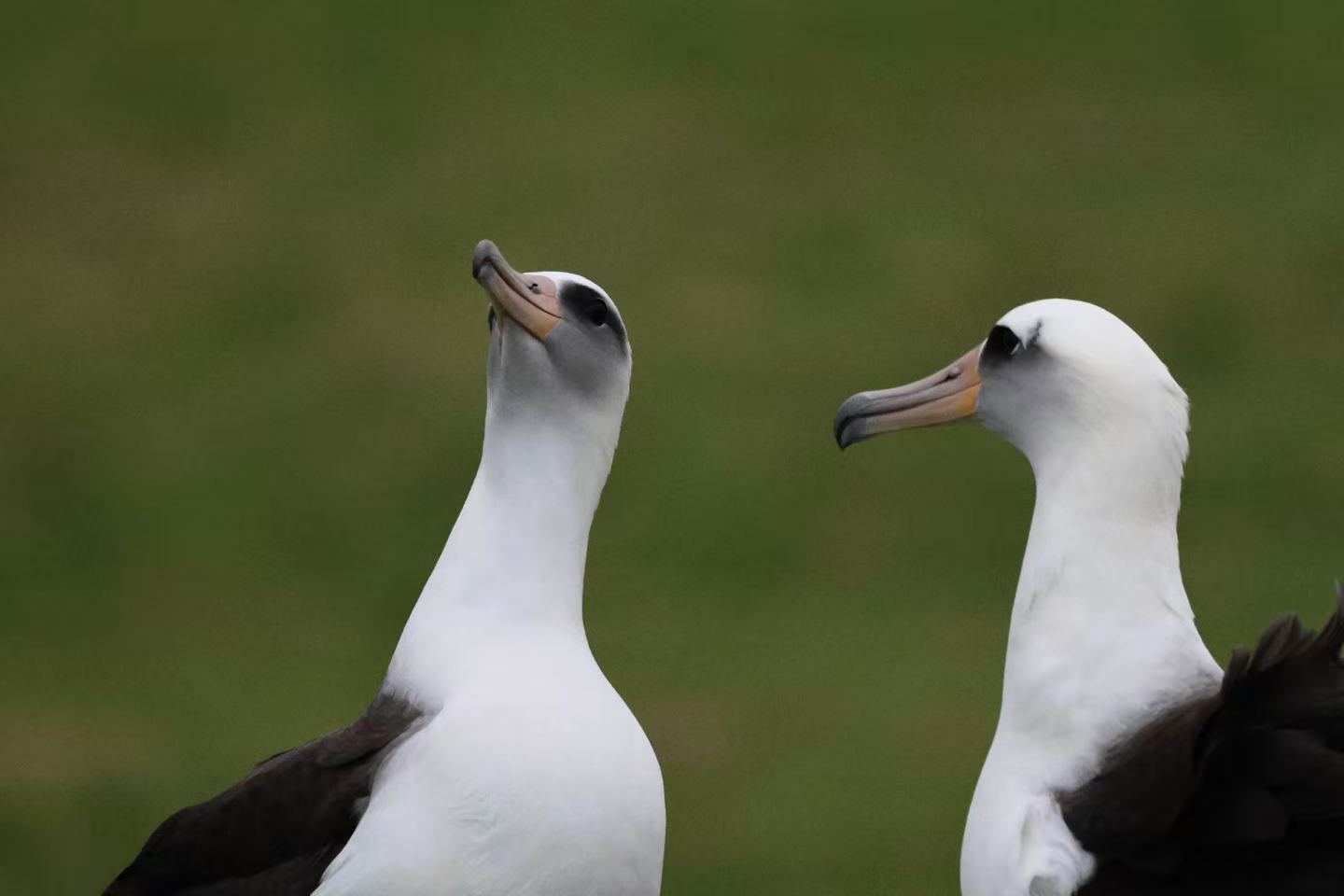
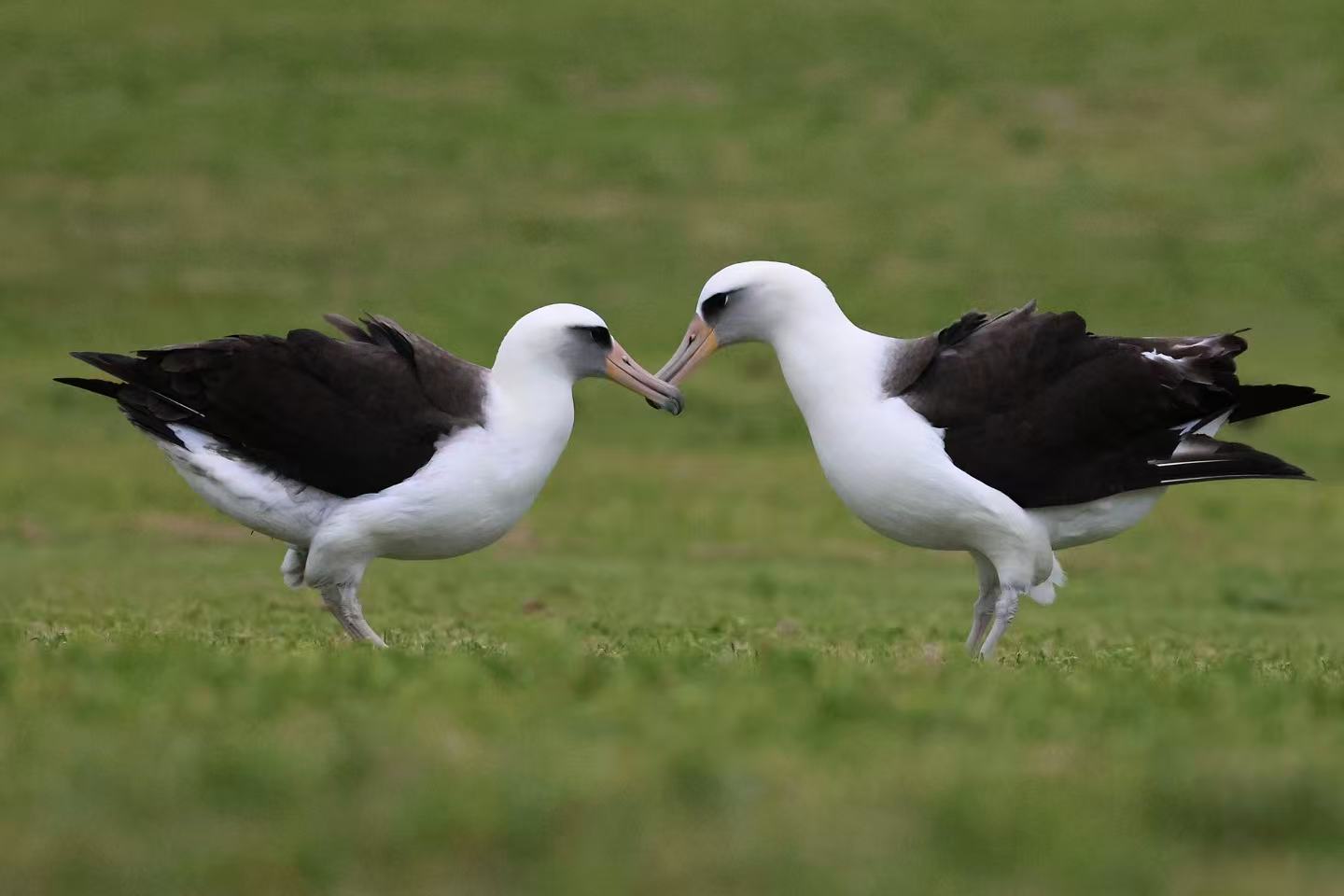
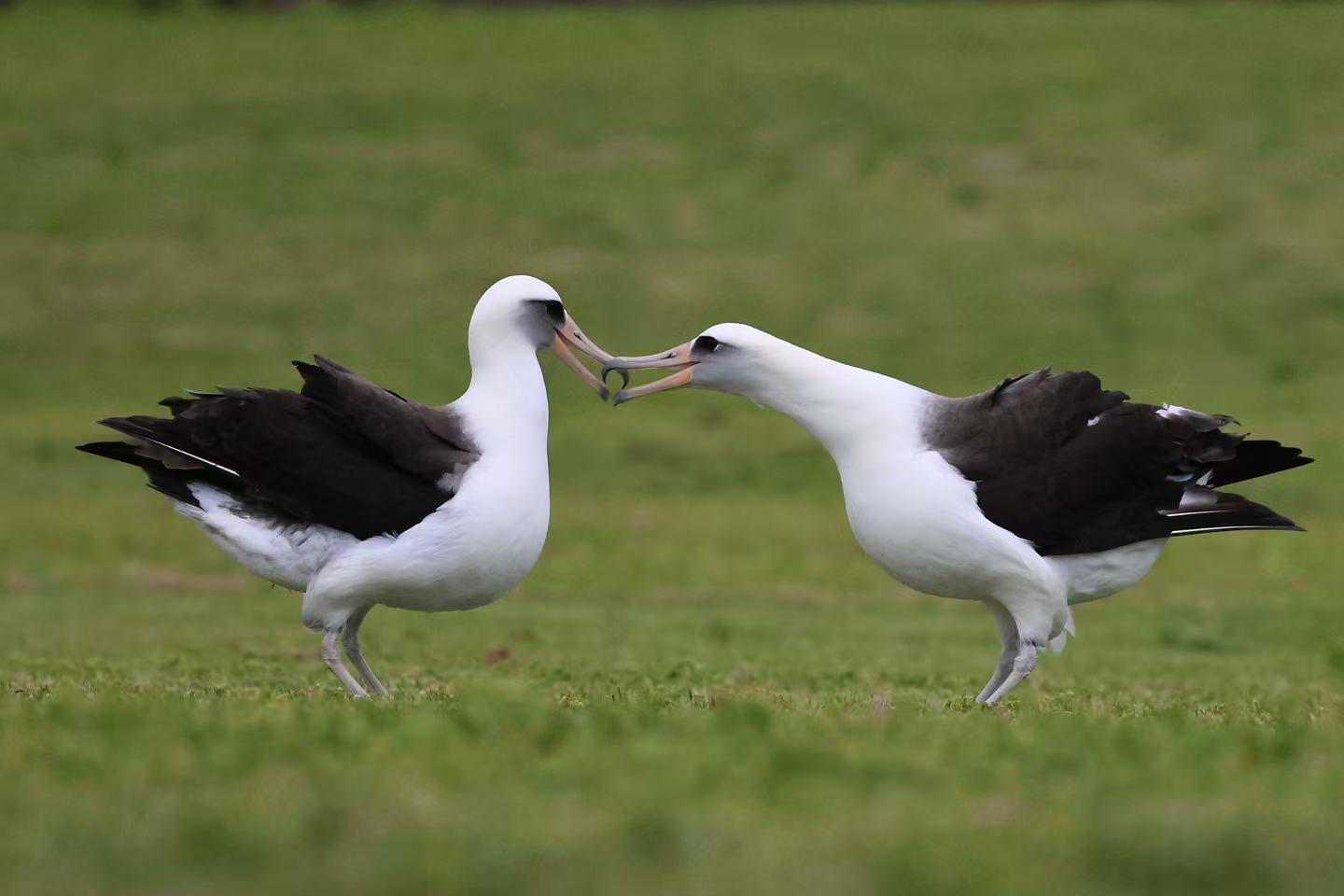
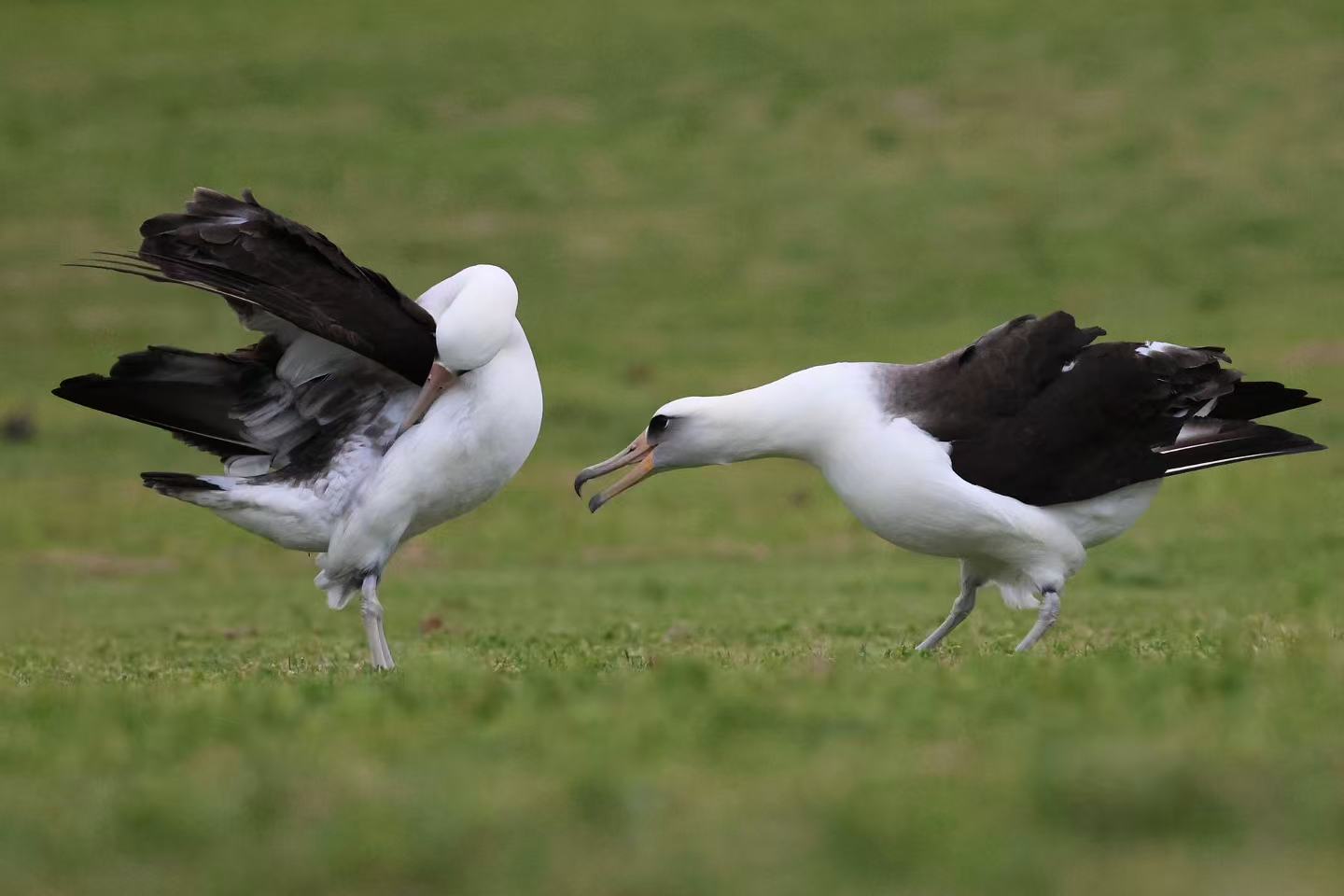
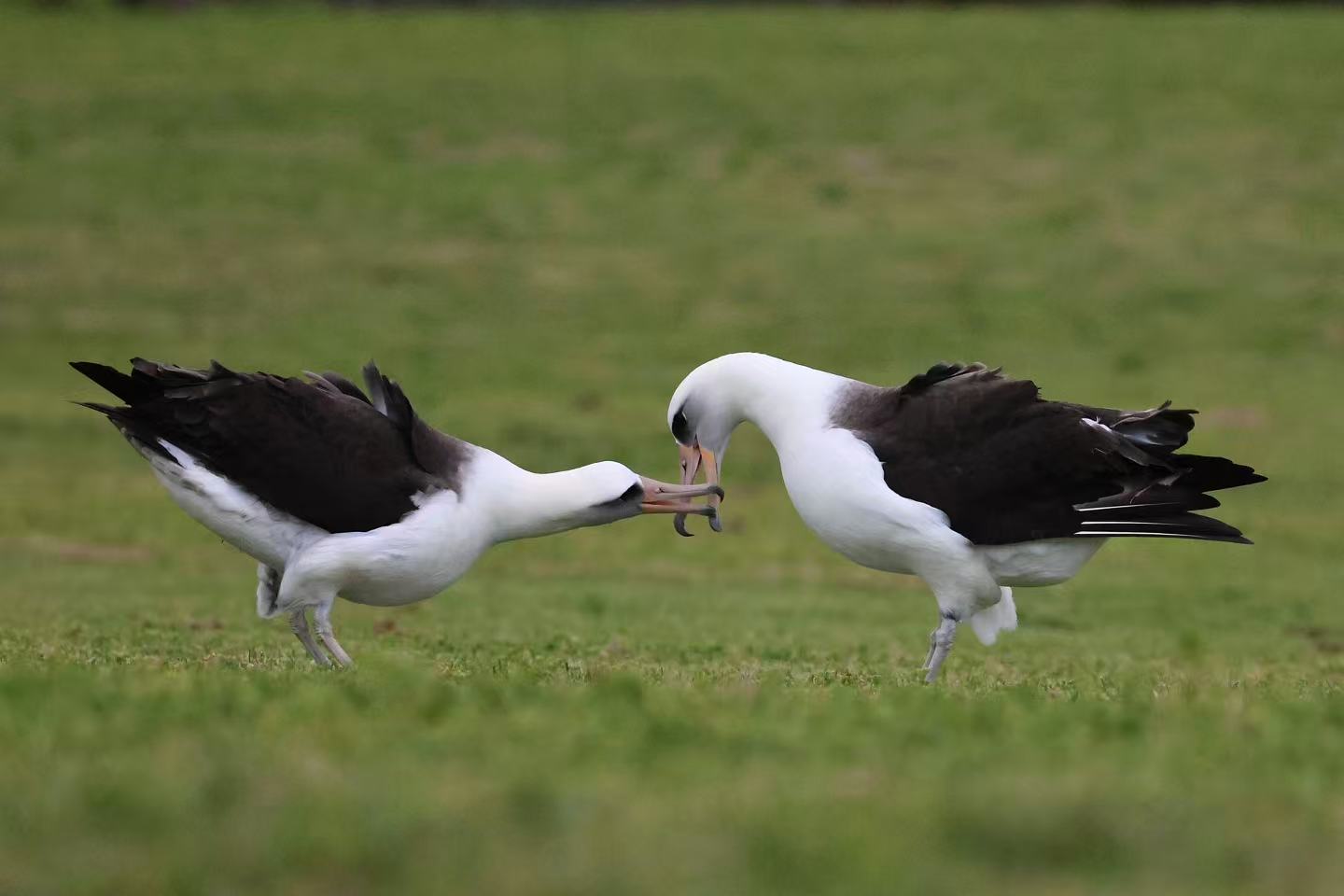
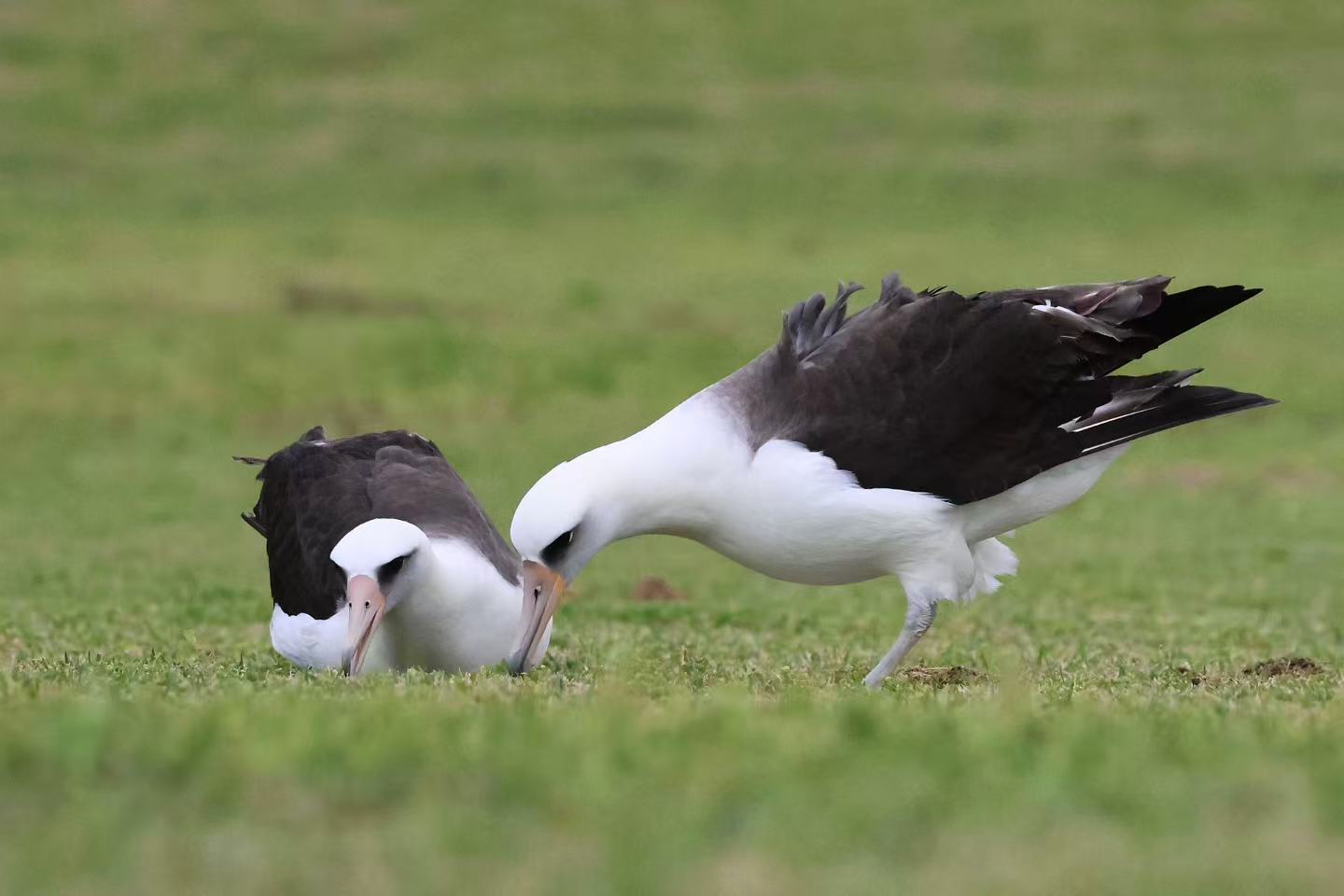
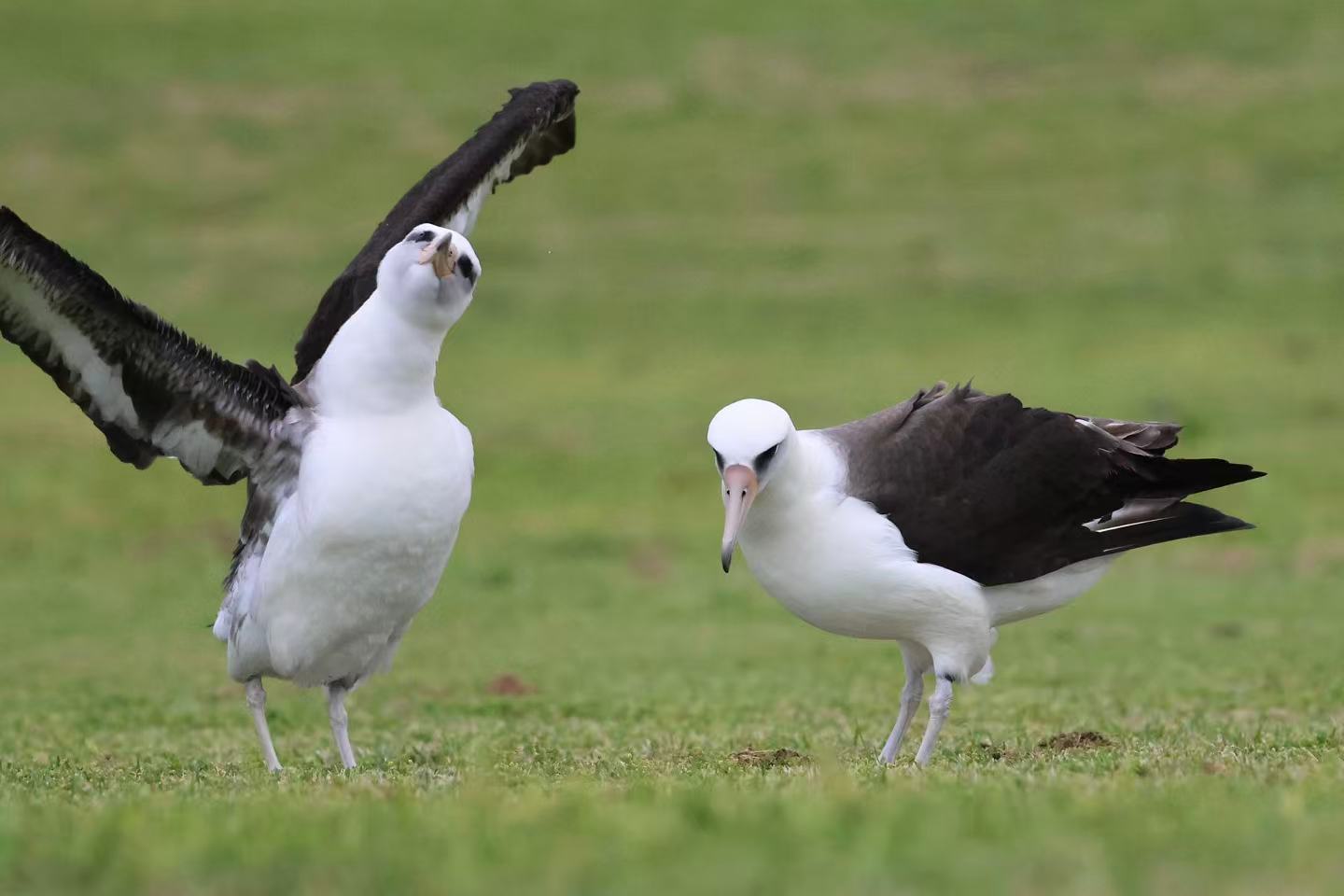
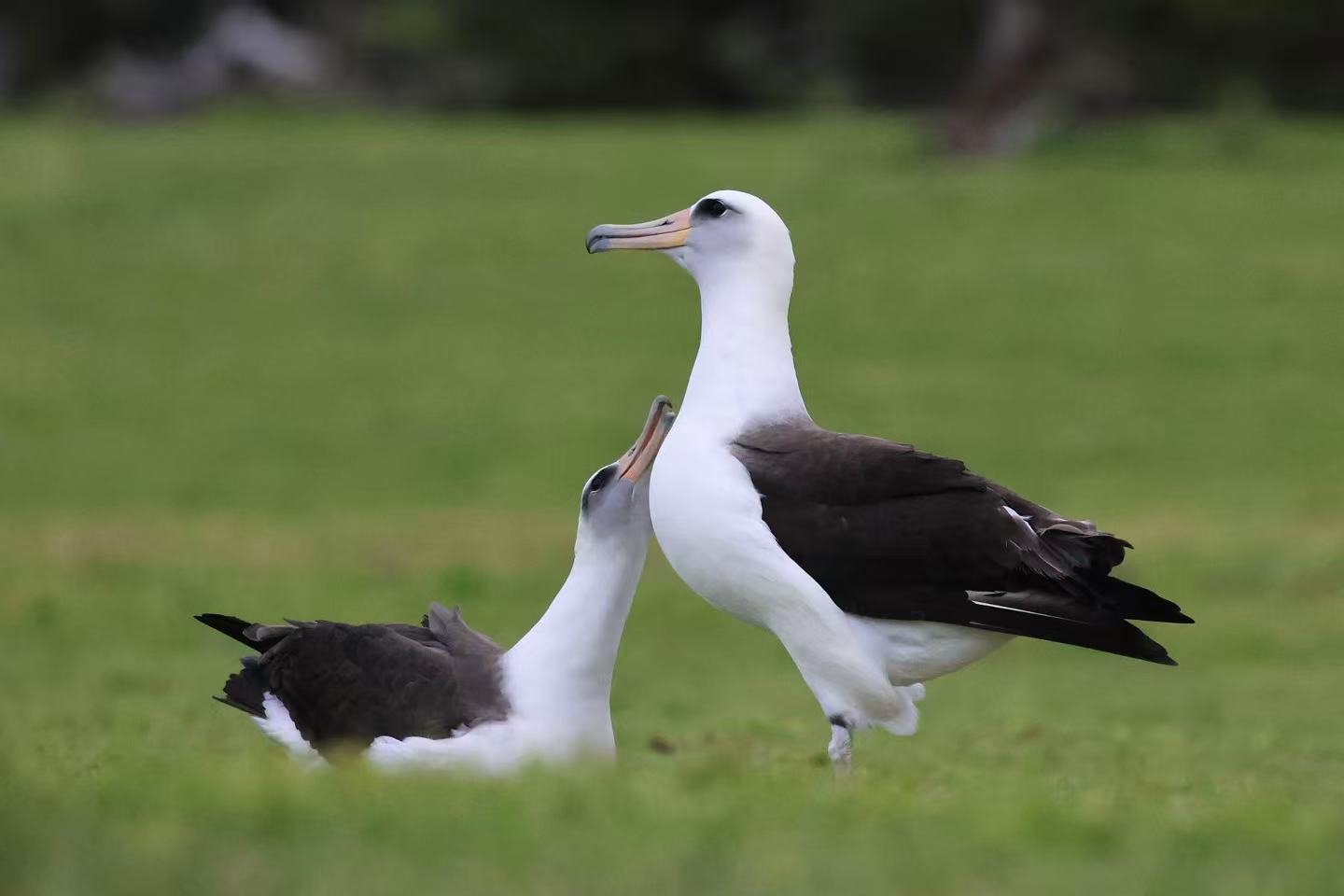
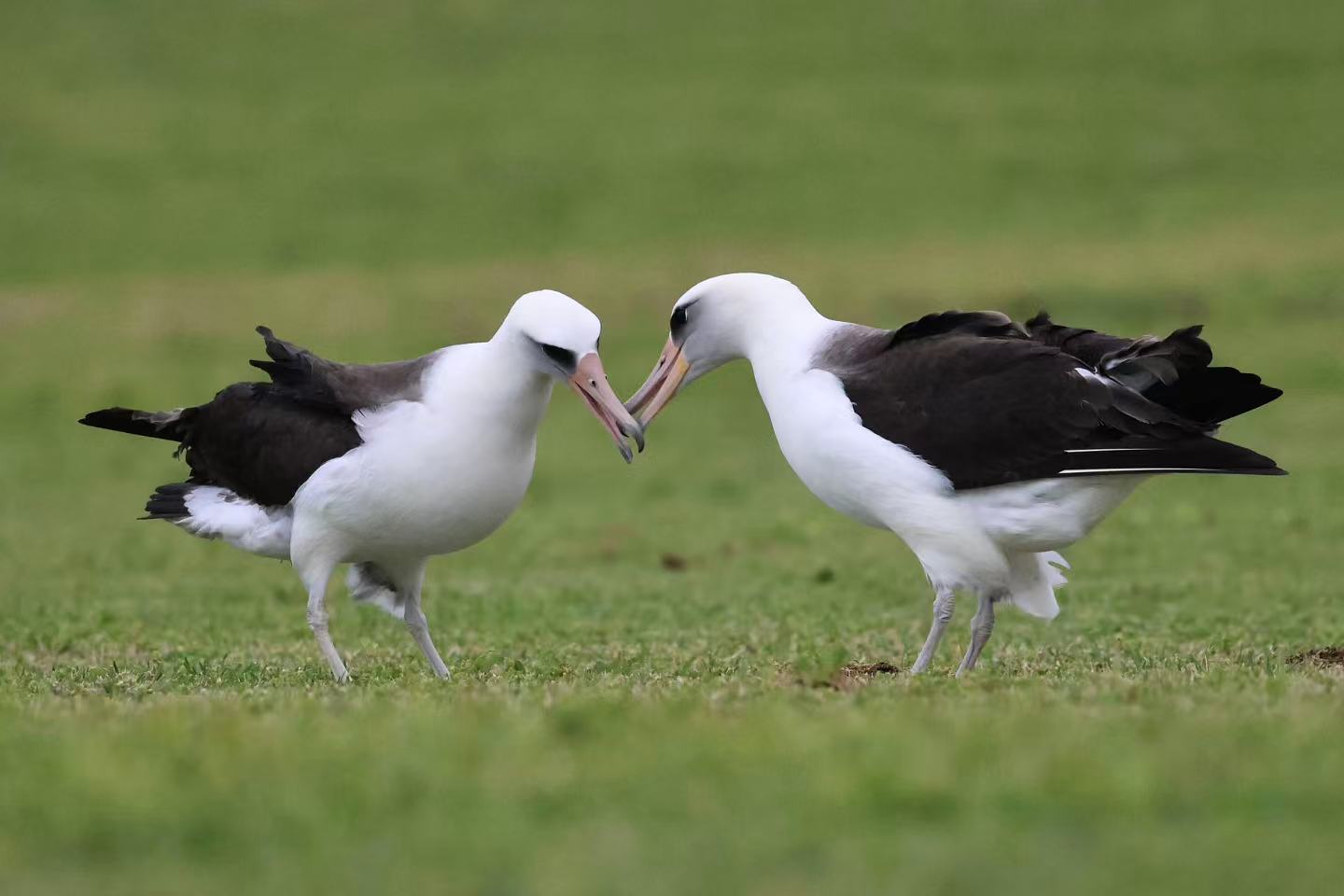
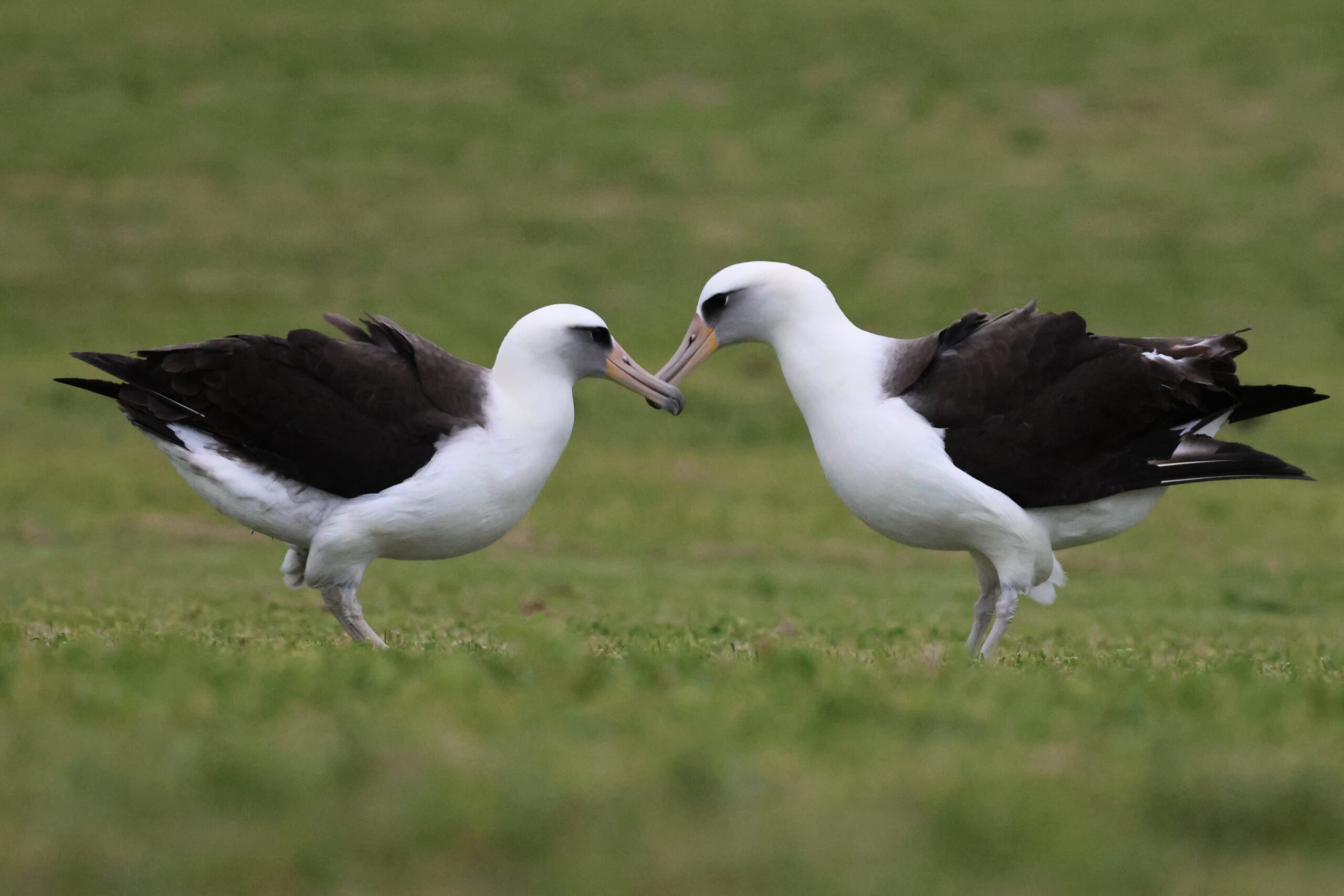
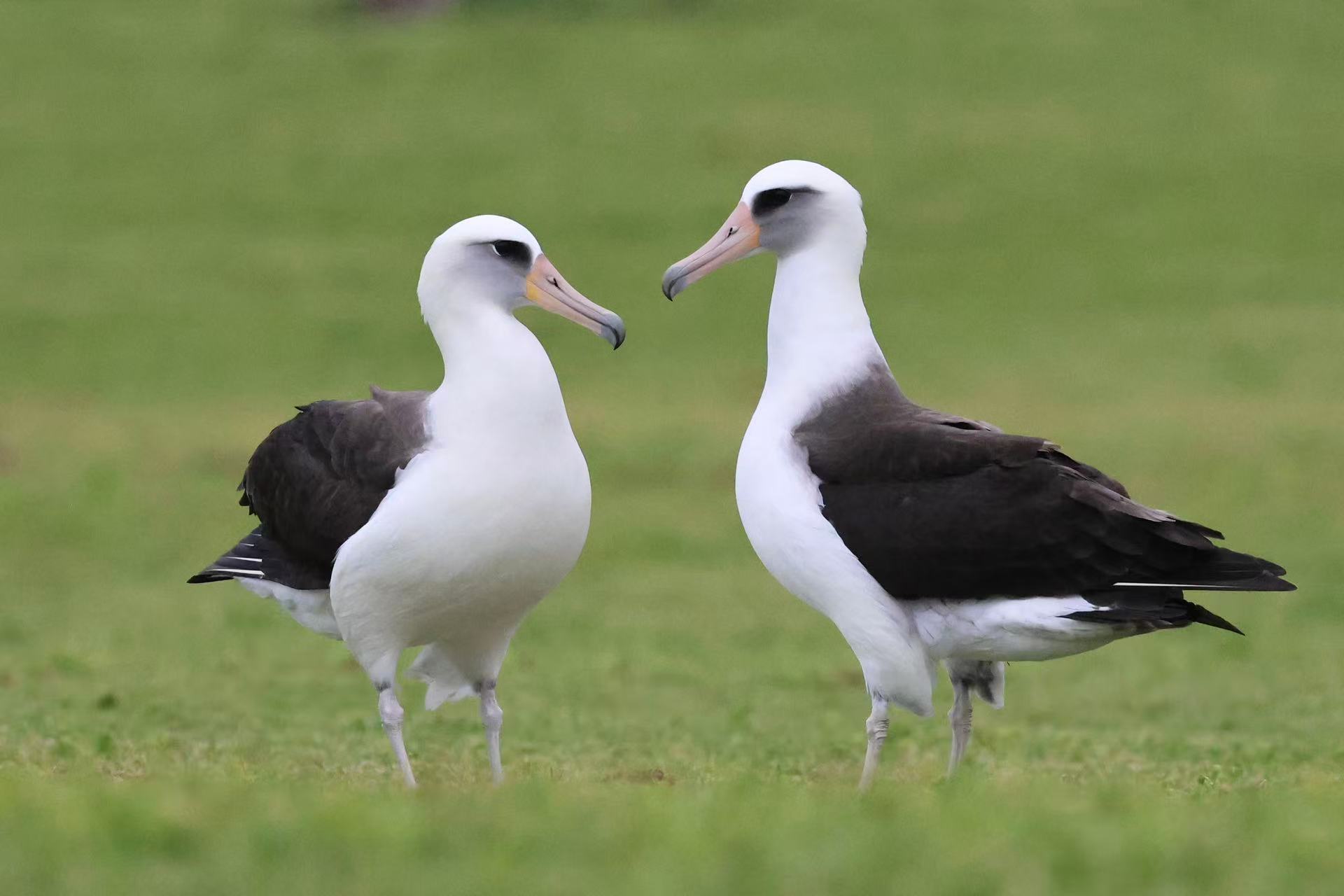
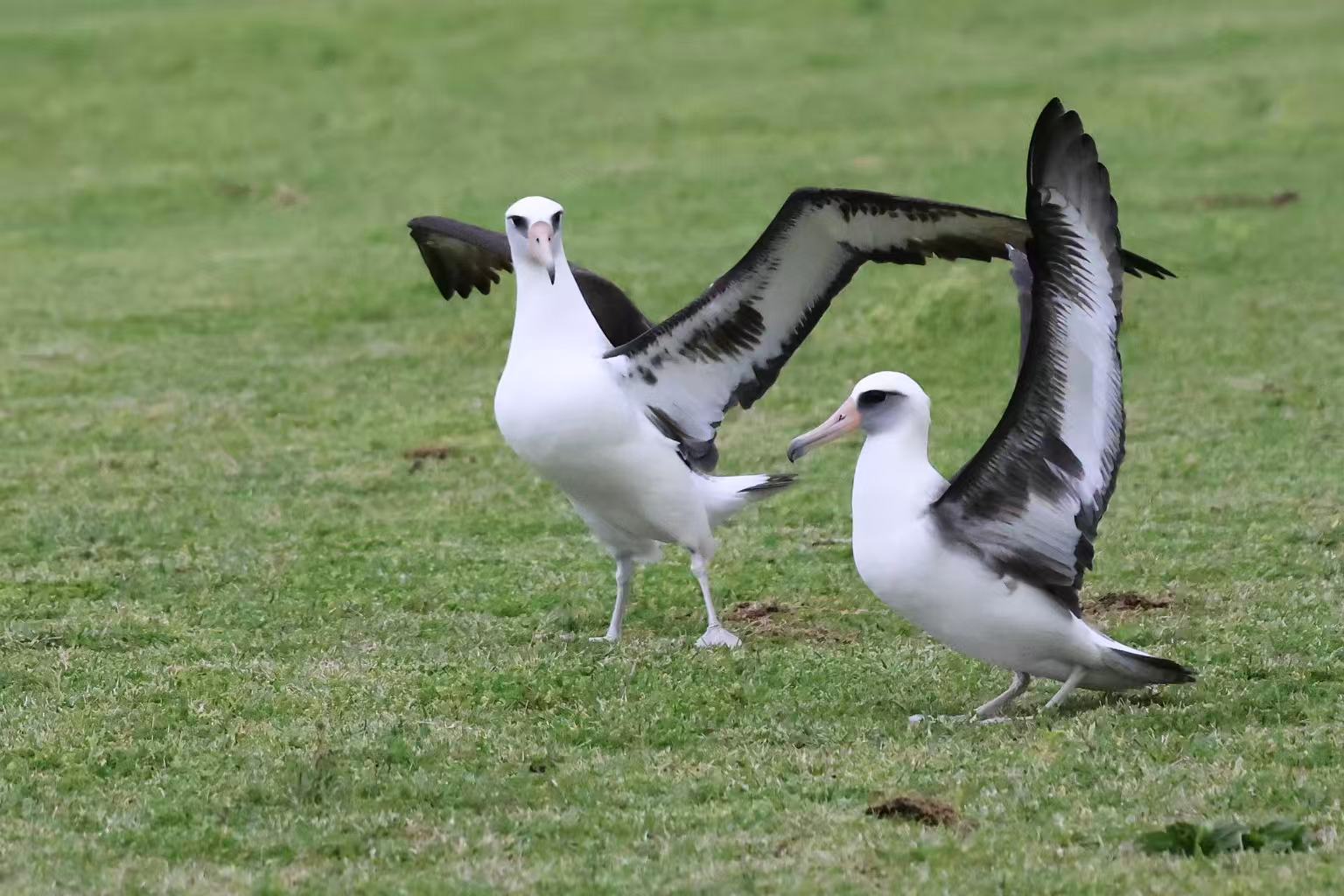
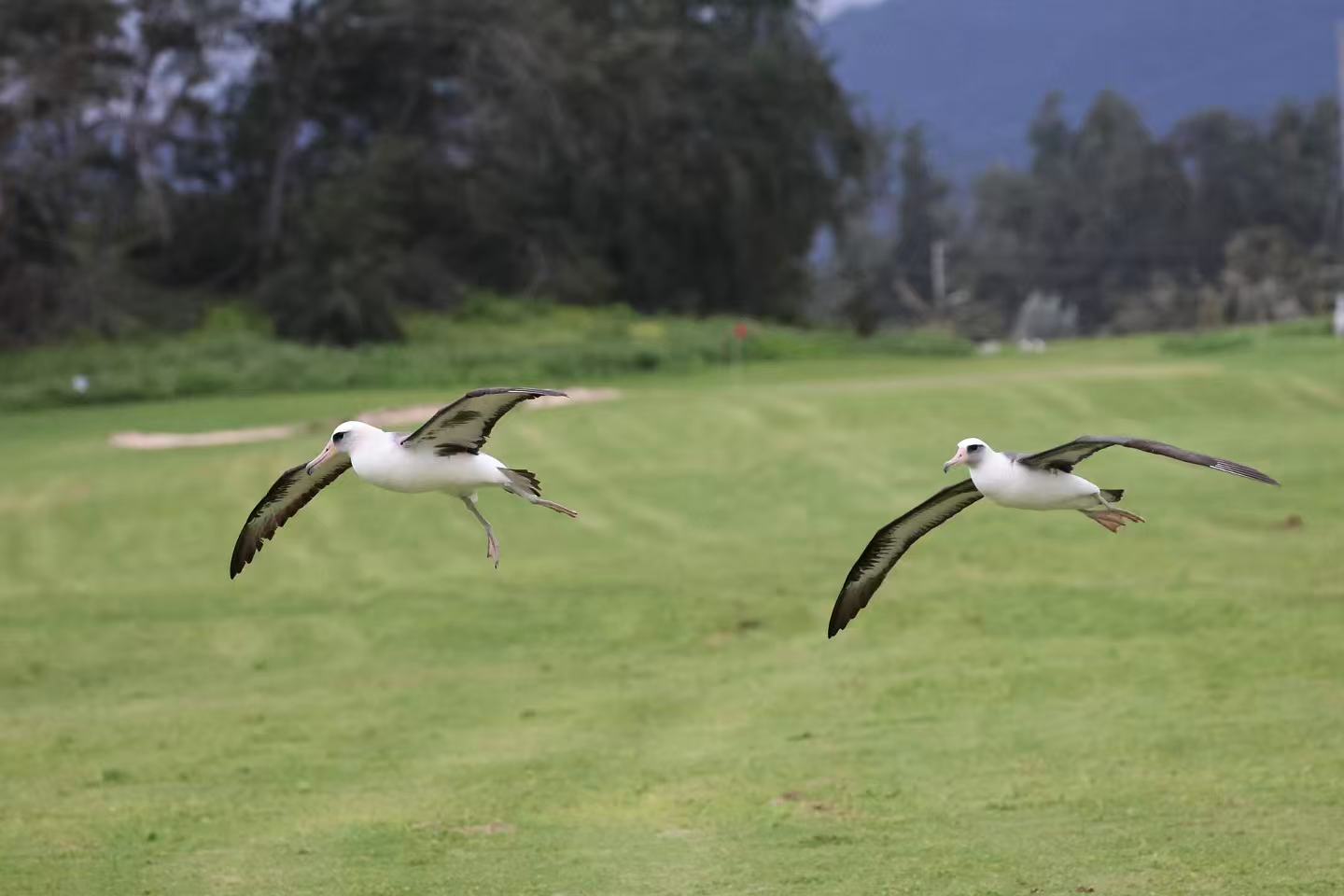
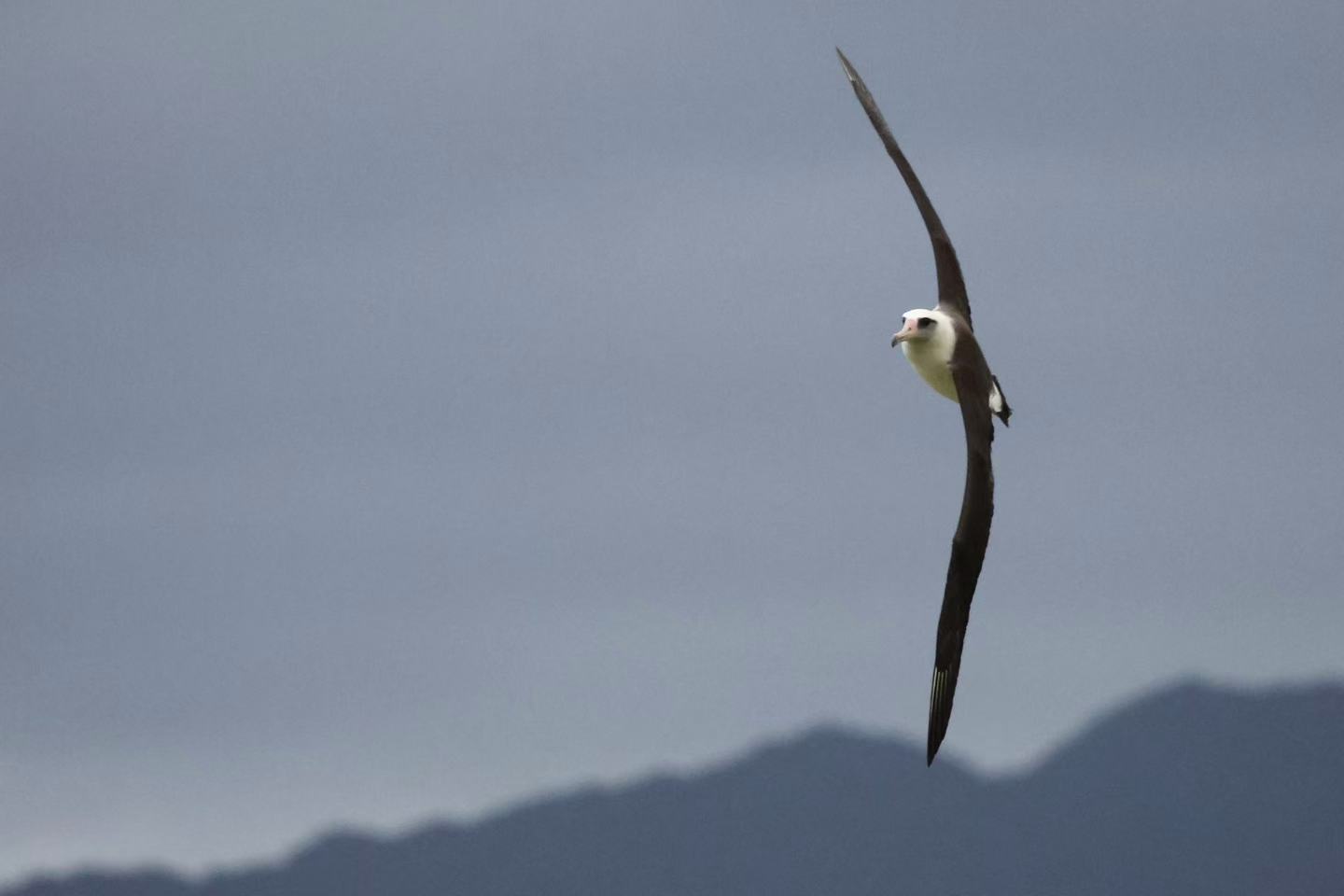
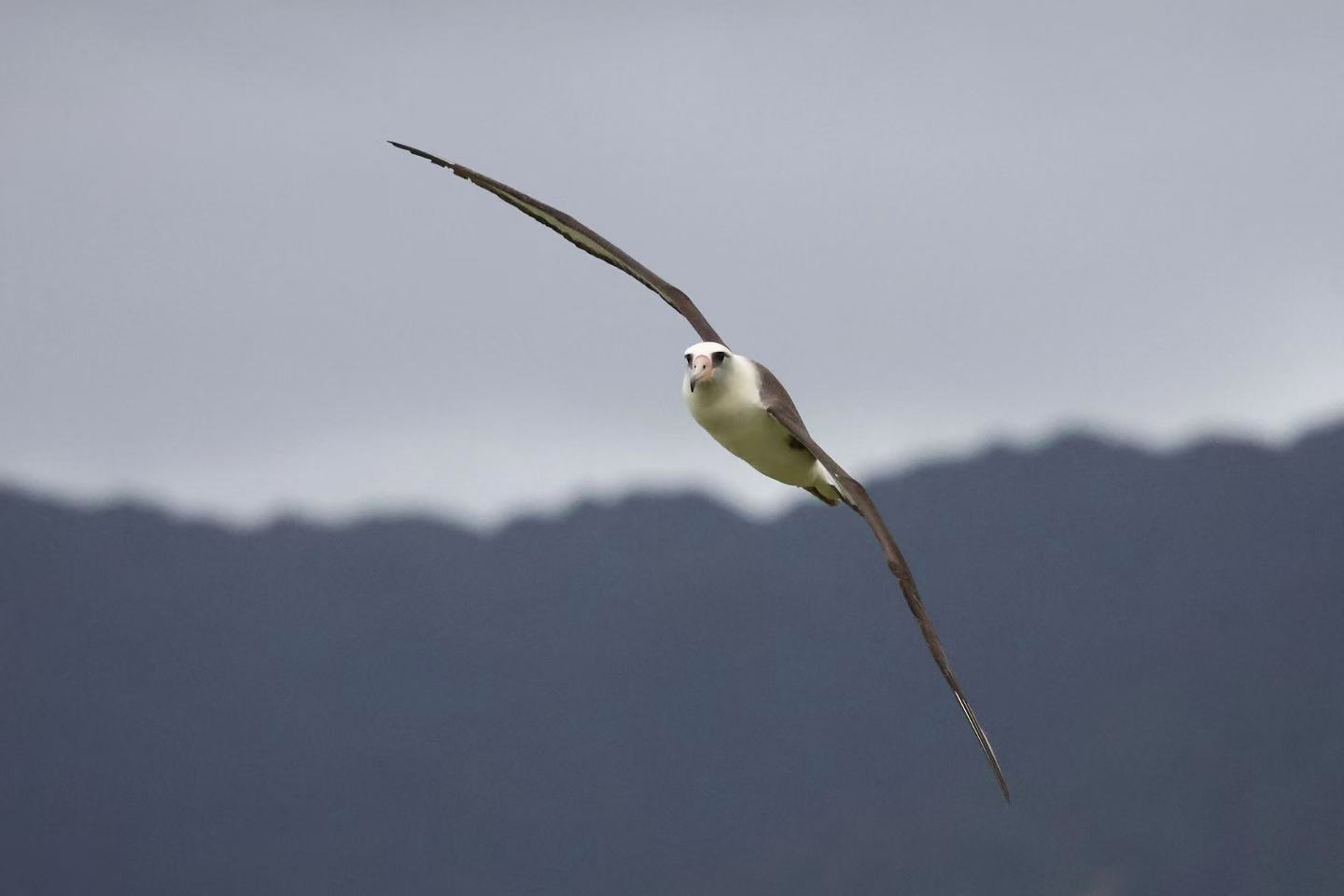
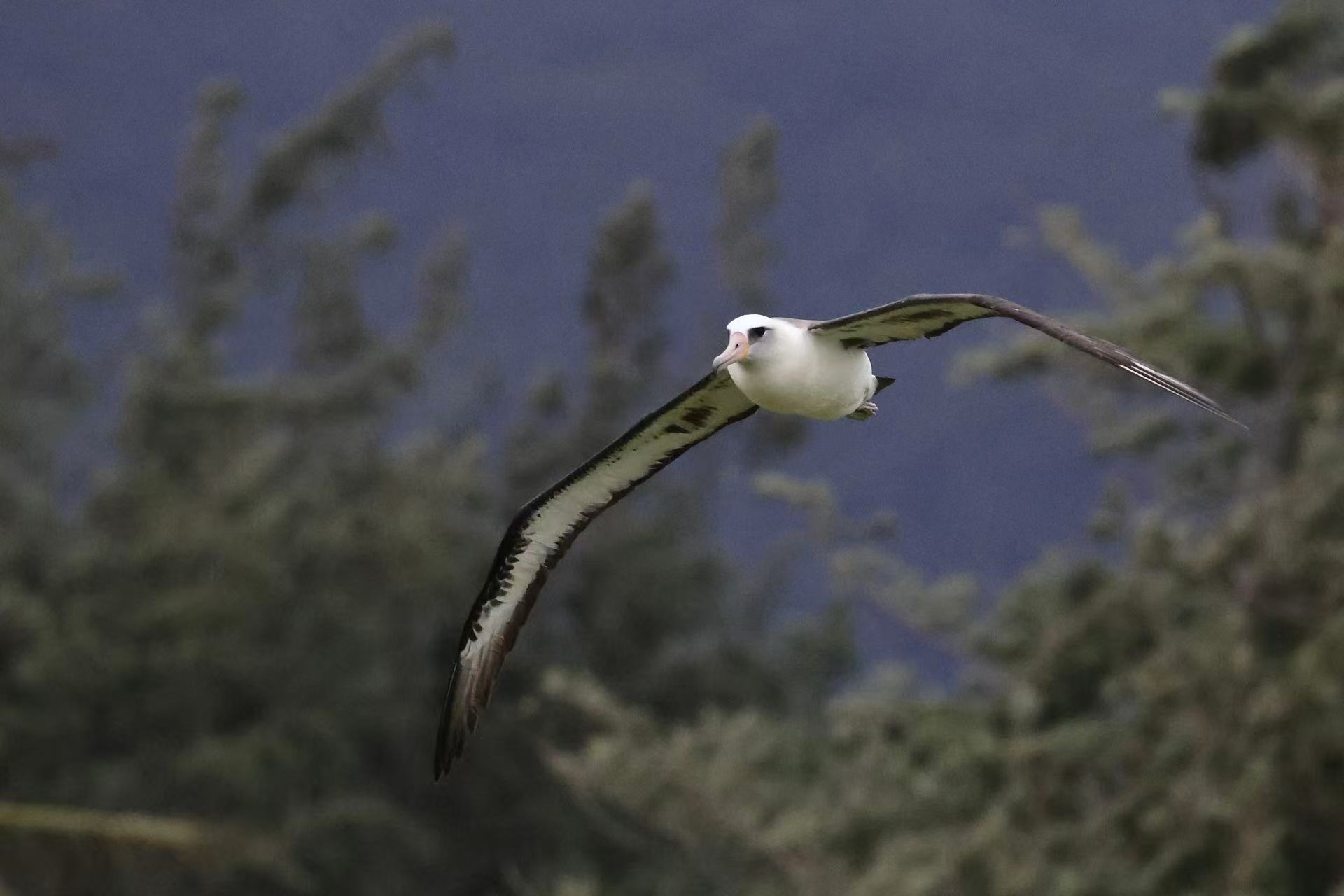
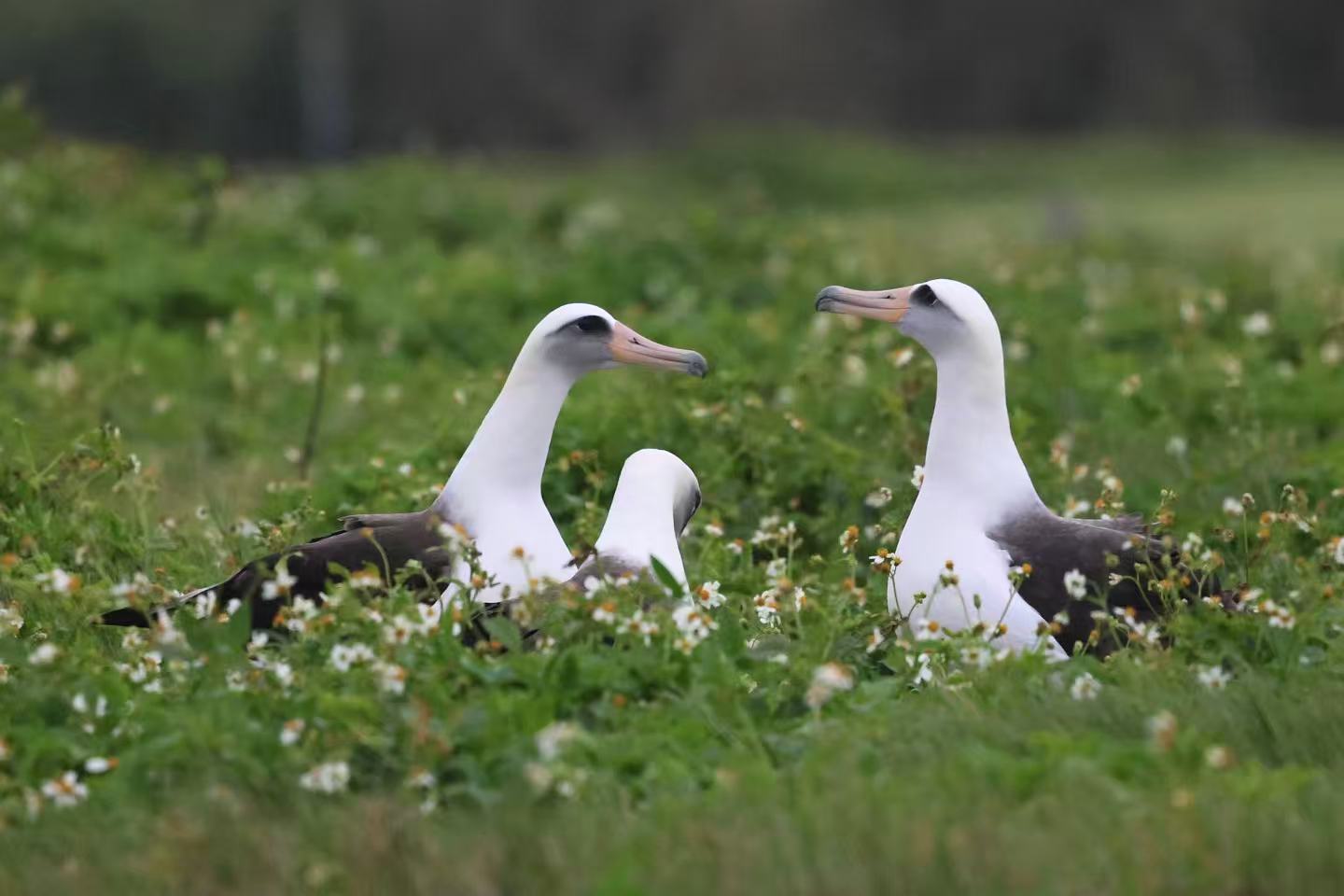
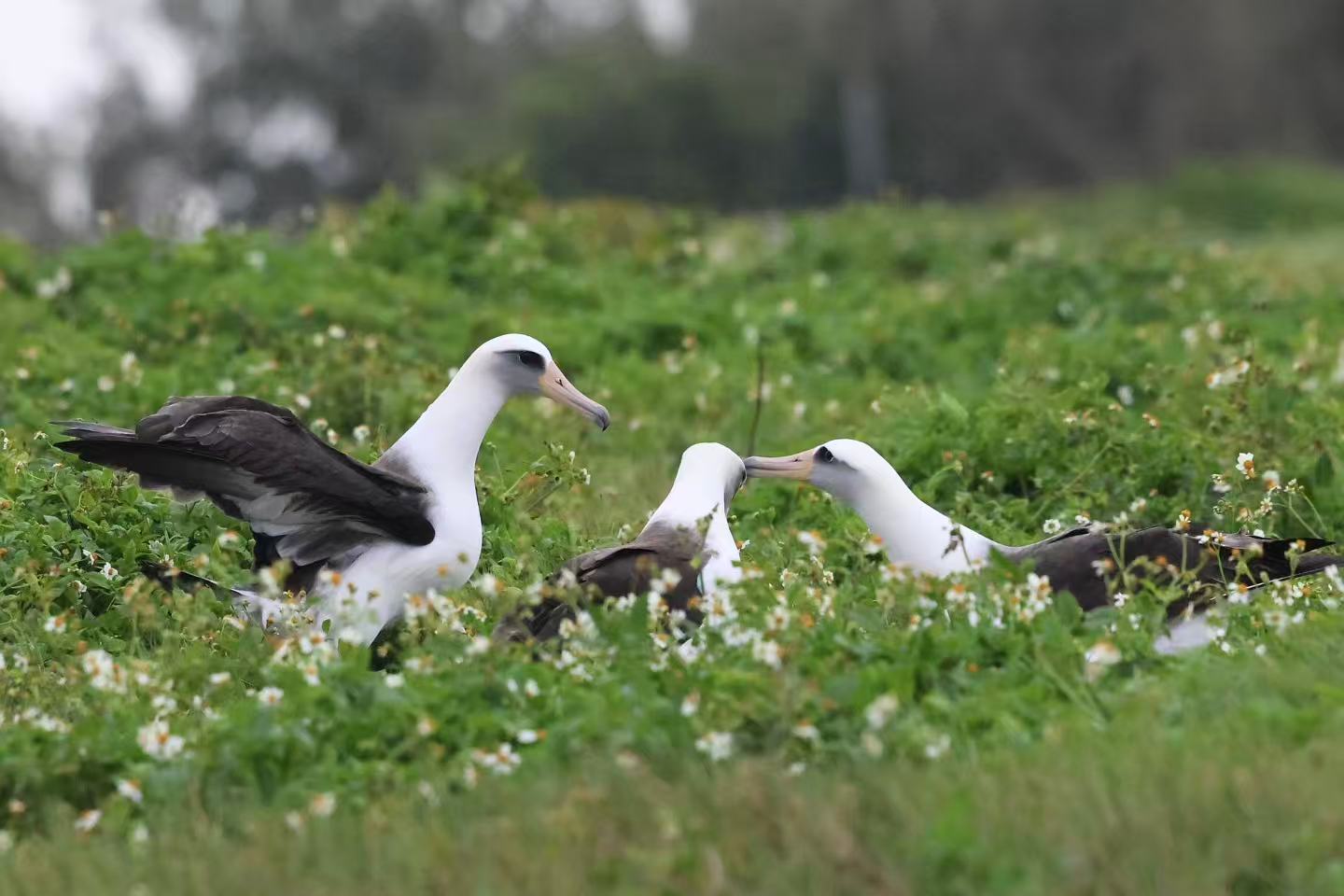
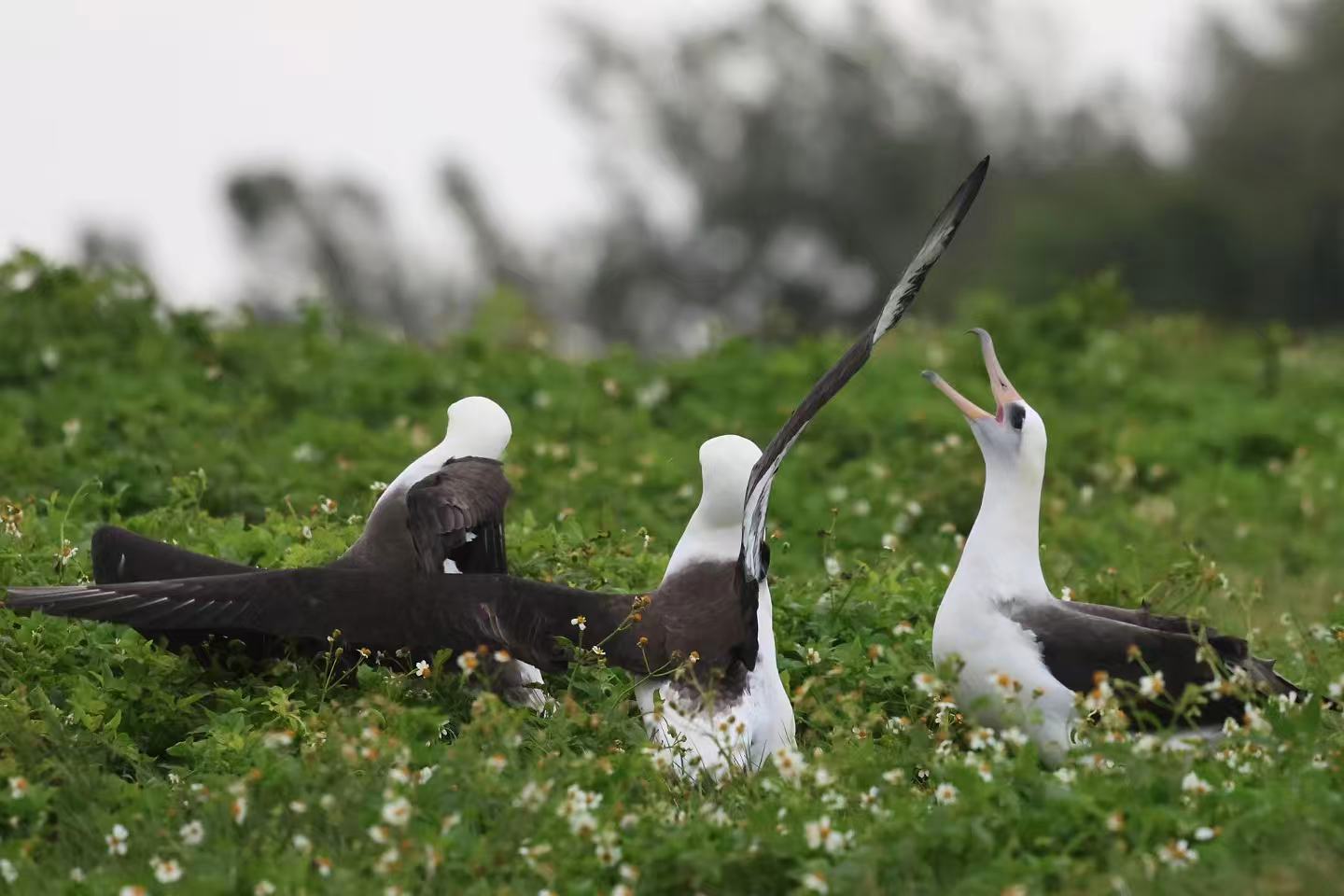
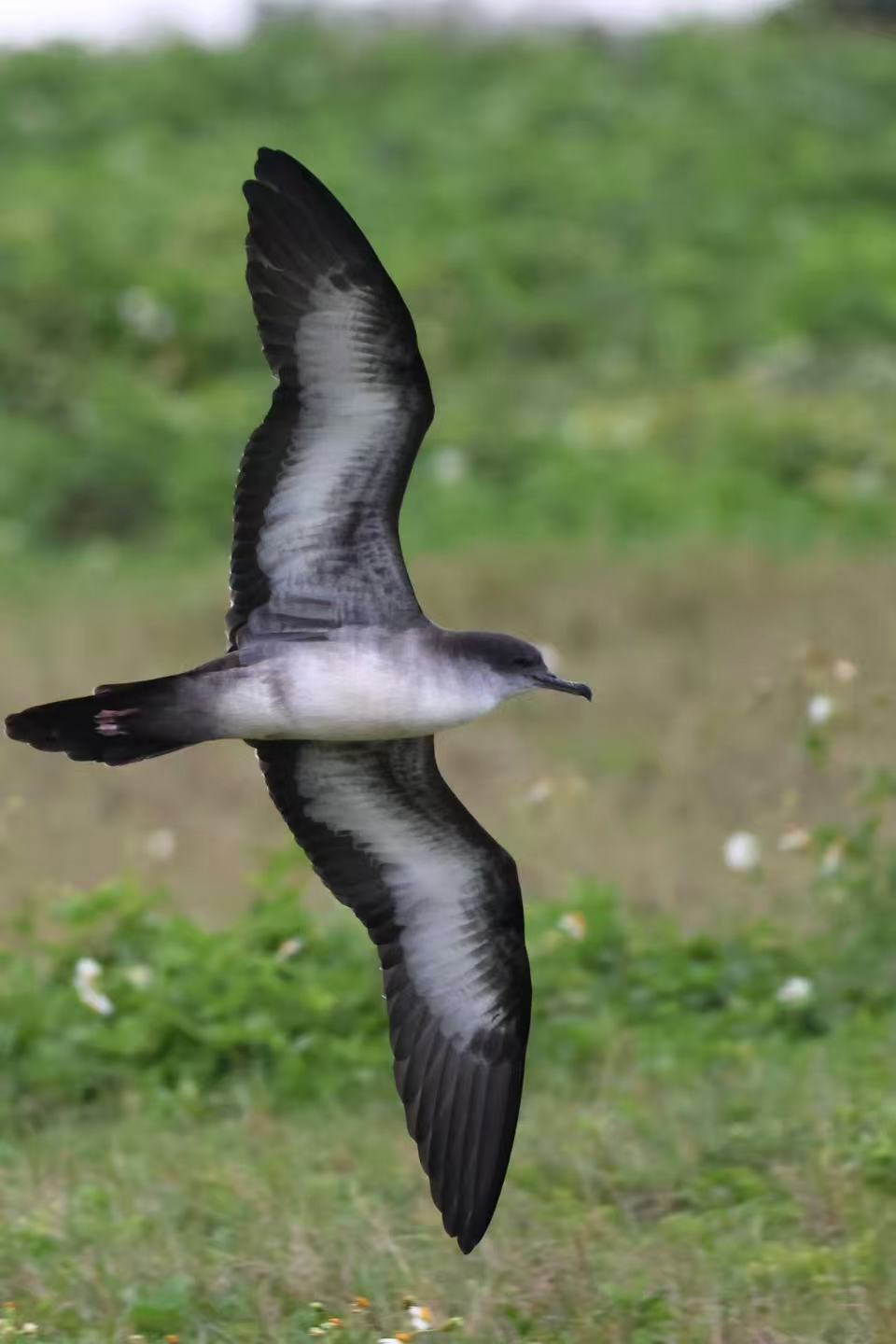
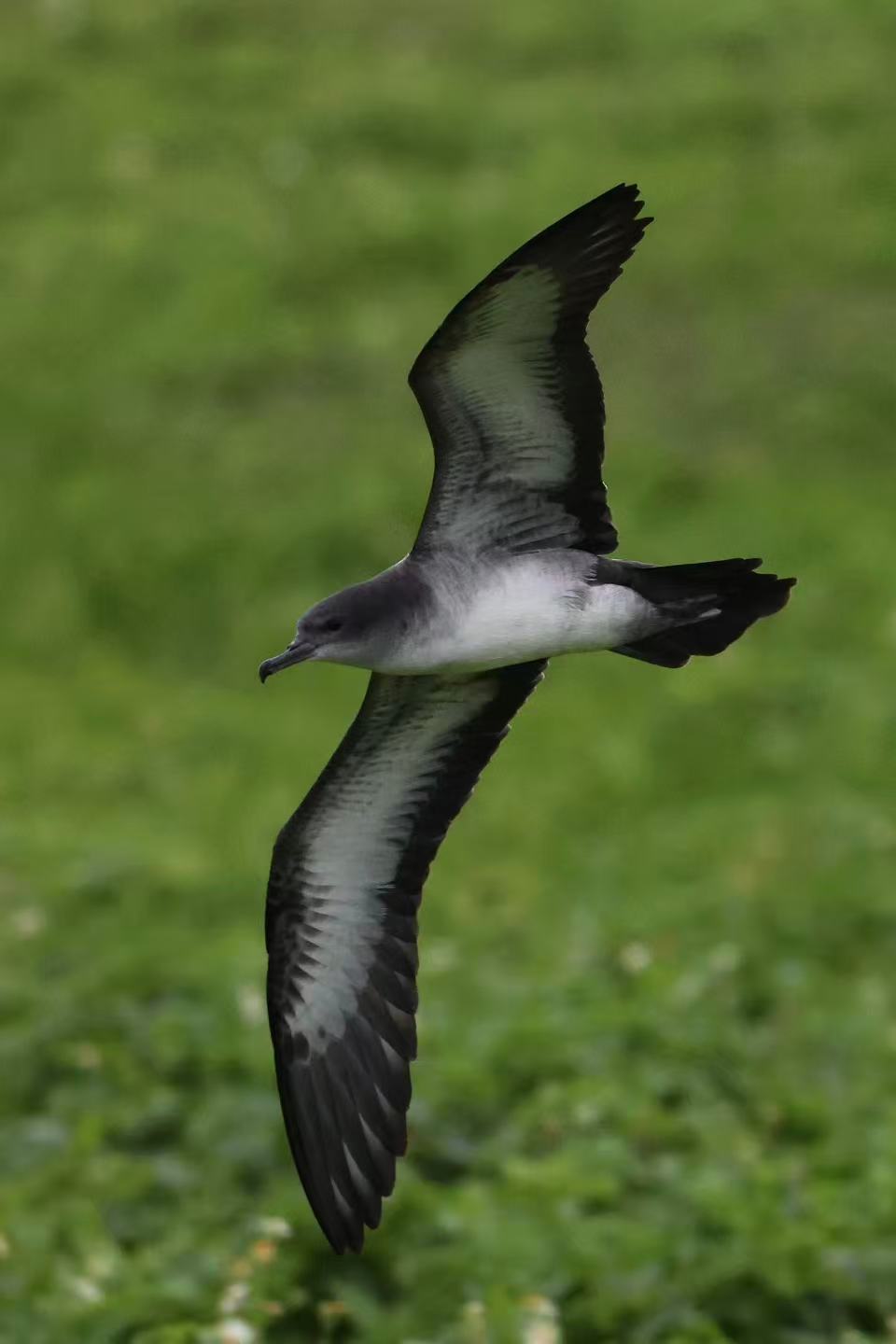
We soon detected a small flock of Bristle-thighed Curlews foraging under a tree. They were very cooperative and allowed me to take great photos. They slowly walked around the grassland, gruadually spreading to the entire golf course. After quite a joy with the Bristle-thighed Curlews, we started to explore the course. Pairs of Laysan Albatros glided over the course, some even landed and performed their Cortship Display right in front of us. Wedge-tailed Shearwater quickly zoomed over the grass heading towards their nesting sites.
After sunsets, we headed back to our hotel.
eBird checklists:
- Waikiki
- Fort Derussy Beach Park
- ʻAiea Loop Trail and Keaīwa Heiau SP
- Pull out between Japanese Fishing Shrine and Lānaʻi Lookout.
- Kahuku Golf Course and Pasture